Tianqiong Sensor IOT Technology Co., Ltd
Sales Manager:Ms. Emily Wang
Cel,Whatsapp,Wechat:+86 15898932201
Email:info@fengtutec.com
Add:No. 155 Optoelectronic Industry Accelerator, Gaoxin District, Weifang, Shandong, China


Sales Manager:Ms. Emily Wang
Cel,Whatsapp,Wechat:+86 15898932201
Email:info@fengtutec.com
Add:No. 155 Optoelectronic Industry Accelerator, Gaoxin District, Weifang, Shandong, China
time:2026-03-30 11:33:19 source:Weather Station viewed:301 time
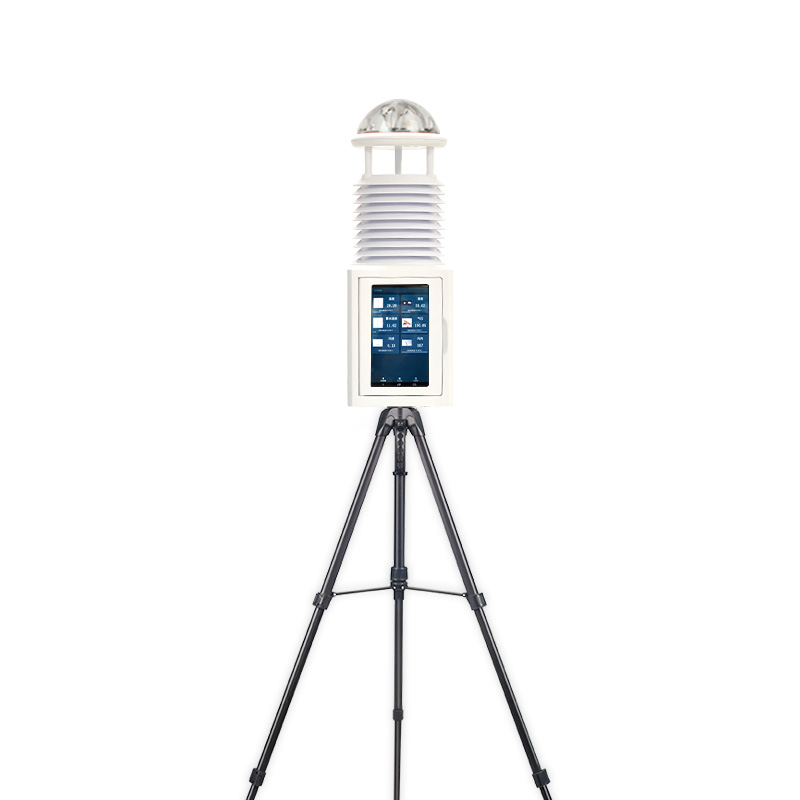
Complete Weather Station is designed in strict accordance with the observation standards of international meteorological organizations. Utilizing a configuration that combines a data logger with modular sensors, it is capable of measuring between ten and twenty meteorological parameters—including air temperature and humidity, wind speed and direction, atmospheric pressure, precipitation, solar radiation, and soil temperature and moisture. The device supports dual power sources (AC and solar) and features data sampling intervals at the minute level, making it ideally suited for applications such as agricultural research, ecological monitoring, and high-altitude meteorological observation.
Complete Weather Station represents a class of high-precision meteorological observation equipment engineered to meet international meteorological standards. Its primary function is the scheduled, automated collection and long-term, continuous monitoring of ground-level ecological environments and various meteorological parameters. Compared to conventional meteorological observation equipment, Complete Weather Station imposes more rigorous requirements regarding measurement accuracy, data acquisition frequency, system stability, and the flexibility of sensor configuration.
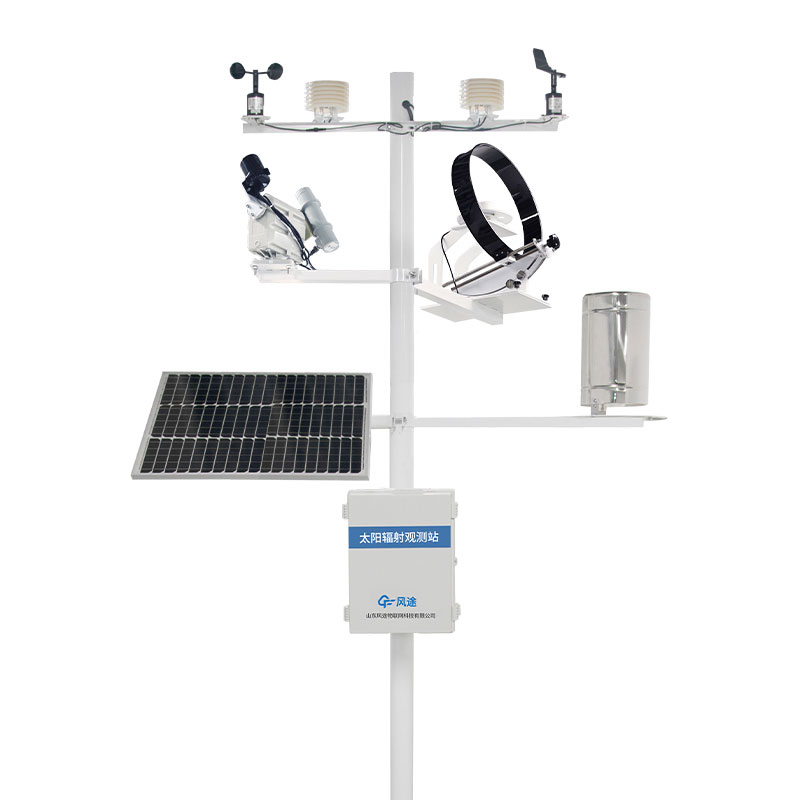
In terms of sensor configuration, Complete Weather Station offers flexible customization options tailored to specific research objectives. A standard configuration typically comprises sensors for air temperature and humidity, wind speed and direction, precipitation, and atmospheric pressure. Extended configurations allow for the inclusion of additional parameters, such as total radiation, photosynthetically active radiation (PAR), net radiation, soil temperature, soil moisture, soil heat flux, carbon dioxide concentration, and leaf wetness.
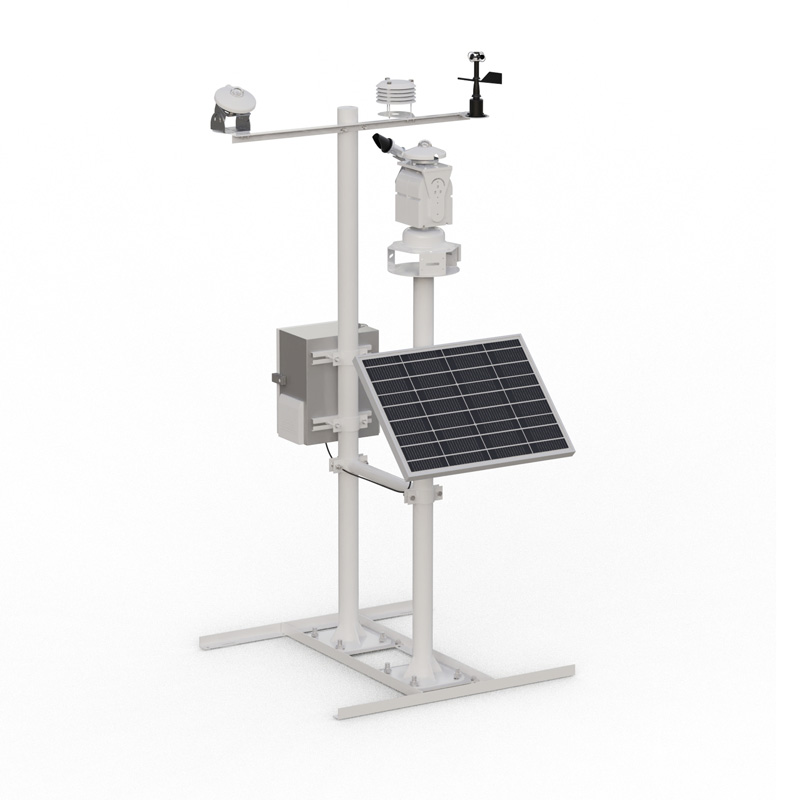
Regarding power supply and data transmission, Complete Weather Station supports both AC mains power and solar power, enabling unattended operation in remote field environments where grid electricity is unavailable. Data transmission is facilitated through various methods—including RS485 and GPRS—allowing for seamless integration with meteorological information centers or scientific research data platforms. The system’s data sampling interval can be set to the minute level, thereby meeting the rigorous standards required for scientific-grade meteorological observation.
In terms of application domains, Complete Weather Station is widely deployed in scenarios such as agricultural meteorology research, ecological site monitoring, hydrological and water resource surveys, and high-altitude climate change studies. For instance, the Chinese Academy of Sciences established a multi-parameter automatic meteorological station—equipped with a BeiDou satellite transmission system—at an elevation of 5,200 meters in the Kunlun Mountains. By utilizing integrated, domestically manufactured meteorological sensing equipment, this station successfully filled a critical gap in meteorological observation coverage within the highest-altitude regions of the central Kunlun Mountain range. An automated weather station established at an elevation of 3,500 meters on the Monte Rosa massif in the Italian Alps continuously collects data on air temperature, atmospheric pressure, wind speed and direction, relative humidity, solar radiation, precipitation, snow depth, and snowpack temperature, thereby providing foundational data support for climate change research in high-altitude regions. In the context of photovoltaic power plants, Complete Weather Station provides critical reference data for power generation forecasting and severe weather warnings by precisely capturing solar radiation data.
Fentu Technology, a manufacturer of radar water level gauges, offers an 80GHz high-frequency radar gauge utilizing Frequency Modulated Continuous Wave (FMCW) technology. With a measurement range of 0.1 to 40 meters, an accuracy of ±5 mm, and a resolution of 1 mm, this device features a non-co...
FT-WQX7, All-in-One Weather SensorsThe top cover hidden ultrasonic probe with physical shielding structure can effectively prevent rain and snow from accumulating on the probe surface to interfere with signal transmission and reception, and reduce the turbulence effect caused by direct impact of nat...
The Negative Oxygen Ion Monitoring System is a monitoring framework built on professional technologies, with its core technical architecture integrating sensing technology and IoT communication technology. The sensor employs a universal capacitive detection principle to measure the concentration of...
The Ultrasonic weather station utilizes ultrasonic technology to measure meteorological elements. When ultrasonic waves propagate in the air, their propagation speed is affected by air flow. When the wind blows from different directions, the propagation times of ultrasonic waves in the downwind and...


 Skype
Skype
 whatsapp
 mail
mail