Tianqiong Sensor IOT Technology Co., Ltd
Sales Manager:Ms. Emily Wang
Cel,Whatsapp,Wechat:+86 15898932201
Email:info@fengtutec.com
Add:No. 155 Optoelectronic Industry Accelerator, Gaoxin District, Weifang, Shandong, China


Sales Manager:Ms. Emily Wang
Cel,Whatsapp,Wechat:+86 15898932201
Email:info@fengtutec.com
Add:No. 155 Optoelectronic Industry Accelerator, Gaoxin District, Weifang, Shandong, China
time:2025-12-15 13:12:07 source:Weather Station viewed:548 time
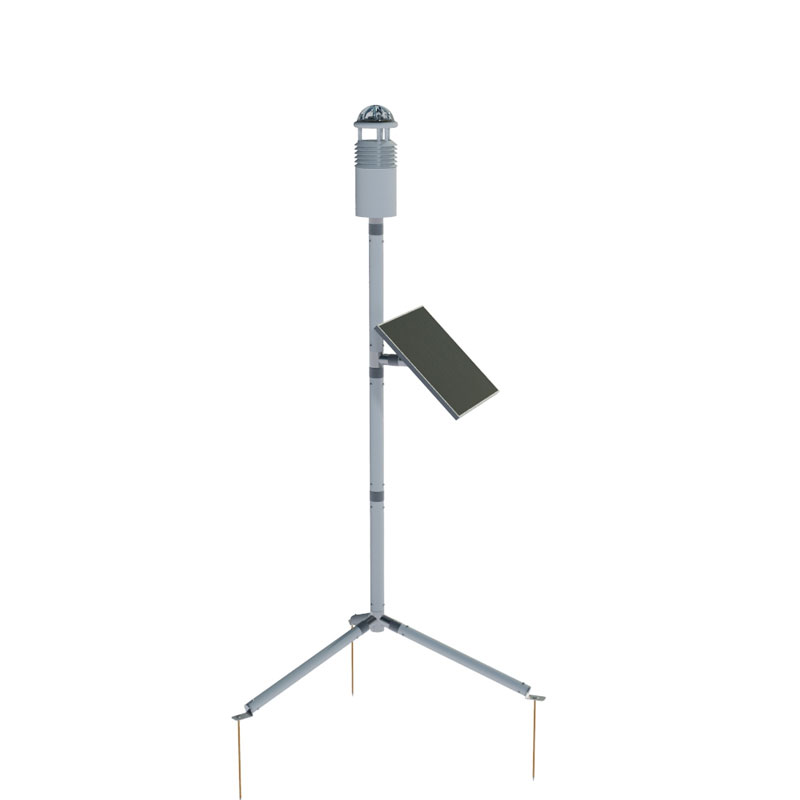
Ground-based meteorological observation statio is a multi-parameter automatic observation station for real-time monitoring of near-surface meteorological elements. It can continuously monitor data such as wind speed, wind direction, temperature, humidity, atmospheric pressure, solar radiation, optical rainfall, PM2.5, PM10, and noise.
Ground-based meteorological observation statio refers to a professional station for observing meteorological elements in the near-surface layer. Modern Ground-based meteorological observation statio typically refers to a multi-parameter integrated automatic weather station, which integrates various sensors and data acquisition systems, enabling unattended, continuous, and real-time observation of the basic state of the atmosphere and various environmental parameters.
The core function of this type of observation station is the comprehensive collection of near-surface meteorological and environmental elements. Its standard observation items usually include the six basic meteorological elements: wind speed, wind direction, air temperature, air humidity, atmospheric pressure, and precipitation. Precipitation monitoring often uses optical rain gauges, which determine the size and quantity of raindrops by measuring the obstruction of a light beam, thereby calculating rainfall intensity and cumulative rainfall. Compared with traditional mechanical rain gauges, it has no moving parts and is more suitable for long-term stable operation.
In addition to basic meteorological parameters, many observation stations have expanded their monitoring capabilities. For example, adding solar radiation sensors to monitor solar radiation intensity; integrating particulate matter sensors (such as those based on laser scattering principles) to monitor the mass concentration of PM2.5 and PM10; and configuring noise sensors to monitor environmental sound levels. This allows a single observation station to simultaneously obtain multi-dimensional data on meteorological conditions, air quality, and the acoustic environment, providing support for comprehensive environmental assessment.
From a technical perspective, a complete ground-based automatic weather observation station mainly consists of a sensor unit, a data collector, a power supply system, a communication module, and a protective enclosure. Each sensor converts physical quantities into electrical signals, and the data collector reads and processes these signals at a set frequency (e.g., every minute), converting them into standard meteorological data values. The data is then transmitted in real time to a central data server or cloud platform via wired (e.g., Ethernet) or wireless (e.g., 4G/5G, LoRa) communication. The entire system design focuses on long-term stability, data accuracy, and low-power operation in complex outdoor environments.
The application scope of Ground-based meteorological observation statio is very wide. In the field of meteorological operations, it forms the basic unit of the national weather observation network, providing the most direct data source for weather forecasting, climate analysis, and disaster warning. In the field of environmental monitoring, stations with expanded capabilities for monitoring gaseous pollutants or particulate matter serve as crucial infrastructure for environmental protection departments to conduct air quality assessments and track pollution sources. Furthermore, customized ground observation stations play a key role in smart agriculture, traffic management (especially on highways), new energy (wind farms, photovoltaic power plants), airport and port operations, large-scale engineering projects, and scientific research, providing them with dedicated, localized, and highly detailed meteorological and environmental data services.
In summary, modern [Ground-based meteorological observation statio] has evolved from a traditional single meteorological data collection point into an integrated, intelligent multi-element automatic monitoring platform. Through high-density network observation, it achieves comprehensive and real-time sensing of near-surface atmospheric conditions and environmental quality, and the continuous data sequences it generates are indispensable basic information for public services, industry operations, and scientific research.
Pocket Weather Meter integrates sensors for wind speed and direction, temperature and humidity, atmospheric pressure, illumination, total radiation, ultraviolet radiation, and runway temperature, measuring multiple meteorological and road surface parameters in real time. The device employs ult...
The Atmospheric Environment Monitoring System serves as a monitoring unit in grid-based monitoring systems. It adopts a miniaturized design enabled by sensor technology, capable of flexibly detecting one or more of various pollutant parameters, including PM10, PM2.5, SO2, NO2, CO, O3, and TVOC. This...
Handheld Weather Station is a portable meteorological observation instrument that integrates wind direction, wind speed, atmospheric pressure, temperature, and humidity measurement. Its compact size and light weight allow for one-handed operation and easy carrying and deployment, meeting the n...
FT-FY1 Model Negative Ion Detector is a high-precision professional instrument for air negative ion detection and analysis. Regarded as a preferred tool for real-time measurement of atmospheric negative oxygen ion concentration, it is widely used in various fields including environmental monitoring,...


 Skype
Skype
 whatsapp
 mail
mail