Tianqiong Sensor IOT Technology Co., Ltd
Sales Manager:Ms. Emily Wang
Cel,Whatsapp,Wechat:+86 15898932201
Email:info@fengtutec.com
Add:No. 155 Optoelectronic Industry Accelerator, Gaoxin District, Weifang, Shandong, China


Sales Manager:Ms. Emily Wang
Cel,Whatsapp,Wechat:+86 15898932201
Email:info@fengtutec.com
Add:No. 155 Optoelectronic Industry Accelerator, Gaoxin District, Weifang, Shandong, China
time:2025-12-18 10:56:54 source:Weather Station viewed:469 time
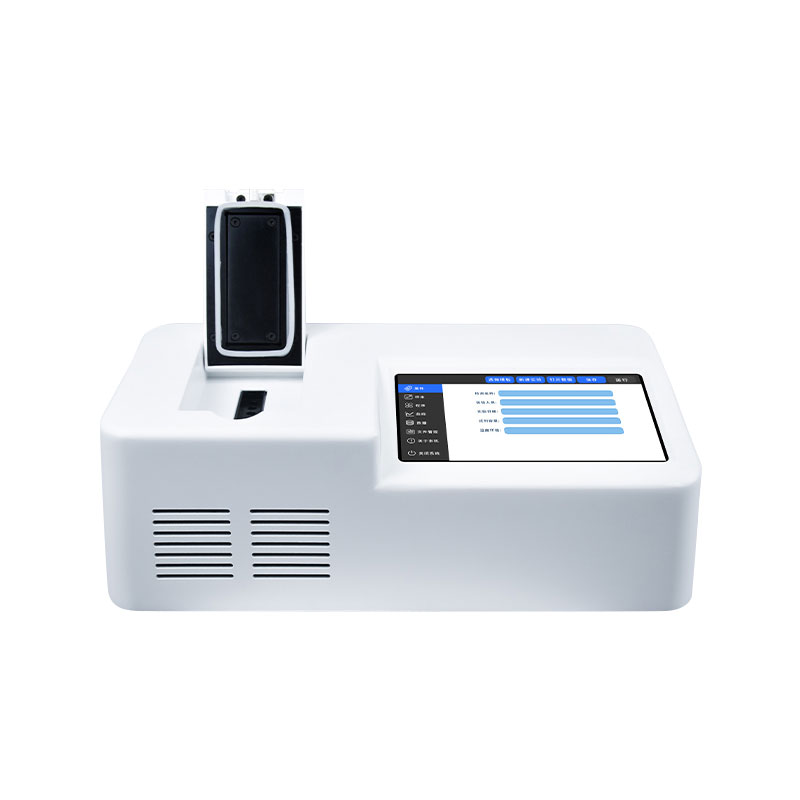
Based on real-time quantitative PCR (qPCR) technology, GMO Testing can specifically identify and quantitatively detect common GM components in corn, providing precise detection support for corn production, trade, safety supervision, and food processing.
GMO Testing is a specialized analytical instrument based on molecular biology technology. Its core function is to accurately detect whether corn and its processed products contain GM components. This equipment mainly uses polymerase chain reaction (PCR) technology, especially real-time quantitative PCR, to achieve high specificity and sensitivity in identifying target GM sequences. It plays a crucial role in ensuring biosafety, regulating market trade, and meeting regulatory compliance.
The working principle of this equipment is based on real-time quantitative PCR technology. During detection, total DNA is first extracted from the corn sample to be tested. Specific primers and fluorescent probes are designed and synthesized for the specific GM elements to be screened (such as common promoters, terminators, marker genes, or exogenous structural gene sequences). In the real-time quantitative PCR instrument, the DNA template, primers, probes, and reaction reagents are mixed and amplified. In each PCR cycle, when the probe binds to the target GM sequence, a fluorescent signal is released. The instrument uses an optical system to monitor and record the accumulated intensity of fluorescence signals in each reaction tube in real time. By simultaneously detecting standards of known concentrations and establishing a standard curve, the system software can calculate the copy number or relative content of the target transgenic component based on the signal intensity of the sample, thus achieving not only qualitative judgment of "detection" but also quantitative analysis.
This detection process is highly automated and standardized. Modern transgenic instruments typically integrate modules such as sample pretreatment assistance, automatic sample addition, temperature cycling control, fluorescence signal acquisition, and data analysis. Users can preset detection methods and select the transgenic line combinations to be screened in the accompanying software. After the equipment finishes operation, the software automatically generates a detection report, clearly showing the detection results (negative/positive) and quantitative values (if applicable) for each sample against each target sequence. Internal reference gene detection can be used to verify the quality of DNA extraction and the effectiveness of the PCR reaction. This method significantly improves detection throughput, consistency, and accuracy, while reducing human error.
At the application level, this equipment is an indispensable tool in multiple links of the industry chain. In the fields of agricultural production and seed supervision, it is used to monitor experimental fields, verify seed purity, and prevent the spread of unapproved transgenic materials. In the grain storage and trade sectors, import and export inspection and quarantine agencies and commodity traders utilize this equipment to implement contract standards or comply with the GMO labeling regulations of the destination country/region, thus mitigating trade risks. In the food processing and feed production industries, manufacturers must conduct incoming inspections of raw materials to ensure that the final product complies with relevant labeling regulations or meets the raw material requirements of specific markets (such as non-GMO product markets). Furthermore, in fields such as bioenergy research and development, for processes using corn as a raw material, clearly defining the GMO properties of the raw material is helpful for process evaluation and intellectual property management.
Therefore, GMO Testing, with its precise detection capabilities based on real-time quantitative PCR technology, has become a crucial technological node connecting technology research and development, agricultural production, market circulation, and consumer supervision. It provides reliable scientific data support for governments to implement effective biosafety management, for enterprises to fulfill compliance obligations, for maintaining a fair trade environment, and for protecting consumers' right to know, playing a key role in the modern agricultural and food industry system.
The Total Phosphorus Analyzer determines total phosphorus concentration in water using the ammonium molybdate spectrophotometric method and is suitable for both online monitoring and laboratory analysis of surface water, industrial wastewater, and domestic sewage. The instrument features autom...
The portable anemometer is a mobile intelligent observation device integrating multiple meteorological monitoring functions. Relying on precision sensors and intelligent chips, it achieves accurate measurement of multiple elements, supports long-term data storage and convenient data transmissi...
The "data brain" in farm fields is quietly changing the agricultural production model that has relied on "weather-dependent farming" for thousands of years.In traditional agricultural production, farmers mostly rely on experience to judge agricultural activities. However, as clim...
Meteorological Stations is an integrated, low-power, high-precision automatic meteorological monitoring device. It supports multiple transmission methods and allows for rapid deployment without the need for complex setup. Equipped with an integrated 12-parameter sensor and featuring excellent protec...



 Skype
Skype
 whatsapp
 mail
mail