Tianqiong Sensor IOT Technology Co., Ltd
Sales Manager:Ms. Emily Wang
Cel,Whatsapp,Wechat:+86 15898932201
Email:info@fengtutec.com
Add:No. 155 Optoelectronic Industry Accelerator, Gaoxin District, Weifang, Shandong, China


Sales Manager:Ms. Emily Wang
Cel,Whatsapp,Wechat:+86 15898932201
Email:info@fengtutec.com
Add:No. 155 Optoelectronic Industry Accelerator, Gaoxin District, Weifang, Shandong, China
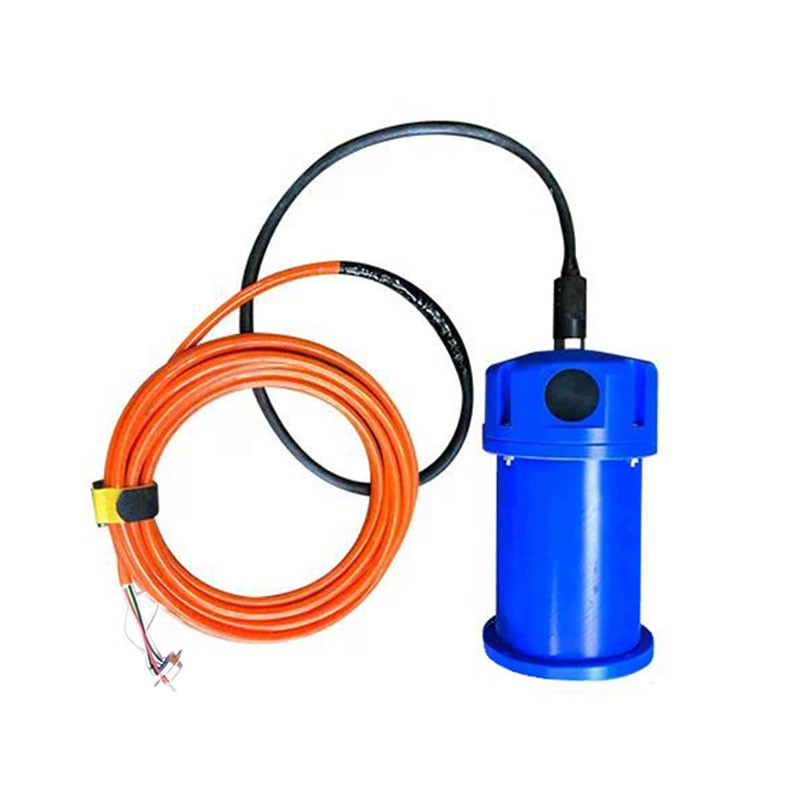
Model:FT-HL2
Brand:tianqiong
1、Doppler current meter Product Introduction
Doppler current meter is an underwater acoustic device that uses sound waves to measure the speed and direction of water flow, collecting high-quality data about the ocean and ocean currents.Doppler current meter is an online Doppler current meter that measures output vector average velocity and directional ocean currents. The instrument also has the ability to record tilt, heading, ping count, single ping standard deviation, and signal strength.
2、Doppler current meter Product Features
To minimize the impact of water flow on the measuring device, the actual measuring range must extend at least >0.4 meters from the current meter itself.
Doppler current meter when used in water, especially when secured by a cable, the current may cause it to tilt. Therefore, an angle sensor is built-in to measure the tilt angle and correct for flow velocity errors.
A built-in electronic compass outputs the direction of the flow velocity.
Ocean currents typically change slowly, so continuous measurement is unnecessary. To conserve battery power and extend transducer lifespan, sampling intervals can be set according to site requirements. After completing a set of measurements, a time interval is allowed before resuming the measurement. The interval can be determined based on site conditions.
3、Doppler current meter Measurement Principle
Doppler current meter system typically has two orthogonal sensor axes, each equipped with two current sensors, enabling bidirectional measurements on each axis.
This provides current sensors in all four directions (north, south, east, and west). Enabling forward measurement reduces interference from eddies around the sensors and anchor chains.
During measurement, the sensors on each axis alternately send acoustic pulses and receive reflected acoustic pulse signals from particles, measuring the orthogonal velocity components of the X and Y axes. North and east velocity components are obtained through tilt compensation and orientation calculations using a built-in solid-state electronic compass. Averaging multiple measurements outputs the current velocity and direction.
The current direction measurement can be used to correct the sensors, achieving accurate north and east directions through the built-in electronic compass and tilt sensors. The solid-state sensor components are well-suited for monitoring low-velocity currents. Measurements begin at a distance of 0.4 to 1.0 meter from the instrument, minimizing the influence of marine fouling and localized eddies.
4、Doppler current meter Technical Specifications
1. Flow velocity measurement range: 0-500 cm/s; Flow velocity resolution: ±0.1 cm/s; Flow velocity accuracy: ±0.5 cm/s ±1% of indicated value.
2. Flow direction measurement range: 0–360°; Flow direction resolution: 0.01°; Flow direction accuracy: ±5° when the tilt angle is less than ±7.5°.
3. Tilt angle measurement range: -90°~+90°; Resolution: 0.1°; Accuracy: ±1.5°.
4. Acoustic frequency: 1.9 to 2.05 MHz; Instantaneous transmit power: 30 watts; Beam angle: 2.5°.
5. Installation requirements: Distance from water surface: not less than 0.75 meters; Distance from water bottom: not less than 0.7 meters.
6. Operating voltage: 9V–15V DC power supply.
7. Communication method: Serial communication (RS485 or RS232 optional). Communication protocol: Modbus protocol. 8. Output parameters: Flow velocity, flow direction, azimuth angle, north-south flow velocity, east-west flow velocity, X-axis tilt angle, Y-axis tilt angle.
9. Serial port configurable parameters: Seawater sound velocity, measurement PING count, distance from the start point of the measurement area to the current meter, distance from the end point of the measurement area to the current meter.
10. Operating temperature range: -5 to +50°C.
11. Weight in air: 1850g ± 100g (excluding bracket).
12. Dimensions: Diameter 120mm, Height 300mm.
EL (Electroluminescence) detection, a non-destructive testing method, works as follows: When a forward bias is applied to a photovoltaic (PV) module, electrons and holes diffuse to the P and N regions, respectively. The radiative recombination of charge carriers generates photons, resulting in the e...
In modern traffic management, real-time and accurate road condition monitoring is of great significance for ensuring driving safety and improving road operation efficiency. Traditional road weather stations typically require embedded installation, which not only damages the road structure but may al...
FT-WQX7, All-in-One Weather SensorsThe top cover hidden ultrasonic probe with physical shielding structure can effectively prevent rain and snow from accumulating on the probe surface to interfere with signal transmission and reception, and reduce the turbulence effect caused by direct impact of nat...
The Geological Monitoring System employs Differential RTK technology to achieve millimeter-level displacement monitoring, making it suitable for the automated early warning of geological hazards such as landslides, rockfalls, and debris flows. Comprising GNSS monitoring stations, data acquisit...


 Get a Free Quote
 Skype
Skype
 whatsapp
 mail
mail