Tianqiong Sensor IOT Technology Co., Ltd
Sales Manager:Ms. Emily Wang
Cel,Whatsapp,Wechat:+86 15898932201
Email:info@fengtutec.com
Add:No. 155 Optoelectronic Industry Accelerator, Gaoxin District, Weifang, Shandong, China


Sales Manager:Ms. Emily Wang
Cel,Whatsapp,Wechat:+86 15898932201
Email:info@fengtutec.com
Add:No. 155 Optoelectronic Industry Accelerator, Gaoxin District, Weifang, Shandong, China
time:2026-01-28 10:50:13 source:Weather Station viewed:452 time
Handheld Weather Station is a portable meteorological observation instrument that integrates wind direction, wind speed, atmospheric pressure, temperature, and humidity measurement. Its compact size and light weight allow for one-handed operation and easy carrying and deployment, meeting the needs for rapid on-site observation in fields such as meteorology, environmental protection, and airports.
Handheld Weather Station is a highly integrated portable meteorological data acquisition device. It primarily serves various professional tasks that require rapid acquisition of key meteorological parameters in the field or on-site, compensating for the limitations of fixed weather stations and the inconvenience of carrying traditional large instruments. The core value of this device lies in its ability to condense multiple measurement functions into a single handheld unit, achieving immediacy and flexibility in meteorological observation.
In terms of measurement functions, a typical Handheld Weather Station usually has the capability to measure five basic meteorological elements. Wind direction and wind speed are typically measured using miniature ultrasonic sensing technology or compact mechanical wind cups and wind vanes, displaying instantaneous and average values in real time. Temperature and relative humidity are measured using integrated digital sensors with rapid response. Atmospheric pressure is measured by a built-in high-precision pressure sensor. These sensor data are processed by an internal microprocessor and finally displayed on the instrument screen, providing users with comprehensive meteorological information at a glance.
Its most significant design features are its high portability and ease of operation. The device is typically the size of a walkie-talkie or a large smartphone, lightweight, and features a robust and durable casing to withstand outdoor environments. Good grip and clear button layout allow users to perform basic operations even while wearing gloves. After power-on, the device usually quickly completes sensor self-testing and enters the measurement state, enabling truly rapid deployment. Most models are equipped with a dot-matrix LCD screen for clear readings under various lighting conditions, and some advanced models also have data storage and Bluetooth wireless transmission functions, allowing measurement data to be sent to mobile phones or tablets for further analysis.
In practical applications, Handheld Weather Station has a wide range of uses. In the meteorological field, it is often used for field meteorological surveys, on-site monitoring of sudden weather events, and auxiliary comparative observations at fixed stations. In the environmental protection field, personnel can use it to quickly measure meteorological conditions at different locations to assist in analyzing pollutant dispersion. In the aviation field, particularly at small airports or temporary landing strips, ground personnel can use this device to quickly check wind direction and speed around the runway, providing immediate reference for flight safety. Furthermore, it is a practical tool in various scenarios such as agriculture, forestry, education, scientific research, outdoor sports events, and even firefighting and rescue operations, providing crucial meteorological data for decision-making in these activities.
When choosing a [device name], users should consider its measurement accuracy, range, sensor response time, equipment protection rating, and battery life. Reliability and stability are especially important when using the device in complex terrain or harsh weather conditions. With advancements in microelectronics technology, modern [device name] are evolving towards higher accuracy, greater intelligence, and enhanced environmental adaptability, and are better integrated with other mobile devices, continuously improving the efficiency and convenience of obtaining on-site meteorological data.
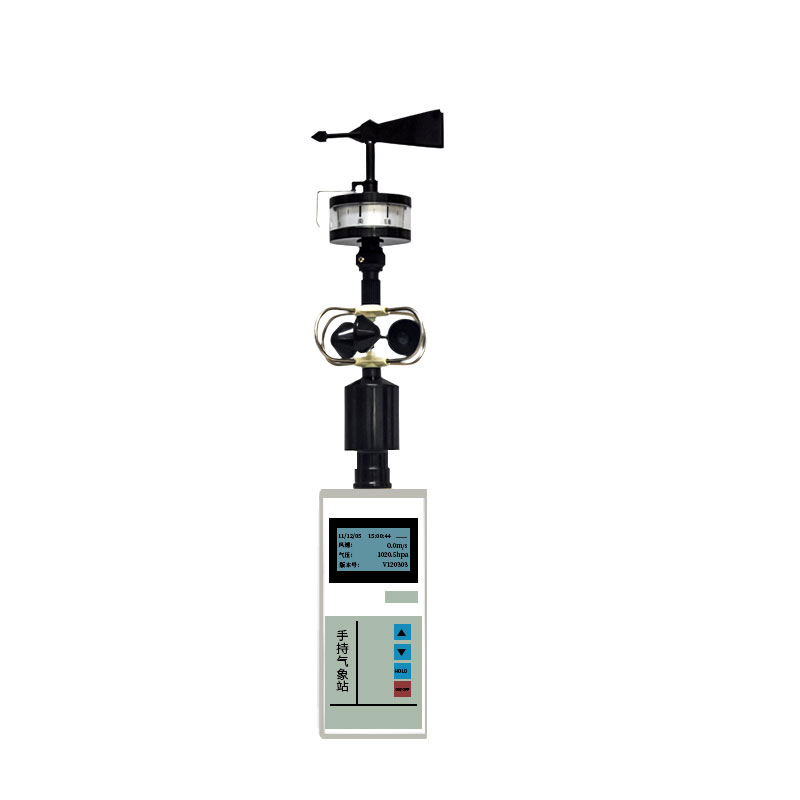
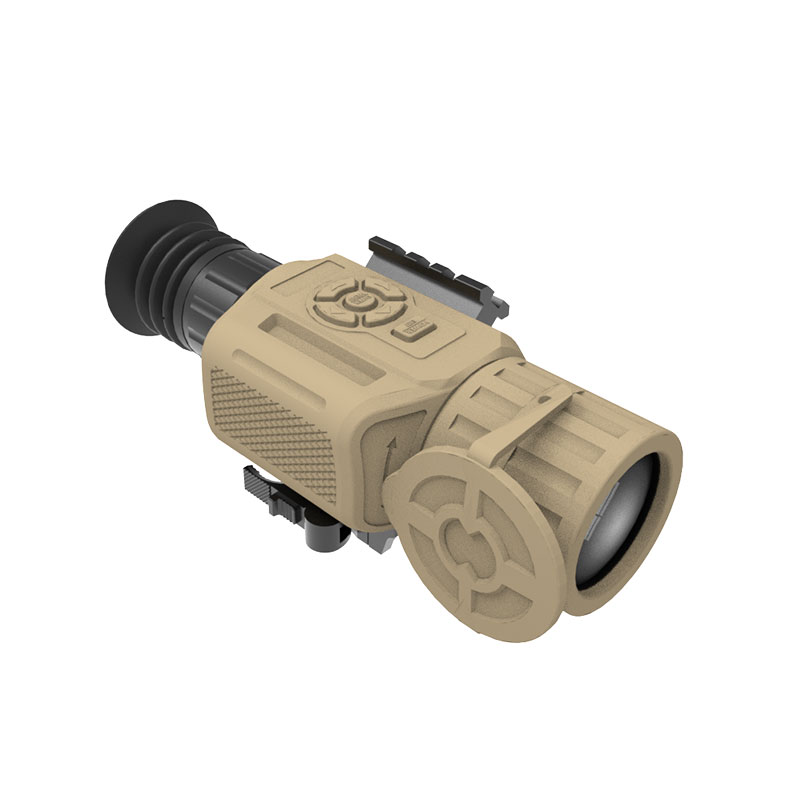
Ground-based fixed monitoring points are limited by their installation locations and can only reflect visibility conditions in specific areas, making it difficult to cover the airspace above vast or complex terrains. For example, in mountainous areas, canyons, coastal regions, etc., there may be dif...
Integrating precision sensors and a smart chip, these portable anemometers can simultaneously measure wind speed, wind direction, and average wind speed with an accuracy of ±0.3 m/s and ±3°. The built-in high-capacity storage chip can store one year's worth of data, making it suitable f...
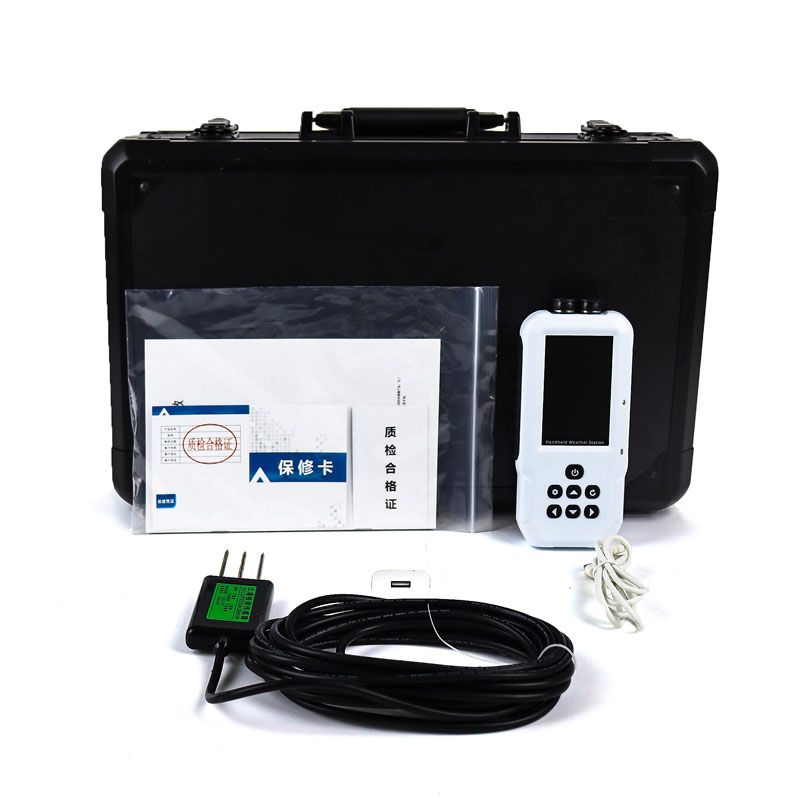
The Handheld Weather meter is extremely lightweight with an ergonomic design that can be held and operated with one hand. It can real-time monitor five core meteorological elements: wind speed, wind direction, temperature, humidity, and atmospheric pressure. Its rugged housing design can withstand c...
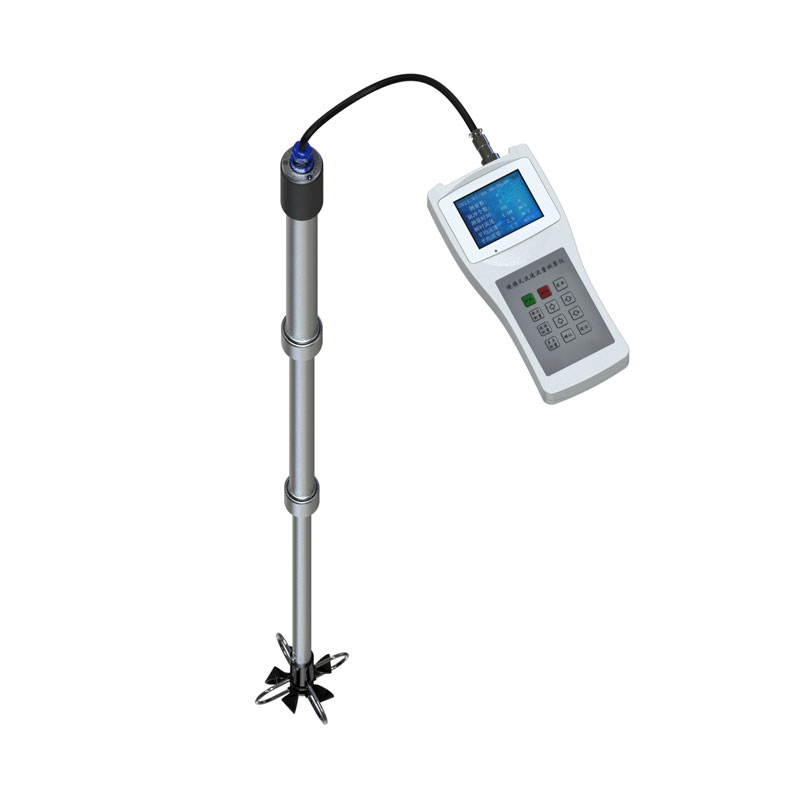
Handheld anemometers measure wind speed and direction using the ultrasonic time-of-flight method. Multiple built-in ultrasonic probes calculate wind field data by measuring the time difference of sound wave propagation in the wind direction. The device has no moving mechanical parts, zero star...


 Skype
Skype
 whatsapp
 mail
mail