Tianqiong Sensor IOT Technology Co., Ltd
Sales Manager:Ms. Emily Wang
Cel,Whatsapp,Wechat:+86 15898932201
Email:info@fengtutec.com
Add:No. 155 Optoelectronic Industry Accelerator, Gaoxin District, Weifang, Shandong, China


Sales Manager:Ms. Emily Wang
Cel,Whatsapp,Wechat:+86 15898932201
Email:info@fengtutec.com
Add:No. 155 Optoelectronic Industry Accelerator, Gaoxin District, Weifang, Shandong, China
time:2026-07-15 10:48:30 source:Weather Station viewed:34 time
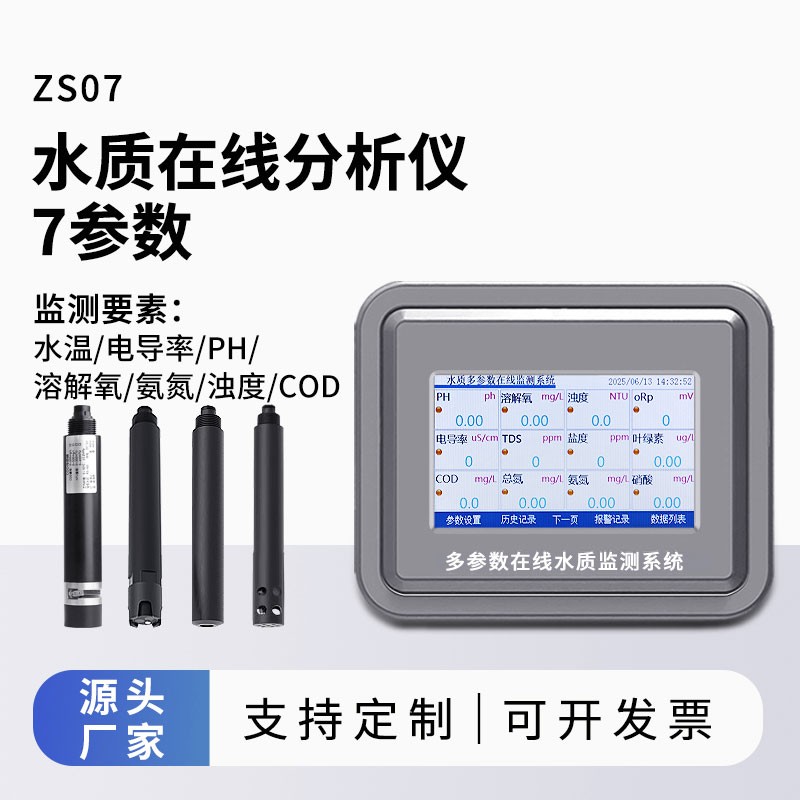
Integrated water quality analyzers enable online monitoring of key parameters such as conductivity, pH, dissolved oxygen, ammonia nitrogen, turbidity, COD, and water temperature. They support sensor expansion as well as the storage and export of historical data. Equipped with an RS485 interface compatible with the MODBUS-RTU protocol, these devices can connect to systems like PLCs and DCSs, making them widely applicable in fields such as environmental monitoring, aquaculture, and industrial pollution source tracking.
An integrated water quality analyzer is an online monitoring instrument that combines multiple water quality sensors into a single unit. It simultaneously monitors key parameters—including conductivity, pH, dissolved oxygen, ammonia nitrogen, turbidity, COD (Chemical Oxygen Demand), and water temperature—rapidly and accurately recording data on these water quality indicators. Utilizing detection principles such as electrochemical methods, optical scattering, and spectrophotometry, the instrument offers high measurement accuracy and rapid response times.
These analyzers support the addition of various multi-parameter sensors, allowing users to flexibly configure the setup based on specific monitoring needs and application scenarios. The device features robust data management capabilities, recording and storing historical monitoring data and alarm logs; the ability to export historical data facilitates data traceability and analysis. Regarding communication, the instrument is equipped with an RS485 interface supporting the MODBUS-RTU protocol, enabling data transmission through connections with PLCs, DCS control systems, SCADA/configuration software, DTUs, and other equipment. Default communication parameters are: 9600 bps baud rate, 1 start bit, 8 data bits, no parity bit, and 1 stop bit.
Integrated water quality analyzers have a wide range of applications. In environmental monitoring, they are used for the online monitoring of surface waters such as rivers, reservoirs, and lakes. In university laboratories and research institutions, they provide a convenient means of testing for water quality analysis in both education and research. In the aquaculture industry, they enable real-time monitoring of critical indicators—such as dissolved oxygen, pH, and ammonia nitrogen—to ensure the healthy growth of aquatic products. Additionally, these devices are used for water quality monitoring in the food and beverage industry, sample analysis by third-party testing agencies, swimming pool water management, and the monitoring of industrial pollution source emissions. Their integrated design ensures a compact footprint, simple installation, and easy maintenance.
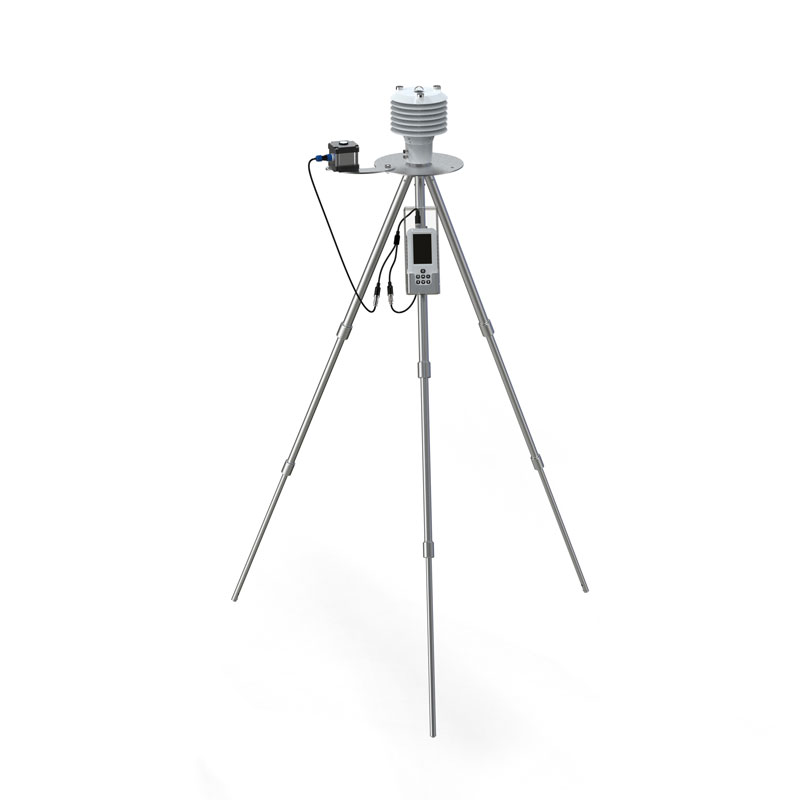
The portable weather station is an integrated, low-power, high-precision automatic observation device. It supports multiple transmission modes, can be quickly deployed, and can monitor twelve types of meteorological and environmental elements in real time. It is suitable for monitoring operati...
Field Weather Instrument is a highly integrated, low-power, and portable meteorological station. Featuring a carbon fiber main support structure, it integrates a meteorological sensor unit, a compass, a tablet computer, and a field shovel within a single wheeled trolley case. This design enabl...
Self-cleaning Turbidity Sensor sensor uses the 90° scattering light method to measure the concentration of suspended particles in liquids, with a range of 0-1000 NTU and an accuracy of ±1%. It features a built-in automatic cleaning brush that periodically cleans the optical window, and, comb...
A fully automated online hydrological monitoring system, based on K-band planar radar microwave technology, can collect water level, flow velocity, flow rate, and rainfall data non-contactly. Adaptable to various hydrological scenarios, it is resistant to environmental interference, easy to op...


 Skype
 whatsapp
 mail