Tianqiong Sensor IOT Technology Co., Ltd
Sales Manager:Ms. Emily Wang
Cel,Whatsapp,Wechat:+86 15898932201
Email:info@fengtutec.com
Add:No. 155 Optoelectronic Industry Accelerator, Gaoxin District, Weifang, Shandong, China


Sales Manager:Ms. Emily Wang
Cel,Whatsapp,Wechat:+86 15898932201
Email:info@fengtutec.com
Add:No. 155 Optoelectronic Industry Accelerator, Gaoxin District, Weifang, Shandong, China
time:2025-03-13 14:18:55 source:Weather Station viewed:468 time
Wheat seedling conditions are usually classified into strong seedlings, robust seedlings (including first - class and second - class seedlings), and weak seedlings (third - class seedlings). For different seedling conditions, differential management measures need to be taken during key growth stages such as the over - wintering period, green - up period, regrowth period, and jointing and booting period. Through scientific regulation, promote the transformation of weak and strong seedlings into robust seedlings, and ensure the stable growth of robust seedlings.
However, during the growth process of wheat, it often faces multiple challenges such as complex climate, soil, and pests and diseases, making it difficult to manage the seedling conditions. How can we scientifically and accurately grasp the growth dynamics of wheat and take timely countermeasures? The Plant Growth Monitoring System is the "intelligent brain" to solve this problem!
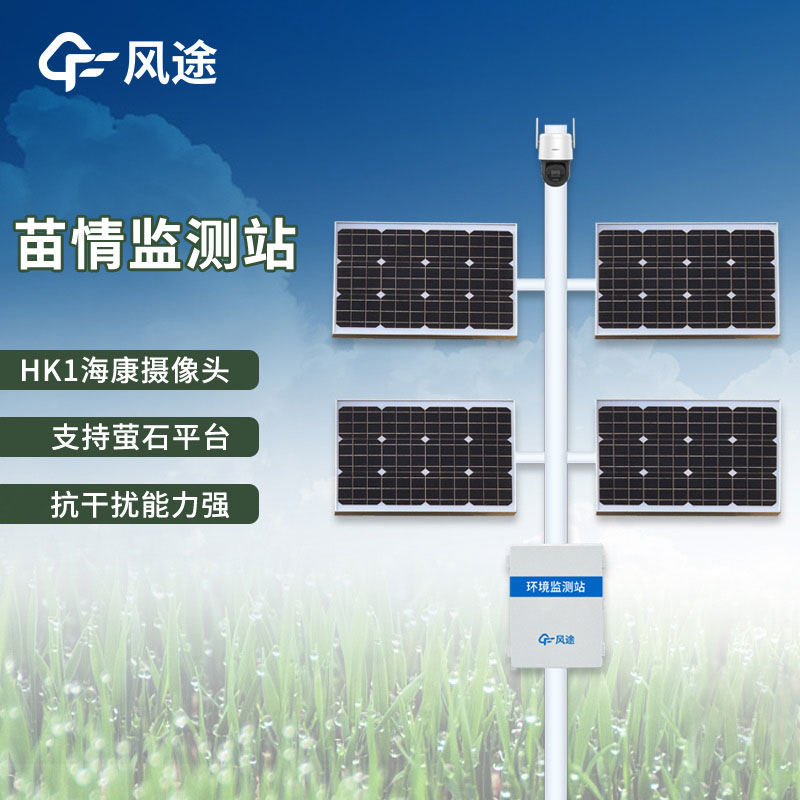
The Plant Growth Monitoring System is a modern agricultural monitoring system integrating technologies such as the Internet of Things, big data, and artificial intelligence. By deploying devices such as sensors and cameras, it can collect real - time data on the growth environment of wheat (such as temperature, humidity, light, soil moisture, etc.) and seedling condition information (such as plant height, leaf area, pest and disease conditions, etc.), and analyze them in combination with expert models to provide farmers with accurate field management suggestions.
Advantages of the Plant Growth Monitoring System
Real - time Monitoring and Precise Grasp
It can monitor the growth of wheat around the clock, detect abnormal seedling conditions in a timely manner, and avoid losses caused by information lag.
Data - driven and Scientific Decision - making
Through big data analysis, it can predict the growth trend of wheat and provide accurate management plans for fertilization, irrigation, pest and disease control, etc., helping farmers make scientific decisions.
Remote Management, Time - saving and Labor - saving
Farmers do not need to go to the fields frequently. They can remotely view seedling condition data and expert suggestions through mobile phones or computers, greatly saving labor costs.
Disaster Early Warning and Risk Reduction
It can combine meteorological data to early - warn of natural disasters such as droughts, freezes, and floods, helping farmers take timely protective measures and reduce losses.
Real Cases
Case 1: Regulation of Strong Seedlings - Scientific Compaction to Control Growth and Promote Vigor
In a certain place in Anhui, the monitoring station found that the wheat in some fields was growing too vigorously, with a risk of lodging. Technicians, based on the meteorological condition that the daily average temperature was > 3℃, resolutely took compaction measures and sprayed "Aizhuangfeng" to control growth. The application time of the green - up fertilizer was accurately adjusted to the late jointing stage, effectively suppressing the over - growth trend, promoting root development, and ensuring stable growth in the later stage.
Case 2: Promoting the Growth of Weak Seedlings - Precise Fertilization Supplementation and Warming to Protect Seedlings
Monitoring in a certain place in Henan showed that the seedling conditions in some fields were weak due to the low temperature in the early stage. Technicians suggested applying 5 - 10 kg of urea per mu and covering with straw to increase the temperature. Just two weeks later, the leaves of the weak seedlings turned green, the number of secondary roots increased significantly, and the seedling condition grade was upgraded from third - class to second - class, laying a solid foundation for high yields in the later stage.
Case 3: Stable Yields of Robust Seedlings - Delaying Nitrogen Fertilization to Improve Quality and Efficiency
The monitoring station in a certain place in Shaanxi found that the wheat in the fields of robust seedlings was growing steadily, but there was a risk of late - stage fertilizer deficiency. Technicians promoted the technology of delaying nitrogen fertilization and accurately top - dressed during the jointing stage, increasing the ear - bearing rate. Eventually, the number of ears per mu in this field increased by 10%, and the grain plumpness was significantly improved, achieving the goal of high and stable yields.
Five Elements Micrometeorological Instrument, model FT-WQX5S, features an exterior made of stainless steel. This material not only boasts high strength, capable of withstanding a certain degree of external impact, but also exhibits excellent anti-oxidation and anti-corrosion properties. This makes i...
Soil moisture monitoring is a crucial link in modern agricultural water-saving and drought resistance. By scientifically measuring and analyzing soil moisture conditions, it provides accurate data support for irrigation decisions and drought resistance scheduling, which is of great significance for...
Instrument for measuring water flow velocity consists of a propeller-type flow velocity sensor, a flow velocity calculator, and a measuring rod. It features a velocity measurement range of 0.06 to 8.00 m/s and a measurement error margin of ≤1.5%. Once the signal cable is connected, the device...
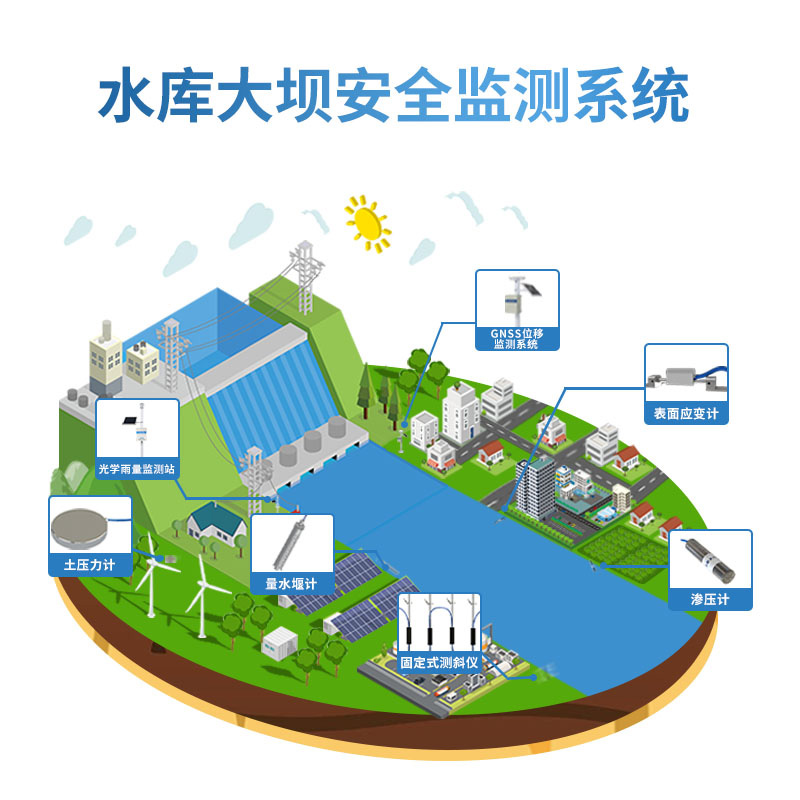
The integrated GNSS device integrates satellite positioning antennas, computing boards, wireless communication, and power management into a single unit. It uses differential RTK technology to acquire millimeter-level displacement data, boasts an IP67 or higher protection rating, and low power...


 Skype
Skype
 whatsapp
 mail
mail