Tianqiong Sensor IOT Technology Co., Ltd
Sales Manager:Ms. Emily Wang
Cel,Whatsapp,Wechat:+86 15898932201
Email:info@fengtutec.com
Add:No. 155 Optoelectronic Industry Accelerator, Gaoxin District, Weifang, Shandong, China


Sales Manager:Ms. Emily Wang
Cel,Whatsapp,Wechat:+86 15898932201
Email:info@fengtutec.com
Add:No. 155 Optoelectronic Industry Accelerator, Gaoxin District, Weifang, Shandong, China
time:2026-05-14 11:17:49 source:Weather Station viewed:239 time
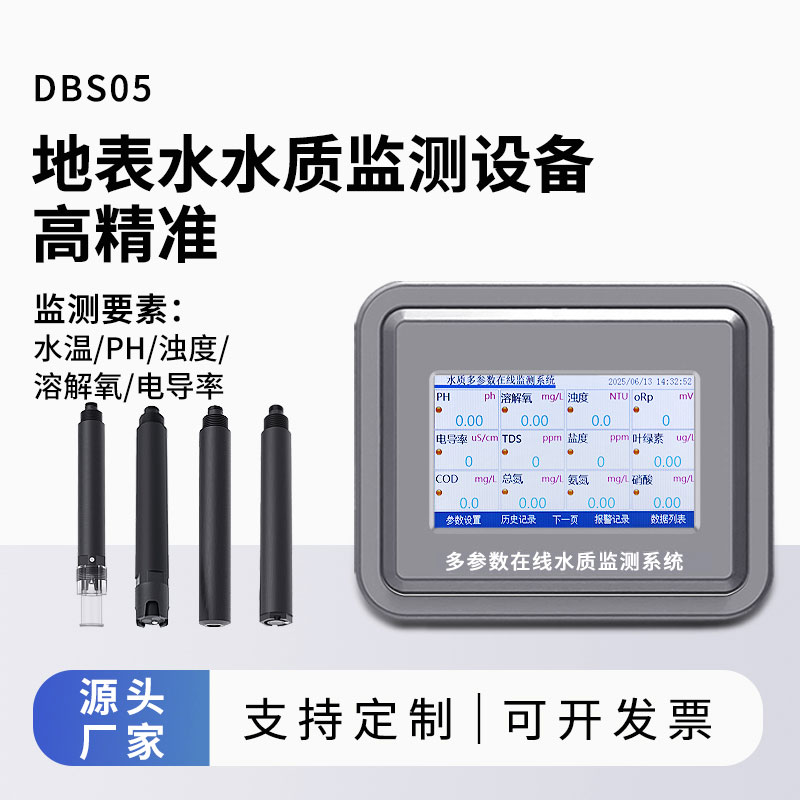
Surface water quality monitoring uses five standard parameters—water temperature, pH, dissolved oxygen, conductivity, and turbidity—for continuous real-time data collection via online automatic monitoring stations or portable multi-parameter analyzers. This provides fundamental data support for drinking water safety assessments, water function zone compliance evaluations, and pollution source tracing.
Surface water quality monitoring refers to the systematic detection of the physical, chemical, and biological characteristics of water bodies such as rivers, lakes, reservoirs, and canals. According to the *Surface Water Environmental Quality Standard* (GB3838-2002), surface water is classified into five categories based on its water quality function, applicable to different protection targets, such as source water, drinking water sources, and industrial water. The core content of surface water quality monitoring includes the five standard parameters: water temperature, pH, dissolved oxygen, conductivity, and turbidity. These five indicators are fundamental items reflecting the basic condition of water bodies, and their values can be directly obtained from sensor probes without complex operating procedures, providing real-time display of water quality trends. Regarding monitoring frequency, automatic monitoring stations are typically set to monitor once per hour to ensure data continuity and timeliness.
In the specific implementation of water quality monitoring, temperature is measured using thermocouples or resistance thermometers, covering a range of 0 to 40℃, with reproducibility within ±0.1℃. pH is measured using the glass electrode method with temperature compensation, covering a pH range of 2 to 12, with a response time not exceeding 0.5 minutes. Dissolved oxygen is measured using the membrane electrode method, with a measurement range of 0 to 20 mg/L, suitable for assessing the self-purification capacity of water bodies and the living conditions of organisms. Conductivity is measured using the electrode method, with a measurement range of 0 to 5000 μS/cm, reflecting the concentration of ions in the water. Turbidity is measured using transmitted scattering and surface scattering methods, with a measurement range of 0 to 1000 FTU, used to determine the degree of turbidity and suspended solids content in the water.
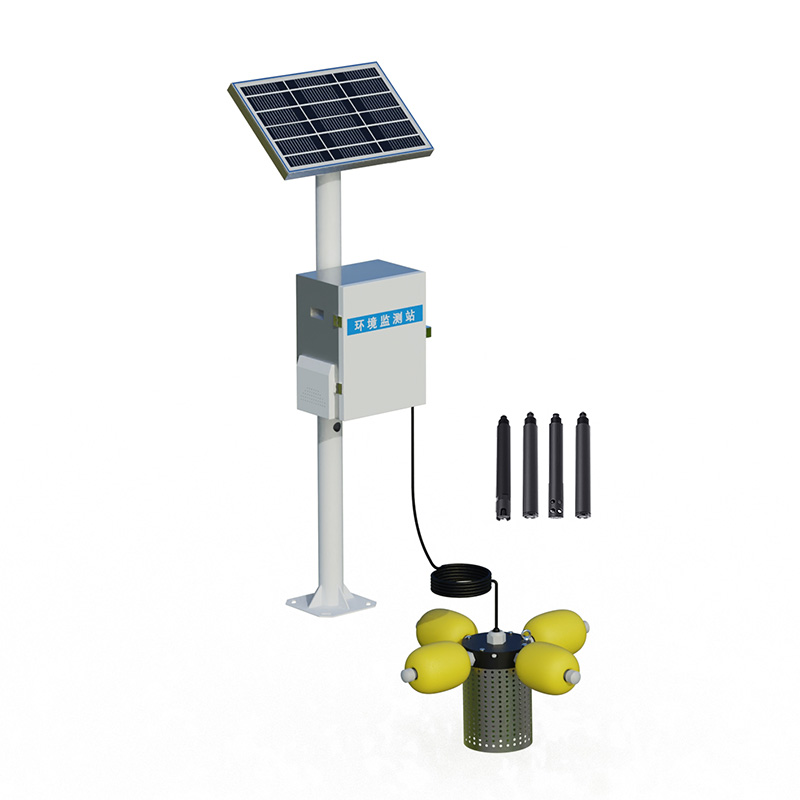
With the development of water quality monitoring technology, surface water quality monitoring has gradually transitioned from traditional manual sampling and laboratory analysis to a combination of online automatic monitoring and portable rapid detection. The online automatic water quality monitoring station integrates a water sampling and distribution unit, a control unit, a multi-parameter analysis unit, and a data transmission unit. It can continuously monitor nine core water quality indicators, including water temperature, pH, dissolved oxygen, conductivity, turbidity, permanganate index, ammonia nitrogen, total phosphorus, and total nitrogen. Taking the FT-WMSM online multi-parameter water quality analyzer as an example, this device is designed for unattended outdoor scenarios. It features integrated water sampling and distribution, pretreatment, and backflushing self-cleaning devices, occupying approximately 2 square meters. It exchanges data with the monitoring center via TCP/IP communication protocol and the HJ 212 data transmission standard, allowing managers to view water quality monitoring results in real time via a webpage.
In the practical application of surface water quality monitoring, ecological and environmental departments establish automatic water quality monitoring networks based on national and provincial control sections to conduct routine supervision of watershed water quality. Surface water quality monitoring data is widely used in various aspects, including safety early warning for drinking water sources, assessment of eutrophication levels, pollution source tracing, and water environment capacity evaluation. Water quality monitoring is also being expanded by combining biological monitoring, remote sensing monitoring, and AI video analysis technologies. For example, water quality remote sensing technology can determine indicators such as chlorophyll a and total suspended solids based on the different colors of water bodies due to differences in water quality. AI video analysis technology can automatically identify abnormal behaviors such as ship leaks, illegal sewage discharges, and unauthorized intrusions at drinking water sources, further improving the coverage and intelligence level of surface water quality monitoring.
Negative oxygen ions exert a significant impact on the physiological activities of the human body, and their effects are mainly realized through the nervous system and blood circulation process. For this reason, the concentration of negative oxygen ions in the air has become one of the key indicator...
The Ultrasonic weather station utilizes ultrasonic technology to measure meteorological elements. When ultrasonic waves propagate in the air, their propagation speed is affected by air flow. When the wind blows from different directions, the propagation times of ultrasonic waves in the downwind and...
The Termite Monitoring System is a specialized device designed for the prevention and monitoring of termites in buildings, characterized by its installation requirement to be buried in the soil surrounding structures. This design concept is derived from the biological habits of termites and their in...
Online ORP Meter is an instrument capable of real-time online monitoring of oxidation-reduction potential (ORP) in water, also known as an online oxidation-reduction potential analyzer. It is widely used in industrial and laboratory fields, allowing for rapid detection of ORP values. It is suitable for on-site testing or continuous real-time monitoring of surface water, tap water, etc. Its main applications include water treatment plants, water supply networks, swimming pools, cooling water systems, and various water treatment projects....


 Skype
Skype
 whatsapp
 mail
mail