Tianqiong Sensor IOT Technology Co., Ltd
Sales Manager:Ms. Emily Wang
Cel,Whatsapp,Wechat:+86 15898932201
Email:info@fengtutec.com
Add:No. 155 Optoelectronic Industry Accelerator, Gaoxin District, Weifang, Shandong, China


Sales Manager:Ms. Emily Wang
Cel,Whatsapp,Wechat:+86 15898932201
Email:info@fengtutec.com
Add:No. 155 Optoelectronic Industry Accelerator, Gaoxin District, Weifang, Shandong, China
time:2026-05-19 11:02:07 source:Weather Station viewed:211 time
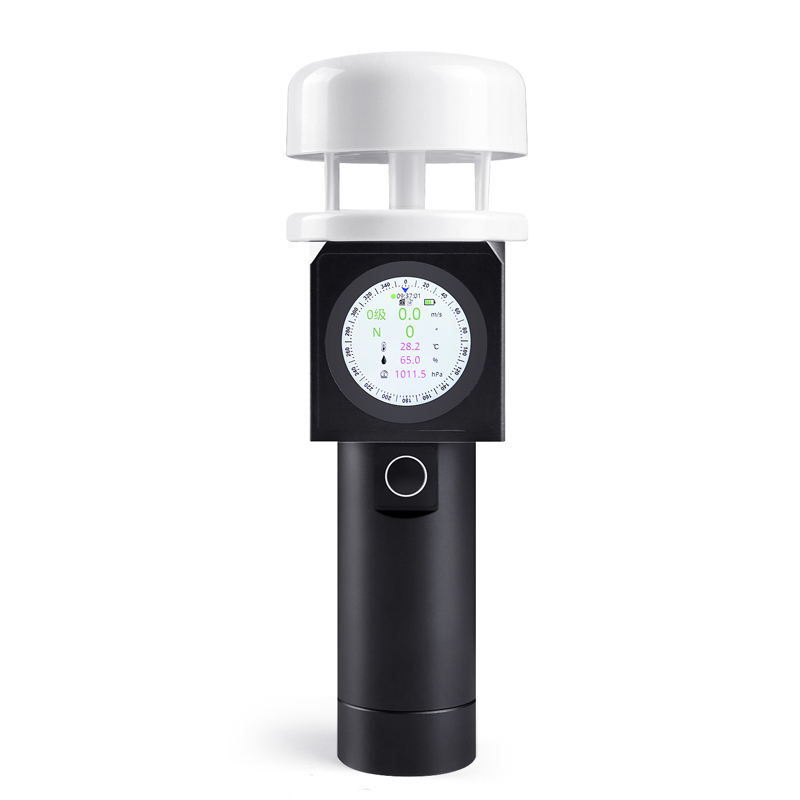
outdoor Weather Station features a handle, power supply, display screen, and wireless transmission module. It integrates three core technologies: ultrasonic sensing, multi-module integration, and smart IoT, making it suitable for various emergency short-term meteorological observations and mobile meteorological monitoring scenarios.
outdoor Weather Station is an intelligent, lightweight meteorological device integrating data observation, recording, and analysis. It is primarily used in meteorology, agriculture and forestry, environmental protection, and emergency monitoring. The device adopts an integrated structural design, weighing no more than 5 kg. It is equipped with a retractable aluminum alloy bracket and a shock-absorbing protective case, allowing for rapid deployment by a single person in 2 minutes. The device integrates the measurement functions of multiple meteorological parameters such as wind speed, wind direction, temperature, humidity, air pressure, and optical rainfall. Some models are expanded to include a twelve-element integrated sensor, simultaneously monitoring environmental factors such as PM2.5, PM10, CO, SO₂, NO₂, and O₃.
The core technologies of outdoor Weather Station are reflected in two aspects: ultrasonic wind speed and direction measurement and IoT data acquisition. The top-cover concealed ultrasonic probe uses continuously variable frequency ultrasonic signals to detect wind speed and direction by measuring relative phase changes. The wind speed measurement range is 0 to 40 m/s, and the wind direction angle is 0 to 359 degrees, outputting 16 wind direction positions. This principle avoids the wear and maintenance problems of moving parts in traditional mechanical anemometers. The integrated sensor simultaneously collects parameters such as air temperature (-40℃ to +80℃), humidity (0% to 100%), and air pressure (300 hPa to 1100 hPa). The device can be optionally equipped with expansion modules for illuminance (0 to 200,000 lux), radiation (0 to 2000 W/m²), UV index (0 to 15), and PM2.5/PM10 (0 to 2000 μg/m³).
For data transmission, outdoor Weather Station supports multiple communication methods such as GPRS, Bluetooth, and RS485, and has a built-in data storage space of no less than 500,000 records. Sensor data is uploaded to the cloud platform in a single transmission via a digital communication interface. Users can view real-time data, historical curves, and trend analysis through a mobile app or PC. The low-power design keeps power consumption below 2W, and the lithium battery provides over 32 hours of continuous operation. Solar power is also available as an option for long-term unattended operation in the field.
Typical applications of outdoor Weather Station include emergency meteorological observation, ecological scientific research, agricultural farmland environmental monitoring, and meteorological support for transportation and airports. The device's commission-free design allows for rapid deployment. All sensor specifications meet the observation standards of international meteorological organizations, making it widely applicable in meteorology, agriculture, forestry, environmental protection, marine science, airports, ports, scientific research, and educational institutions.
Corn GMO Detector is a specialized solution custom-designed for maize. Based on real-time quantitative fluorescence technology, the system consists of a 4-channel, 16-well real-time quantitative PCR instrument and a portable accessory kit. It enables rapid and precise detection of transgenic c...
An automatic weather station is a highly integrated, low-power, and quickly installable automatic meteorological observation device. It uses a twelve-element integrated sensor to monitor parameters such as wind speed, wind direction, temperature, humidity, air pressure, rainfall, and PM2.5 in...
Meteorological disasters often cause severe losses to agriculture. Among the numerous agrometeorological disasters, drought, flood, frost, and dry-hot wind are relatively common.Drought is a disaster caused by long-term lack of rain or little rain, which leads to soil water shortage and dry air, res...
Complete Weather Station is designed in strict accordance with the observation standards of international meteorological organizations. Utilizing a configuration that combines a data logger with modular sensors, it is capable of measuring between ten and twenty meteorological parameters—inclu...


 Skype
Skype
 whatsapp
 mail
mail