Tianqiong Sensor IOT Technology Co., Ltd
Sales Manager:Ms. Emily Wang
Cel,Whatsapp,Wechat:+86 15898932201
Email:info@fengtutec.com
Add:No. 155 Optoelectronic Industry Accelerator, Gaoxin District, Weifang, Shandong, China


Sales Manager:Ms. Emily Wang
Cel,Whatsapp,Wechat:+86 15898932201
Email:info@fengtutec.com
Add:No. 155 Optoelectronic Industry Accelerator, Gaoxin District, Weifang, Shandong, China
time:2026-04-24 10:45:33 source:Weather Station viewed:247 time
African swine fever detector utilizes real-time quantitative fluorescence PCR technology; the complete unit weighs 5.7 kg and features a temperature control accuracy of ±0.1°C. It serves a dual purpose: functioning as a standard instrument for routine laboratory testing while also being portable enough for rapid, on-site nucleic acid detection in the field. This makes it suitable for a wide range of scenarios, including random sampling at livestock farms, screening at slaughterhouses, and self-inspection by food processing enterprises.
African swine fever detector is a nucleic acid detection device based on real-time quantitative fluorescence PCR technology, specifically designed for the molecular diagnosis of livestock diseases. The instrument features compact external dimensions of 235 × 385 × 175 mm and a total weight of just 5.7 kg. Its small size and lightweight design allow it to function as a standard diagnostic tool within a laboratory environment, while also enabling its transport to field locations for on-site scientific testing. The device supports variable-temperature detection modes and allows for the real-time monitoring of the experimental process through fluorescence excitation and signal acquisition.
In terms of technical configuration, the instrument features a 4-channel, 32-well design equipped with four independent fluorescence detection channels, enabling the simultaneous amplification and analysis of up to 32 samples. The hardware incorporates high-power thermoelectric coolers (Peltier elements) from Marlow, specifically designed for PCR applications, to ensure stable heating and cooling rates. With a guaranteed operational lifespan of 100,000 cycles, the device is built for long-term, stable performance. Temperature control accuracy reaches ±0.1°C, with inter-well temperature uniformity maintained within ±0.3°C. The optical system utilizes independent LED light sources paired with photodiode detectors to ensure the stability and reproducibility of detection data. When used in conjunction with the appropriate detection reagents, this device enables the rapid qualitative detection of target nucleic acids extracted from test samples.
Regarding detection capabilities, the instrument is capable of not only screening for the African Swine Fever virus but also performing rapid quantitative diagnosis for a variety of other livestock diseases, including Avian Influenza, Classical Swine Fever, Porcine Reproductive and Respiratory Syndrome (PRRS), and Pseudorabies. Utilizing the principles of fluorescence excitation and acquisition, the device plots real-time experimental data as fluorescence curves, which are displayed on the instrument's interface. Upon completion of the experiment, the system automatically performs data fitting and analysis, generating a comprehensive experimental report in PDF format for easy archiving and printing. The instrument offers dual operational modes: it can be connected to a computer for control within a laboratory setting, or it can function as a standalone unit via its 7-inch full-color touchscreen display, utilizing built-in analysis software to independently perform quantitative analysis.
In terms of application scenarios, this device provides comprehensive coverage of the entire testing chain within the livestock industry—spanning everything from production to processing. At breeding farms, it can be utilized for the periodic spot-checking of swine herd health, enabling the timely detection of infected individuals. At slaughterhouses and meat processing facilities, it serves to screen live pigs and meat products for pathogens, thereby preventing diseased pork from entering the market. Furthermore, agricultural and rural affairs departments, livestock bureaus, and inspection and quarantine agencies employ this device for official sampling and disease surveillance activities. Select models of the instrument are available with optional, complete rapid-testing kits, catering to the distinct requirements of both laboratory-based analysis and mobile field testing.
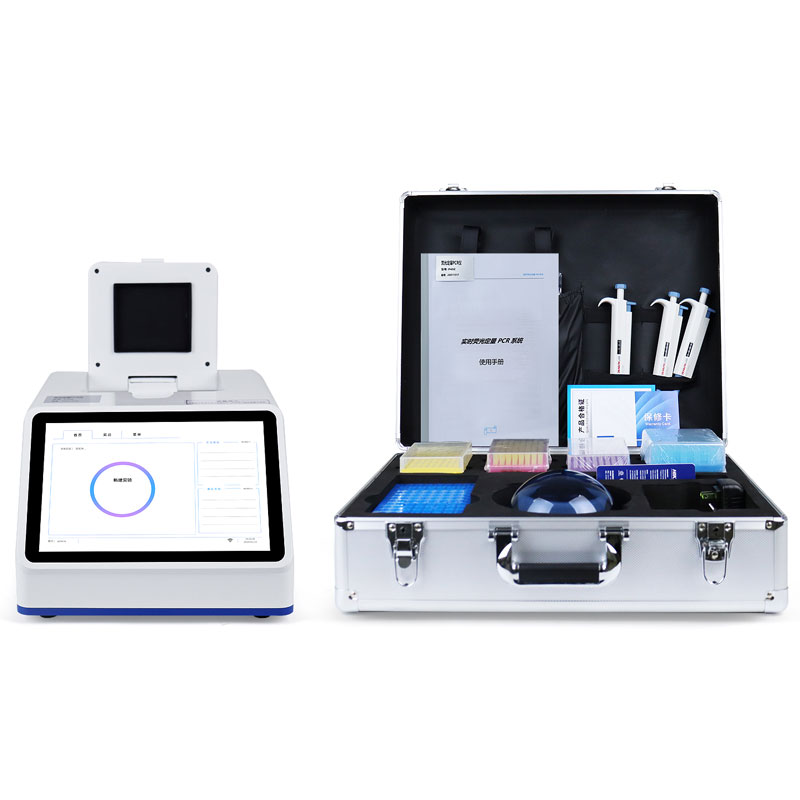
Rapid Meat Authenticity Detector is a specialized device that utilizes real-time fluorescence PCR technology to detect animal-derived ingredients. It enables the rapid qualitative identification of various meats—including pork, beef, lamb, horse, donkey, duck, and chicken. The device is user-...
As a device widely used in fields such as water conservancy monitoring, environmental governance, and engineering construction, a flow meter can monitor water flow velocity data in real time with high accuracy, providing a scientific basis for decision-making. Currently, mainstream flow meters on th...
Gridization is a technical means that divides the geographical space into several regular or irregular grid units. Through independent monitoring, analysis, and management of each grid, it achieves refined management of the entire region. In the field of environmental monitoring, grid-based manageme...
As environmental pollution becomes increasingly complex, the limitations of traditional air monitoring methods are gradually becoming apparent. The national ambient air monitoring network has a limited number of stations and high costs, and the method of using points to represent the whole area resu...


 Skype
Skype
 whatsapp
 mail
mail