Tianqiong Sensor IOT Technology Co., Ltd
Sales Manager:Ms. Emily Wang
Cel,Whatsapp,Wechat:+86 15898932201
Email:info@fengtutec.com
Add:No. 155 Optoelectronic Industry Accelerator, Gaoxin District, Weifang, Shandong, China


Sales Manager:Ms. Emily Wang
Cel,Whatsapp,Wechat:+86 15898932201
Email:info@fengtutec.com
Add:No. 155 Optoelectronic Industry Accelerator, Gaoxin District, Weifang, Shandong, China
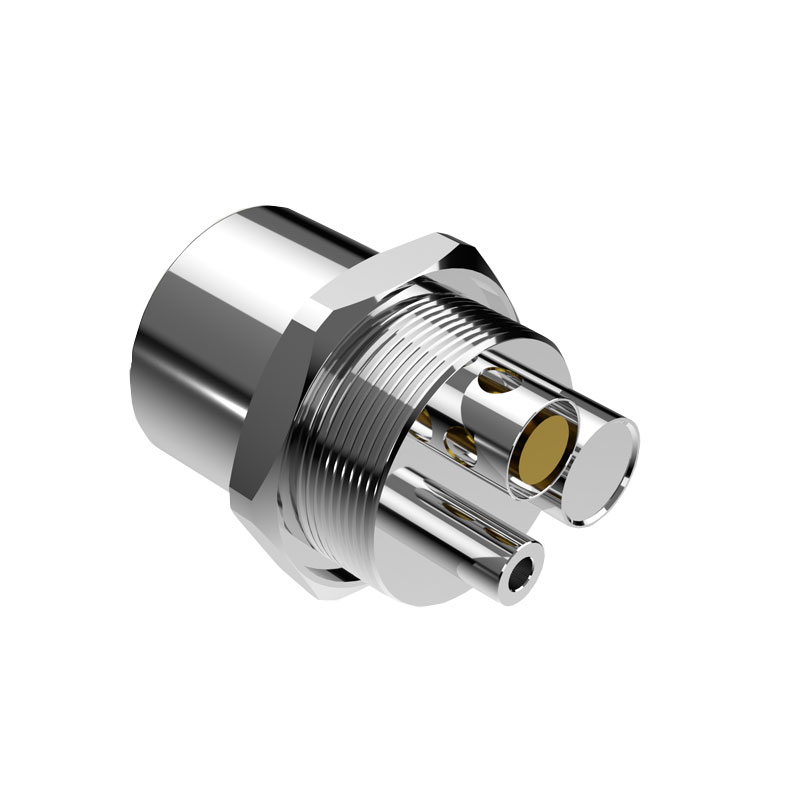
Model:QM-7000
Brand:tianqiong
1、Multi-parameter oil quality sensor Product Introduction
Multi-parameter oil quality sensor monitors key lubrication characteristics, integrating the measurement of oil-in-water content, free water, dielectric constant, ferrous debris, pressure, and fluid level.Multi-parameter oil quality sensor is used for real-time, online monitoring of lubricating oil health and wear. Continuous monitoring of the oil condition improves condition-based maintenance efficiency, optimizes oil change intervals, and reduces reliance on offline analysis.
Multi-parameter oil quality sensor integrates electrochemical impedance spectroscopy (EIS) to detect oil impedance spectra, ultrasonic viscosity monitoring to detect oil viscosity and density, inductive magnetic field analysis to assess equipment wear, and micro-water monitoring to detect trace amounts of moisture and water activity in the oil. It can also monitor dissolved and free water, thus obtaining the oil's health status. Based on our years of experience in online oil monitoring, it analyzes the oil health index. It assesses the wear of lubricating oil additives, monitors oil aging, and determines oil contamination levels.
Multi-parameter oil quality sensor helps users improve equipment asset health management, assisting in maintenance decisions based on real-time monitoring results and preventing abnormal wear and corrosion caused by oil aging and contamination.
2、Multi-parameter oil quality sensor Features
Wide range of applications, suitable for all lubricating oils
Simultaneous measurement of multiple parameters allows for timely detection of lubricating oil contamination and aging, helping users optimize oil change intervals.
Adsorption-based wear particle concentration monitoring enables timely assessment of equipment wear conditions.
Includes pressure monitoring; real-time oil level monitoring prevents abnormal equipment wear caused by excessive or insufficient oil.
No need for customer-calibrated free water; sensor features automatic calibration.
Analyzes oil contamination sources for more targeted oil fault analysis.
Big data oil analysis algorithms help customers solve diagnostic challenges; includes built-in health index analysis.
24/7 uninterrupted monitoring provides timely feedback on oil status.
Strong compatibility; compatible with CAN-J1939 and RS485-Modbus RTU.
Suitable for oil monitoring under high-speed flow conditions; no need for static oil monitoring; stronger viscosity interference resistance than similar sensors; robust and durable.
Integrated structural design for easy installation.
3、Multi-parameter oil quality sensor Application areas
Lubricating oil is the "blood" of critical equipment. Lubricating oil failure directly leads to abnormal wear of mechanical structures and critical functional components, a major cause of large equipment failures and serious accidents.
Multi-parameter oil quality sensor can continuously monitor the aging and contamination levels of the oil in the hydraulic system 24 hours a day, providing real-time feedback on the oil's operating status. This helps users avoid or mitigate equipment failures caused by lubricating oil failure.
Multi-parameter oil quality sensor can be widely used in industries such as power, mining, cement, shipbuilding, military, industrial manufacturing, papermaking, petrochemicals, transportation, metallurgy, aviation, oil fields, and ports, for applications such as wind turbine gearboxes, aircraft/helicopter gearboxes, hydraulic transmission systems, machining centers, steam turbines, gearboxes, and gasoline/diesel engines.
4、Multi-parameter oil quality sensor Technical parameters
Ferromagnetic Wear Particle Concentration
Detection Range: 0~100%
Resolution: 0.01%
Dielectric Constant
Dielectric Constant: 1~6
Dielectric Constant Accuracy: ±0.01 (Absolute Accuracy)
Water Activity
Measurement Range: 0~1aw
Measurement Accuracy:
0~0.6±0.02aw
0.6~0.9±0.03aw
0.9~1±0.04aw
Response Time (Typical): <1 minute
Dissolved Water Content
Measurement Range: 0~10000ppm, 0~1% (Applicable to mineral transformer oil)
Measurement Accuracy: ±10%
Free Water Content
Quantity Range (Absolute Accuracy): 0~5% (±0.1%), 5%~reversal point (±2%), 0~100%
Temperature Stability: 0.01% water/℃
Resolution: 100ppm
Viscosity
Dynamic Viscosity: 1~10000CP, Accuracy: 2%
Kinematic Viscosity: 1~12000CST, Accuracy: 2%
Density
Measurement Range: 600kg/m^3~1300kg/m^3
Accuracy: 2%
Pressure and Level
Pressure Range: 0~100kPa……0~2MPa
Overload Pressure: 1.5 times full-scale pressure
Accuracy: ±0.5%F.S.BFSL 25℃
Total Error: ±1.0%F.S. (including calibration error and temperature drift)
Level Range: 0~1000mm (customizable)
Accuracy: ±0.5%F.S.BFSL 25℃
Temperature
Measuring Range: −40~120°C
Accuracy (at+25°C): ±0.2°C
Operating Temperature: −40~+85°C
Storage Temperature: −40~+85°C
Permissible Oil Temperature: −40~+120°C
Health Index: 0~100 (Health level and alarm points can be customized according to customer needs)
Output
Digital Signal: RS485-Modbus RTU (RS232, CAN-J1939, CANopen optional)
Other
Mechanical Interface: G1
Pressure Range: Up to 10 MPa
Materials: Hard anodized aluminum, stainless steel (material optional)
Protection Rating: IP67
Power Supply: DC 9V~36V
Power Supply Current: <5mA + Load Current
Transmitter Weight: <300g
Total Package Weight: <370g
Cable Specification: M8, 4 cores
Cable Length: 2 meters
Standards Compliance: CE certified EN 61326-1 EN 61326-2-3 ICES-003 Class B
There is a hidden hazard invisible to the naked eye in solar photovoltaic panels —— hidden cracks. This hazard can negatively impact the performance and lifespan of photovoltaic power generation systems. Let’s take a detailed look at it.Hidden cracks refer to fine cracks that occur in the cells o...
Utilizing core technologies such as ultrasonic sensing, the portable mobile weather station features a convenient aluminum alloy handle, supports TF card storage and Bluetooth app communication, and can monitor multiple meteorological elements. It can also be mounted on a tripod for temporary...
Real Time PCR is a high-precision instrument for real-time monitoring of the PCR amplification process, featuring an 8-well single-channel design. By combining PCR amplification and fluorescence detection technology, it enables rapid and accurate quantitative analysis of nucleic acid targets,...
Meteorological disasters often cause severe losses to agriculture. Among the numerous agrometeorological disasters, drought, flood, frost, and dry-hot wind are relatively common.Drought is a disaster caused by long-term lack of rain or little rain, which leads to soil water shortage and dry air, res...


 Get a Free Quote
 Skype
Skype
 whatsapp
 mail
mail