Tianqiong Sensor IOT Technology Co., Ltd
Sales Manager:Ms. Emily Wang
Cel,Whatsapp,Wechat:+86 15898932201
Email:info@fengtutec.com
Add:No. 155 Optoelectronic Industry Accelerator, Gaoxin District, Weifang, Shandong, China


Sales Manager:Ms. Emily Wang
Cel,Whatsapp,Wechat:+86 15898932201
Email:info@fengtutec.com
Add:No. 155 Optoelectronic Industry Accelerator, Gaoxin District, Weifang, Shandong, China
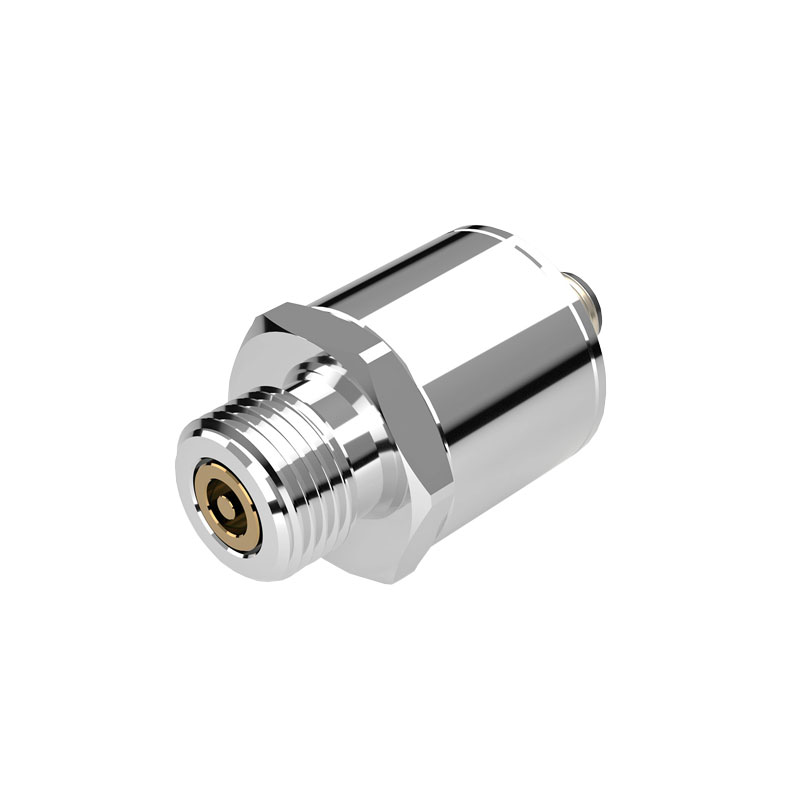
Model:U-1000
Brand:tianqiong
1、Oil conductivity sensor Product Introduction
Oil conductivity sensor is used to measure the electrical conductivity of oil, enabling real-time, online measurement of changes in various petroleum products such as lubricating oils and fire-resistant oils.Oil conductivity sensor is used for real-time, online monitoring of the volume resistivity of oils such as fire-resistant oils and lubricating oils. Resistivity reflects the health of the oil. Continuous monitoring of oil condition can improve condition-based maintenance efficiency, optimize oil change intervals, and reduce reliance on offline analysis.
Oil conductivity sensor uses electrochemical impedance spectroscopy (EIS) technology to detect the oil's impedance spectrum, thereby obtaining the oil's health status. Impedance spectroscopy can detect multiple parameters and can be used to assess the wear and tear of lubricating oil additives, monitor the degree of oil aging, and determine the degree of oil contamination.
Oil conductivity sensor helps users improve the health management of equipment assets, assisting maintenance decisions based on real-time monitoring results and preventing abnormal wear and corrosion caused by oil aging and contamination.
2、Oil conductivity sensor Features
Widely applicable, suitable for all fire-resistant oils, lubricating hydraulic fluids, etc.
Simultaneous measurement of multiple frequencies and parameters promptly detects fire-resistant oil contamination and aging, helping users optimize oil change intervals.
Big data oil analysis algorithms help customers solve diagnostic challenges.
24/7 uninterrupted monitoring provides timely feedback on oil status.
Highly compatible with CAN-J1939 and RS485-Modbus RTU.
No moving parts, robust and durable, compact and lightweight, easy to install.
3、Oil conductivity sensor Application areas
Fire-resistant oils and lubricating oils are the "blood" of critical equipment. Lubricant failure directly leads to abnormal wear of mechanical structures and critical functional components, a major cause of large equipment failures and serious accidents.
Oil conductivity sensor can continuously monitor the aging and contamination levels of oil in the oil circuit 24 hours a day, reflecting the oil's operating status in real time. This helps users avoid or mitigate equipment failures caused by lubricant failure.
Oil conductivity sensor can be widely used in industries such as power, mining, cement, shipbuilding, military, industrial manufacturing, papermaking, petrochemicals, transportation, metallurgy, aviation, oil fields, and ports, including applications such as wind turbine gearboxes, aircraft/helicopter gearboxes, hydraulic transmission systems, machining centers, steam turbines, gearboxes, electric vehicle motor cooling equipment, and gasoline/diesel engines.
4、Oil conductivity sensor Technical parameters
Online Monitoring System
Medium: Fire-resistant oil
Test State: Flowing
Test Name: Volume Resistivity
Measuring Range: X×10⁸-----X×10¹¹
Unit: Ω.cm
Specific Quantity: 6×10⁸-----6×10¹¹
Unit: Ω.cm
Mechanical Interface: G1/2, M24*1.5, etc. (customizable)
Protection Rating: IP68
Flow Rate: Independent of flow rate
Viscosity: Independent of viscosity
Ambient Temperature: -40℃~85℃
Oil Temperature: -40℃~105℃
Operating Pressure: 10Mpa (maximum)
Communication Protocol: CAN-J1939/RS485-Modbus RTU
Weight: 100g
Power Supply: 10~30VDC, 0.4W
Handheld Weather meter is a portable and easy-to-operate mobile meteorological observation device that integrates the measurement functions of five meteorological elements: wind speed, wind direction, temperature, humidity, and atmospheric pressure. It uses precision sensors and intelligent ch...
When traditional mechanical weather stations monitor wind speed and direction, they encounter a difficult problem. The wind speed sensor usually consists of wind cups and an axis, and the wind direction sensor relies on mechanical components such as a wind vane. When these mechanical components are...
portable handheld weather station is a portable, high-precision meteorological monitoring device capable of real-time monitoring of key meteorological data such as temperature, humidity, atmospheric pressure, wind speed, and wind direction....
Handheld Water Quality Meter is a portable water quality analyzer integrating ORP, pH, and temperature detection functions. The ORP measurement range is -2000 to 2000 mV, and the pH range is 0 to 14. It has a built-in 6000mAh lithium battery and is suitable for rapid on-site testing in industr...


 Get a Free Quote
 Skype
Skype
 whatsapp
 mail
mail