Tianqiong Sensor IOT Technology Co., Ltd
Sales Manager:Ms. Emily Wang
Cel,Whatsapp,Wechat:+86 15898932201
Email:info@fengtutec.com
Add:No. 155 Optoelectronic Industry Accelerator, Gaoxin District, Weifang, Shandong, China


Sales Manager:Ms. Emily Wang
Cel,Whatsapp,Wechat:+86 15898932201
Email:info@fengtutec.com
Add:No. 155 Optoelectronic Industry Accelerator, Gaoxin District, Weifang, Shandong, China
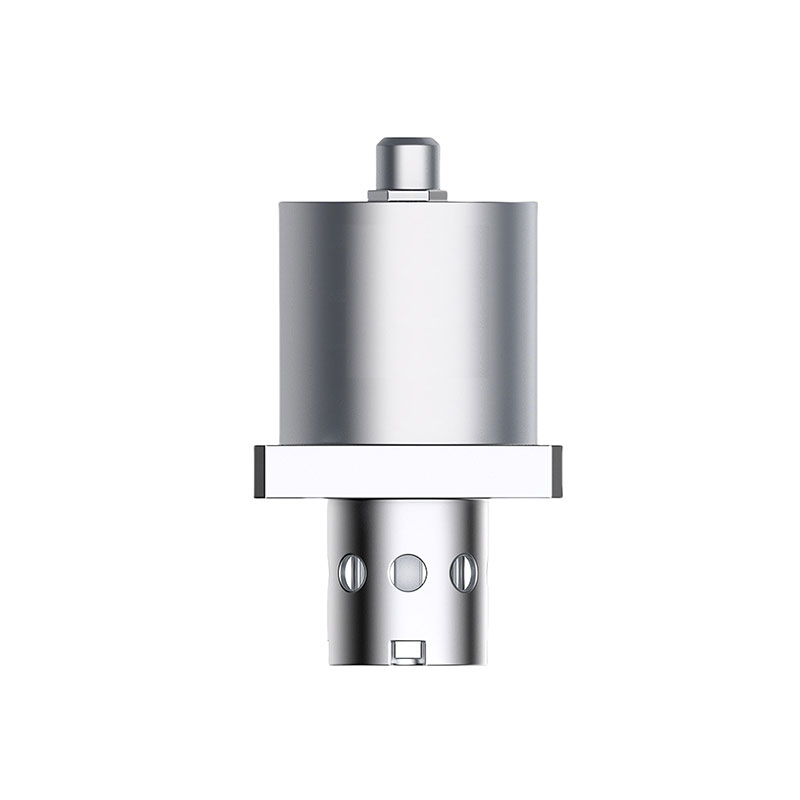
Model:FV3
Brand:tianqiong
1、Oil viscosity sensor Product Overview
Oil viscosity sensor allows for online monitoring of three oil parameters: viscosity, mass density, and temperature, providing real-time, continuous kinematic viscosity monitoring.FV3 Oil viscosity sensor utilizes a piezoelectric resonant MEMS core element, integrating high-precision signal acquisition and processing units with intelligent algorithms to enable the real-time, simultaneous measurement of liquid temperature, dynamic viscosity, and density.
Application Areas: Hydraulic power units, gearboxes, diesel engines, turbines, air compressors, and similar equipment.
2、Oil viscosity sensor Applicable Oils
Industrial Lubricants: Hydraulic oil, gear oil, turbine oil, transformer oil.
Engine Oils: Diesel engine oil, aviation engine oil.
Light Fuels: Gasoline, kerosene, aviation fuel.
3、Oil viscosity sensor Measurement Principle
The FV3Oil viscosity sensor operates based on the principle of piezoelectric resonance. Driven by an electronic unit, its core oscillator maintains a state of resonance; by precisely measuring changes in characteristic parameters—such as resonance frequency, phase, or amplitude—the device directly calculates the viscosity, density, and temperature of the medium.
Its oscillation period T is correlated with the liquid density: ρ = K0 + K1*T + K2*T² (where K0, K1, and K2 are instrument calibration parameters).
Its oscillation quality factor Q is correlated with viscosity: η = C0 + C1*Q + C2*Q² (where C0, C1, and C2 are instrument calibration parameters).
Kinematic viscosity can also be derived using the following formula: µ = η / ρ (where µ represents kinematic viscosity in mm²/s or cSt; η represents dynamic viscosity in mPa·s; and ρ represents density in g/cm³).
4、Oil viscosity sensor Technical Parameters
| Measurement indicators | Range | Resolution | Measurement accuracy | |||
| Temperature | -20~125℃ | 0.1℃ | ±0.3℃(25℃) | |||
| Dynamic viscosity | 1~400cP | 0.1cP | ±3% | |||
| 0~1000cP | ||||||
| Density | 600~1250kg/m3 | 0.1kg/m3 | ±3% | |||
| Note: The factory default is calibrated according to 68# hydraulic oil. (Customized calibration of oil products is available) | ||||||
| Electrical parameters | ||||||
| Digital signal output | RS485 MODBUS RTU (default) | |||||
| Simulated current output | 4~20mA (optional) | |||||
| Working voltage | DC12~32V(RS485) | DC20~32V(4~20mA) | ||||
| Working current | <20mA (RS485 output) | <40mA (4~20mA output) | ||||
| Electrical interface | M8*1, 6-core aviation plug | |||||
| Connect the cable | 6 (core) * 2 meters (standard), 26AWG | |||||
| Refresh time | 1 time/S (power on < 30S) | |||||
| Follow the standard | EN61326-1 | |||||
| EN61326-2-3 | ||||||
| ICES-003 B-level | ||||||
| Temperature parameters | ||||||
| Working temperature | Fluid temperature | Storage temperature | ||||
| -30~70℃ | -20~125℃ | -40~85℃ | ||||
| Structural parameters | ||||||
| Mechanical interface | Structural dimensions | Probe material | Protection level | |||
| Flange (see product structure diagram) | Φ32*56.6mm | 316 stainless steel | IP65 | |||
| Other parameters | ||||||
| Probe allows pressure | The probe allows flow rate | Sensor weight | ||||
| ≤2MPa | ≤3m/s | 150g | ||||
| Communication protocol-cable | ||||||
| red | White | Black | Green | Brown | Blue | |
| DC24V+ | RS485+/A | GND | RS485-/B | 4~20mA ch1 | 4~20mA ch2 | |
In traditional agricultural production, there has always been a problem of lag in crop disease prevention and control. Farmers mainly rely on experience to judge diseases, and by the time obvious symptoms appear in the field, certain losses have often been caused. Blind use of pesticides is also com...
The construction of hydrological monitoring station networks in irrigation districts utilizes microwave radar technology to measure water level, flow velocity, flow rate, and rainfall in channels in a non-contact manner. This method is unaffected by silt and floating debris, providing high-pre...
Water Quality Monitoring Data Buoys can be fixed in water bodies for a long time, collecting real-time and continuous water quality data such as water temperature, pH value, dissolved oxygen, ammonia nitrogen, and turbidity. With the help of this real-time data, dynamic changes in water quality can...
Micrometeorology refers to the small-scale climatic characteristics formed in the near-surface atmosphere and upper soil due to the specific structural features of the underlying surface. These characteristics may be reflected in individual meteorological values, or in specific weather phenomena suc...


 Get a Free Quote
 Skype
Skype
 whatsapp
 mail
mail