Tianqiong Sensor IOT Technology Co., Ltd
Sales Manager:Ms. Emily Wang
Cel,Whatsapp,Wechat:+86 15898932201
Email:info@fengtutec.com
Add:No. 155 Optoelectronic Industry Accelerator, Gaoxin District, Weifang, Shandong, China


Sales Manager:Ms. Emily Wang
Cel,Whatsapp,Wechat:+86 15898932201
Email:info@fengtutec.com
Add:No. 155 Optoelectronic Industry Accelerator, Gaoxin District, Weifang, Shandong, China
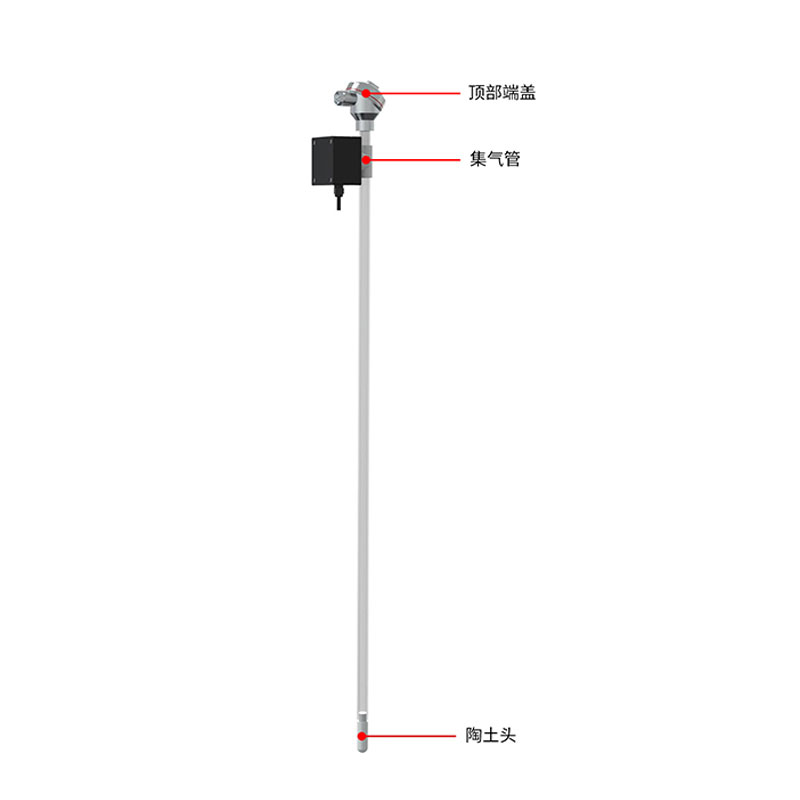
Model:FT-SS1
Brand:tianqiong
1.Introduction to Soil water potential sensor
Soil water potential sensor accurately measures soil moisture, indicating the amount of energy required by plant roots to extract water from soil particles.Plant growth requires a certain amount of soil water, and the content of soil water has an important impact on plant growth and development.With the development of agriculture, the requirements for crop yield and quality are getting higher and higher, so we need to know the precise irrigation cycle of plants and give them an irrigation time point.The Soil water potential sensor can give such an irrigation point.It can clearly inform growers whether the plants are short of water, how long will they be short of water, and how often will they be irrigated, thereby improving the quality of the crops.
In modern agriculture, the role of Soil water potential sensor is very significant.When the Soil water potential sensor collects dynamic soil moisture content data of the planted crops, it then conducts more precise irrigation measures based on the growth of the crop.This not only records the soil tension change data, but also helps growers continuously supplement the soil environmental data of crop species, which is of great significance to improving crop varieties and improving crop quality and yield.
The Soil water potential sensor uses transparent PVC plastic tubes, which can clearly see the amount of water remaining in the equipment, making it convenient for adding water.It also uses a -100-0Kpa vacuum meter to facilitate users to view data clearly.The product is suitable for places where soil moisture and drought information needs to be detected.It is mostly used to monitor whether crops are water-deficient in agricultural crop cultivation, so as to better water crops.
When the PVC pipe inside the equipment is filled with water, the pressure inside the PVC pipe is 0 compared with the atmospheric pressure.After the equipment is inserted into the soil, some of the moisture inside the PVC will be sucked away by the soil, causing negative pressure to form inside the pipe.The greater the absolute value of negative pressure in a standard unit time, it proves that the stronger the soil absorbs water and the more water-deficient the soil.
2.Product features of Soil water potential sensor
1.Protection level: IP67
2.Overall machine structure: The product adopts a bottom-end monitoring structure, and the depth to be monitored by inserting the bottom of the equipment into the soil.The specific insertion depth can be customized according to on-site requirements.
3.Equipment size: The insertion depth is 60cm, and an integer multiple of 15cm can be added, up to 120cm.
4.Maximum power consumption: 0.8W (24V DC power supply)
5.Equipment material: Transparent PVC plastic pipe, which can clearly see the amount of water remaining in the equipment, making it convenient to add water.
6.Communication interface: RS485.
7.Power supply method: 5-30vdc wide voltage power supply.
8.Working environment: 0℃~+60℃.
9.Default accuracy: ±0.5kpa (25℃).
10.Range: -100kpa ~0kpa
11.Resolution: 0.1kpa
3.How to install Soil water potential sensor
1.Installation location
After the crop is sown, the equipment installation location should be selected for a relatively high and flat place to prevent rainwater from pouring back into the equipment, causing equipment short circuits or line failures.
Under comprehensive irrigation conditions, areas with less water are preferred as monitoring locations; under local irrigation conditions, areas with wet areas are selected as monitoring locations;
Select the position where the crop grows well and can represent the growth of most crops;
Understand the root distribution of the monitored crops and generally choose a location close to the crop's water-absorbing root system to determine the height of the equipment.
2.Installation method
The drilling and grouting installation method is adopted, please refer to the instruction manual for details.
3.Installation method
Prepare cold boiled water: Boil the tap water for 20 minutes, then leave it to cool and set aside.
Exhaust the clay head: Inject cool boiled water, fill it up, stand upright for 10-40 minutes (do not add a cover), and see water dripping from the surface of the clay head, then plug the silicone plug, wrap the clay head with a tissue to absorb water, so that the soil tension reaches about -40kpa.If you see bubbles rising, you can shake the equipment to exhaust as much as possible.This process is repeated 2-3 times.
Submerge the clay head into the water, wait until the soil tension returns to -10kpa, add water again and fill it up, plug the silicone plug, twist the top end cap, and set aside.
4.Things to note
Do not use oil on the clay head to avoid blocking the micropores and causing the instrument to fail.
The instrument's range is -100Kpa-0.When this limit exceeds this limit, the instrument leaks due to the rupture of the clay head tube wall, causing the instrument to lose its function.
Check regularly, add cool water to the sensor, and add it once every half a month to a month (or wait until the water level drops to the above the gas collecting pipe).Do not loosen the sensor during filling.
Before the temperature drops to 0℃, the outdoor instrument should be withdrawn to avoid freezing and cracking.
-10~0kpa, which means humidity and is too high for most crops.
-30~-10kpa, which means moist and is suitable for the growth of most crops.
-50~-30kpa, indicating that it is dry and wet-loving crops need to be irrigated.
<-50kpa, which means dryness and most crops require irrigation.
The bird DNA Test device, priced at 68,000 yuan, can simultaneously identify the sex of pigeons and perform genotyping of genes affecting flight ability, such as homing ability (DRD4), endurance (LDHA), and navigation ability (CRY1). The device supports processing multiple samples simultaneous...
Waste Water Quality Monitoring can detect water temperature, COD, ammonia nitrogen, pH, residual chlorine, dissolved oxygen, and other indicators online. The sensors are flexibly selectable, and it has data storage and export functions. Equipped with an RS485 interface, it can connect to vario...
TianQiong is an enterprise specializing in meteorological and environmental monitoring, as well as application solutions for the water conservancy industry and related sectors. The company is dedicated to the research, development, production, and sales of various advanced environmental monitoring e...
Expressways, as the main arteries of transportation, are crucial for the movement of people and the transportation of goods. However, severe weather such as heavy rain, heavy snow, dense fog, and strong winds frequently disrupts the operation of expressways, posing challenges to traffic order and tr...


 Get a Free Quote
 Skype
Skype
 whatsapp
 mail
mail