Tianqiong Sensor IOT Technology Co., Ltd
Sales Manager:Ms. Emily Wang
Cel,Whatsapp,Wechat:+86 15898932201
Email:info@fengtutec.com
Add:No. 155 Optoelectronic Industry Accelerator, Gaoxin District, Weifang, Shandong, China


Sales Manager:Ms. Emily Wang
Cel,Whatsapp,Wechat:+86 15898932201
Email:info@fengtutec.com
Add:No. 155 Optoelectronic Industry Accelerator, Gaoxin District, Weifang, Shandong, China
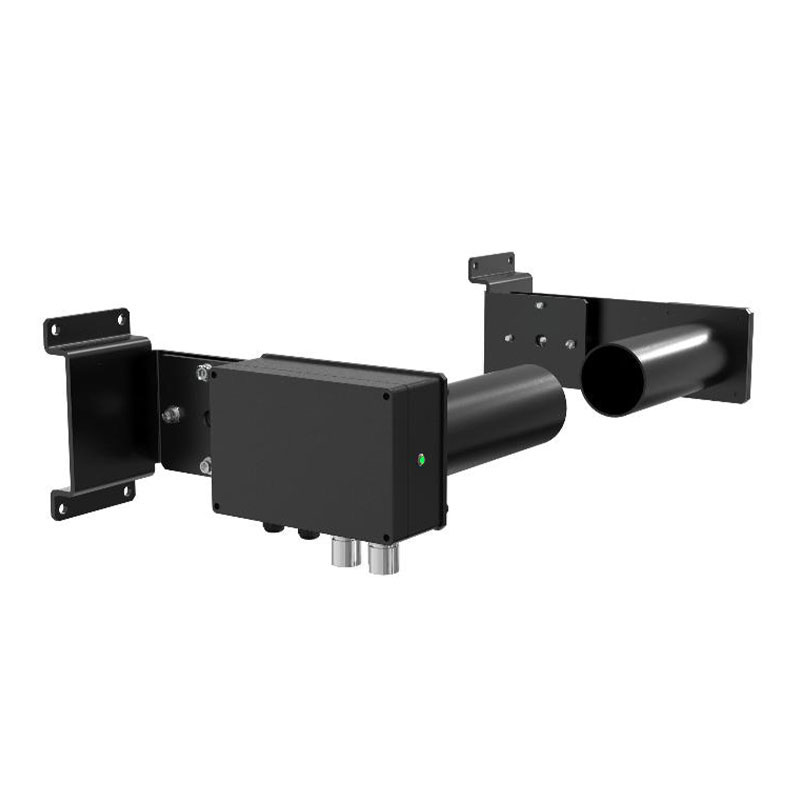
Model:FT-SDN2
Brand:tianqiong
Tunnel CO,VI,NO2 detector Product Introduction
Tunnel CO,VI,NO2 detectors monitor air quality and safety in tunnels, including carbon monoxide, visibility, and nitrous oxide.The Tunnel CO,VI,NO2 detector detector operates based on the principle of transmission.The transmitter/receiver and reflector are installed opposite each other and aligned using a bracket.The highly focused beam emitted by the optical components becomes a detection beam.The installation distance is 3 meters (round trip dual-path, actual detection optical path is 6 meters).Due to dust attenuation, the receiver processes the received signal into a measurement value.It is installed on the tunnel roof or sidewall according to my country's "Specifications for Ventilation and Lighting Design of Highway Tunnels".
This intelligent detector has a built-in compensation function.When the optical lens is contaminated, it automatically performs gain compensation, thus ensuring a longer maintenance cycle.Tunnels are special tubular structures.Due to their small space and enclosed nature, exhaust fumes emitted by vehicles passing through tunnels, if not discharged in a timely and proper manner, can cause the accumulation of CO and suspended particulate matter, as well as excessive levels of toxic gases such as nitrogen oxides (NOx), directly affecting the personal safety of drivers, passengers, and maintenance personnel.
The SDN2 series is designed to collect VI/CO/NO2 data online, providing it to traffic regulatory departments to provide decision-making basis for tunnel ventilation and road safety.
Tunnel CO,VI,NO2 detector Product Features
1.Can simultaneously or separately measure visibility (VI), carbon monoxide (CO), and nitrogen dioxide (NO2);
2.High-resolution visibility measurement;
3.Measurement is completely unaffected by stray light sources;
4.Specifically designed for harsh tunnel environments;
5.Effectively avoids measurement failures caused by environmental factors and vibrations from passing vehicles;
6.Low installation, startup, and maintenance costs;
7.Built-in status display, fault alarm, and data storage functions for easy debugging and equipment maintenance;
8.Multiple output modes for convenient data acquisition;
9.Unique compensation function ensures a longer maintenance cycle;
10.Non-contact, continuous visibility monitoring;
11.Utilizes the latest microprocessor technology for fully digital operation.
Tunnel CO,VI,NO2 detector Technical Parameters
Installation Method: Wall-mounted
Power Supply: AC 90-305V
Measured Values: VI: 1/m
CO Concentration: PPM
NO2 Concentration: PPM
Measurement Principle: Light projection method
Measurement Range: VI: 0--35×10-31/m
CO: 0--1000PPM
NO2: 0--20PPM
Measurement Distance: 6-meter optical path (probe installation distance 3 meters)
Accuracy: VI: ±0.0001 1/m CO: ±1PPM
NO2: ±0.5PPM
Output Interval: 10 seconds
Digital Output: RS485
Analog Signal Output: 3 channels 0/4mA-20mA (internal impedance not greater than 500Ω)
Data Update Rate: 6/min
Reliability: Mean Time Between Failures (MTBF) not less than 5000 hours
Automatic Compensation Function: VI features self-calibration and automatic zero-point function
Power Consumption: <15W
Ambient Temperature: -40~+75℃
Air Humidity: 0~100%RH
In the fields of solar energy resource assessment and meteorological monitoring, the Fully Automatic Solar Spectrometer is revolutionizing traditional measurement methods. This instrument combines multi - spectral filters with thermopiles to capture radiant energy within the spectral range of 280 to...
To measure water levels, a Radar Water Level Sensor is required, such as the YW-76 introduced today. Let's take an in-depth look at its advantages and working principle.1. High-frequency Technology Ensures Measurement AccuracyThe YW-76 horn-type Radar Water Level Sensor adopts Frequency Modulate...
Expressways, as the main arteries of transportation, are crucial for the movement of people and the transportation of goods. However, severe weather such as heavy rain, heavy snow, dense fog, and strong winds frequently disrupts the operation of expressways, posing challenges to traffic order and tr...
Fentu Technology, a manufacturer of radar water level gauges, offers an 80GHz high-frequency radar gauge utilizing Frequency Modulated Continuous Wave (FMCW) technology. With a measurement range of 0.1 to 40 meters, an accuracy of ±5 mm, and a resolution of 1 mm, this device features a non-co...


 Get a Free Quote
 Skype
Skype
 whatsapp
 mail
mail