Tianqiong Sensor IOT Technology Co., Ltd
Sales Manager:Ms. Emily Wang
Cel,Whatsapp,Wechat:+86 15898932201
Email:info@fengtutec.com
Add:No. 155 Optoelectronic Industry Accelerator, Gaoxin District, Weifang, Shandong, China


Sales Manager:Ms. Emily Wang
Cel,Whatsapp,Wechat:+86 15898932201
Email:info@fengtutec.com
Add:No. 155 Optoelectronic Industry Accelerator, Gaoxin District, Weifang, Shandong, China
time:2026-02-11 10:49:16 source:Weather Station viewed:402 time
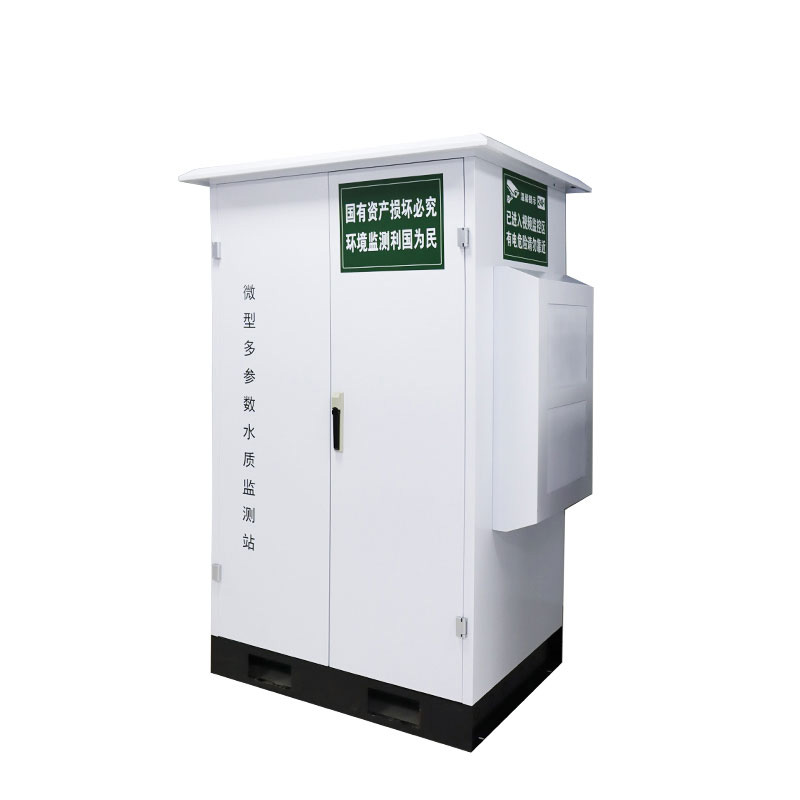
Water quality micro monitoring station is a miniaturized, integrated, and intelligent online water quality monitoring system. This device integrates five measurement modules—total phosphorus, total nitrogen, chemical oxygen demand, permanganate index, and ammonia nitrogen—as well as conventional five-parameter sensors. It can simultaneously monitor dissolved oxygen, turbidity, conductivity, water temperature, and pH. Specifically designed for rivers, canals, lakes, and ponds, it achieves real-time continuous water quality monitoring and remote data management through built-in sensors, automatic sampling and analysis units, data acquisition and transmission systems, and a remote monitoring platform.
Water quality micro monitoring station represents the trend of modern environmental monitoring technology towards miniaturization and intelligence. It highly integrates multiple functions of traditional large-scale water monitoring stations into a compact body, with its core being the simultaneous installation of measurement units for multiple key water quality indicators. The equipment can independently analyze five key comprehensive pollution indicators: total phosphorus, total nitrogen, chemical oxygen demand (COD), permanganate index, and ammonia nitrogen. It also integrates conventional five-parameter sensors for measuring dissolved oxygen, turbidity, conductivity, temperature, and pH, enabling simultaneous and rapid sensing of water quality physical and chemical indicators.
The monitoring station is designed with field deployment in mind. Its compact structure, small footprint, and low environmental requirements make it ideal for deployment in locations with limited space, such as riverbanks, reservoir dams, factory drainage outlets, or urban landscape water bodies. The equipment integrates an automatic sampling and pretreatment device, capable of collecting water samples according to a set cycle and completing necessary pretreatment steps such as filtration and digestion. Subsequent precise measurements by various analysis modules ensure data accuracy and representativeness.
Intelligence and automation are its main technical features. The entire monitoring process, from sampling, analysis, cleaning to calibration, can be pre-programmed and run automatically, greatly reducing manual intervention and maintenance frequency. The built-in data acquisition controller coordinates the work of each module and summarizes the measurement results in real time. This data is transmitted via wired or wireless networks to a cloud or local monitoring center platform, supporting remote real-time viewing, historical data querying, exceedance alarms, and statistical analysis, providing decision support for management personnel.
In practical applications, Water quality micro monitoring station plays a crucial role. In river chief system management, it can be used to track changes in cross-sectional water quality and assess the effectiveness of treatment; in lakes and reservoirs, it helps monitor eutrophication trends; at the effluent outlets of industrial parks or sewage treatment plants, it provides real-time monitoring and early warning. Its long-term continuous data accumulation provides a reliable data foundation for water pollution source tracing, environmental quality assessment, and ecological research.
In summary, with its high integration, automated operation, and powerful remote monitoring capabilities, Water quality micro monitoring station has constructed an efficient, real-time, and low-maintenance water quality monitoring node, becoming an indispensable infrastructure in the surface water environment monitoring system.
Fengtu's fluorescence method chlorophyll a online analyzer detects chlorophyll content based on fluorescence characteristics and is specifically designed for online monitoring of rivers, lakes, and ponds. The instrument is easy to operate, stable in performance, and accurate in measurement...
Water quality monitoring micro-station is a new type of online monitoring product for environmental protection and water conservancy fields. It can real-time monitor parameters such as dissolved oxygen, turbidity, and pH in rivers, lakes, and reservoirs, and features automatic monitoring and data uploading functions, meeting the needs of high-density deployment....
Drinking Water Monitoring provides round-the-clock, real-time monitoring of key water quality parameters—such as residual chlorine, pH, turbidity, and temperature. It supports sensor expansion and data storage/export, utilizes standard communication protocols, and is adaptable to various monitoring...
Negative oxygen ions exert physiological effects on the human nervous system and blood circulation. Their concentration directly reflects air quality and serves as a key indicator for air quality assessment. The Negative Oxygen Ion Monitoring Station is specially designed to monitor this core indica...


 Skype
Skype
 whatsapp
 mail
mail