Tianqiong Sensor IOT Technology Co., Ltd
Sales Manager:Ms. Emily Wang
Cel,Whatsapp,Wechat:+86 15898932201
Email:info@fengtutec.com
Add:No. 155 Optoelectronic Industry Accelerator, Gaoxin District, Weifang, Shandong, China


Sales Manager:Ms. Emily Wang
Cel,Whatsapp,Wechat:+86 15898932201
Email:info@fengtutec.com
Add:No. 155 Optoelectronic Industry Accelerator, Gaoxin District, Weifang, Shandong, China
time:2025-12-16 10:50:35 source:Weather Station viewed:542 time
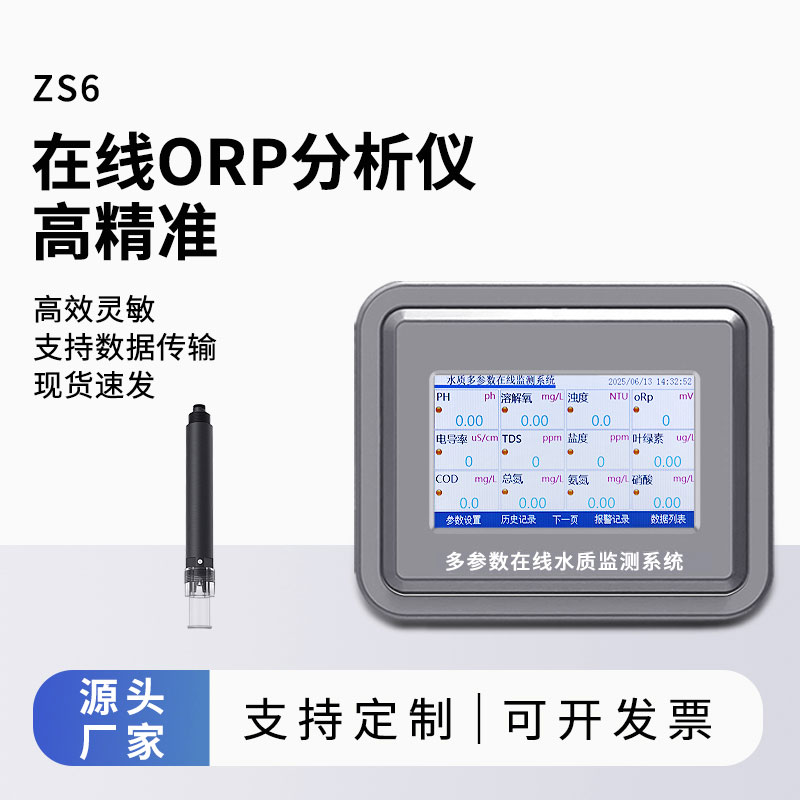
Online ORP Meter is an instrument capable of real-time online monitoring of oxidation-reduction potential (ORP) in water, also known as an online oxidation-reduction potential analyzer. It is widely used in industrial and laboratory fields, allowing for rapid detection of ORP values. It is suitable for on-site testing or continuous real-time monitoring of surface water, tap water, etc. Its main applications include water treatment plants, water supply networks, swimming pools, cooling water systems, and various water treatment projects.
Online ORP Meter is an instrument used for continuous, real-time measurement of oxidation-reduction potential values in aqueous solutions. Oxidation-reduction potential (ORP) is a comprehensive indicator of the oxidizing or reducing strength of water, expressed in millivolts (mV). This value reflects the macroscopic equilibrium state of all redox pairs in the solution and is a key parameter in water quality monitoring and management.
The core measuring component of the analyzer is the ORP electrode (also known as the oxidation-reduction potential electrode). The electrode usually consists of a measuring element made of a precious metal (such as platinum or gold) combined with a reference electrode. When the electrode is immersed in the solution being measured, electron exchange occurs on the surface of the metal sensitive membrane, generating a potential difference corresponding to the redox capacity of the solution. This potential difference is compared with the stable potential of the reference electrode. After signal amplification, temperature compensation, and digital processing by the transmitter, the standard ORP value is displayed and output.
A complete online ORP analysis system usually consists of a sensor (i.e., the ORP electrode), a transmitter (or analyzer host), a mounting bracket, and accompanying calibration solutions. Modern transmitters are often equipped with a digital display screen, which can display measured values, temperature, and equipment status in real time. Its output signal is usually a 4-20mA analog signal or supports the Modbus protocol through a digital interface such as RS485, facilitating connection to PLCs, DCSs, or dedicated water quality monitoring platforms for remote data transmission, recording, and alarm functions.
The core value of this instrument lies in its real-time and continuous monitoring capabilities. Compared with manual sampling and testing in a laboratory, it can continuously provide the ORP change trend at the monitoring point, promptly detect abnormal fluctuations in water quality, and provide immediate basis for process control. Its main application areas revolve around water treatment and water quality safety assurance. In water treatment plants and distribution networks, ORP (Oxidation-Reduction Potential) is a crucial indicator for evaluating the effectiveness of drinking water disinfection. A sufficiently positive ORP value (typically greater than 650mV) indicates the presence of sufficient disinfectants such as residual chlorine, effectively killing pathogenic microorganisms and ensuring the biological safety of the water supply. Online monitoring of ORP at the end of the distribution network allows for optimization of disinfectant dosage.
In swimming pool water treatment, ORP is a key sensor in automatic dosing systems. It directly reflects the bactericidal capacity of the pool water, and the control system automatically adjusts the dosage of oxidizing disinfectants such as sodium hypochlorite based on the feedback ORP value, maintaining water quality and protecting swimmers' health.
In industrial cooling water systems, monitoring ORP helps control microbial growth and assess the effectiveness of corrosion inhibitors and scale inhibitors. A specific ORP range is beneficial for inhibiting the growth of harmful bacteria such as Legionella, while also optimizing chemical treatment strategies.
In wastewater treatment engineering, especially in biochemical treatment units (such as anaerobic, anoxic, and aerobic processes), ORP is an important process control parameter. Different ORP ranges indicate different microbial reaction environments (such as nitrification, denitrification, phosphorus release, and phosphorus uptake). Online monitoring can be used to optimize aeration rate, carbon source addition, and recirculation ratio, improving treatment efficiency and stability.
To ensure the accuracy of ORP measurements, regular calibration and maintenance are necessary. Calibration typically involves a one-point calibration using a standard buffer solution with a known ORP value. Routine maintenance includes keeping the electrode clean, preventing the sensitive membrane from being covered by oil or sediment, and regularly checking the electrolyte level of the reference electrode. When selecting and installing the sensor, it is necessary to choose the appropriate electrode material, protection level, and installation method based on the chemical characteristics, pressure, temperature, and installation environment of the measured medium.
In summary, ORP, as an important process analysis instrument, provides reliable data support for precise control of water treatment processes, water quality safety warnings, and efficient resource utilization by providing real-time oxidation-reduction potential data.
Handheld Water Quality Meter is a portable water quality analyzer integrating ORP, pH, and temperature detection functions. The ORP measurement range is -2000 to 2000 mV, and the pH range is 0 to 14. It has a built-in 6000mAh lithium battery and is suitable for rapid on-site testing in industr...
This fully automatic online hydrological monitoring system is based on microwave technology. It employs K-band planar radar technology to non-contactly measure water level, flow velocity, flow rate, and rainfall within channels. The system's built-in algorithm calculates cross-sectional fl...
The UAV visibility meter is designed with full consideration of the requirements for UAV mounting. It features a lightweight and compact design, enabling it to be easily adapted to various small UAV platforms and reducing the burden on the UAV during flight. At the same time, the flat body design ca...
Designed specifically for emergency rescue scenarios, this handheld weather station accurately measures multiple factors such as wind speed, wind direction, temperature, and humidity. It is suitable for all disaster emergency scenarios including fire, earthquake, and flood, and can be used in...


 Skype
Skype
 whatsapp
 mail
mail