Tianqiong Sensor IOT Technology Co., Ltd
Sales Manager:Ms. Emily Wang
Cel,Whatsapp,Wechat:+86 15898932201
Email:info@fengtutec.com
Add:No. 155 Optoelectronic Industry Accelerator, Gaoxin District, Weifang, Shandong, China


Sales Manager:Ms. Emily Wang
Cel,Whatsapp,Wechat:+86 15898932201
Email:info@fengtutec.com
Add:No. 155 Optoelectronic Industry Accelerator, Gaoxin District, Weifang, Shandong, China
time:2026-01-04 11:04:20 source:Weather Station viewed:466 time
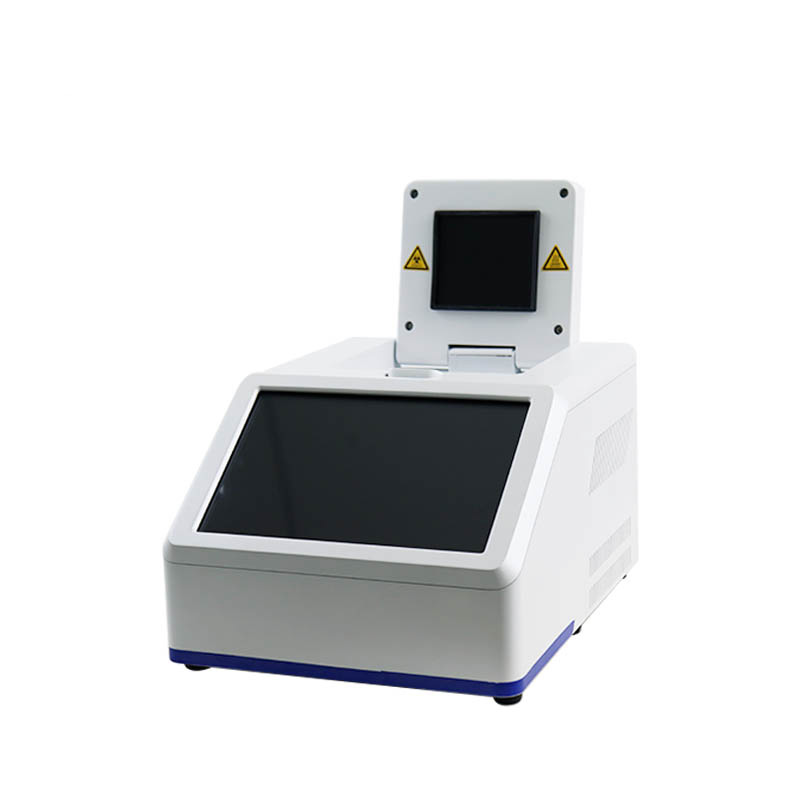
Pine wood nematode DNA rapid detection system achieves specific analysis of pine wood nematode genes through separation, extraction, and fluorescence quantitative PCR technology. This system boasts rapid detection speed and is applied in forestry disease monitoring, agricultural quarantine, and ecological protection fields.
Pine wood nematode DNA rapid detection system is a professional diagnostic tool based on molecular biology technology. This system aims to quickly and specifically identify whether a sample contains the genetic material of the pine wood nematode, thereby enabling early diagnosis and monitoring of pine wood nematode disease. Its core advantage lies in transforming traditional morphological identification into precise molecular detection, significantly improving the accuracy and efficiency of detection.
The system's standard operating procedure mainly includes three consecutive steps. The first step is sample pretreatment and separation of pine wood nematodes. From the wood chips or insect vectors to be tested, nematodes are separated using methods such as the Baermann funnel method or the shallow dish method. The second step is DNA extraction and purification. From the collected nematode suspension, cells are lysed using chemical or kit methods to extract total DNA, including that of the pine wood nematode, and inhibitors such as proteins and polysaccharides are removed from the sample to obtain a high-purity DNA template. The third step is the crucial fluorescence quantitative PCR detection. The purified DNA template is added to a specially designed reaction system. This system contains primers designed for the specific gene sequence of the pine wood nematode, fluorescent probes, and various enzymes and substrates required for the PCR reaction.
The core technology of the system lies in the application of fluorescence quantitative PCR. PCR, or polymerase chain reaction, is a technology that simulates DNA replication in vitro to achieve exponential amplification of target gene fragments. The fluorescence quantitative PCR used in this system adds a fluorescent signal marker to the basic PCR. During the reaction, the specific primers designed for the pine wood nematode guide DNA polymerase to selectively amplify only the unique DNA sequence of the pine wood nematode. As the amplification cycles proceed, each time the target DNA fragment is replicated, the fluorescent probe bound to it releases a fluorescent signal that can be detected by the instrument. The instrument monitors the change in fluorescence intensity throughout the entire reaction process in real time. By analyzing the number of cycles required for the fluorescence signal to reach a set threshold, this method can not only qualitatively determine the presence of pine wood nematode DNA in a sample but also perform quantitative analysis to some extent, inferring the initial template concentration. The entire process is usually completed within a few hours, achieving the goal of rapid detection.
The application of this system has significant practical implications. In the forestry sector, it is a primary technical means for controlling pine wood nematode disease. Regular testing of suspected infected pine trees, wood products, and the vector, the pine sawyer beetle, in and around affected areas allows for precise localization and dynamic monitoring of the epidemic, providing direct scientific evidence for delineating affected areas, implementing control measures, and evaluating the effectiveness of prevention and control efforts. In agriculture and quarantine inspection, the system is used for rapid quarantine inspection of imported timber, seedlings, and wood packaging materials to prevent the introduction of invasive pests with goods. In environmental protection, its rapid diagnosis of the cause of death in pine trees helps to promptly remove infected wood, interrupt the natural transmission chain, and protect the health and safety of forest ecosystems. The standardized operation of the entire system reduces the long-term reliance on professional morphological identification personnel for detection work, improving the disease monitoring capabilities of grassroots units.
Integrated Weather Observation System is a high-precision automatic meteorological observation device that integrates sensors for wind speed, wind direction, temperature, humidity, atmospheric pressure, PM2.5, PM10, noise, and other parameters. It utilizes solar power supply and wireless trans...
To measure water levels, a Radar Water Level Sensor is required, such as the YW-76 introduced today. Let's take an in-depth look at its advantages and working principle.1. High-frequency Technology Ensures Measurement AccuracyThe YW-76 horn-type Radar Water Level Sensor adopts Frequency Modulate...
This system is a fully automated online hydrological monitoring device built on microwave technology. Equipped with K-band planar radar technology, it accurately monitors water data using a non-contact acquisition method. Adaptable to various water conservancy scenarios, it features anti-inter...
FT-WQX5 5-in-1 Compact Weather Sensor is an efficient tool in the field of environmental monitoring, capable of simultaneously monitoring five key meteorological parameters: ambient temperature, relative humidity, wind speed, wind direction, and atmospheric pressure.The instrument adopts an integrat...


 Skype
Skype
 whatsapp
 mail
mail