Tianqiong Sensor IOT Technology Co., Ltd
Sales Manager:Ms. Emily Wang
Cel,Whatsapp,Wechat:+86 15898932201
Email:info@fengtutec.com
Add:No. 155 Optoelectronic Industry Accelerator, Gaoxin District, Weifang, Shandong, China


Sales Manager:Ms. Emily Wang
Cel,Whatsapp,Wechat:+86 15898932201
Email:info@fengtutec.com
Add:No. 155 Optoelectronic Industry Accelerator, Gaoxin District, Weifang, Shandong, China
time:2026-02-02 11:28:43 source:Weather Station viewed:472 time
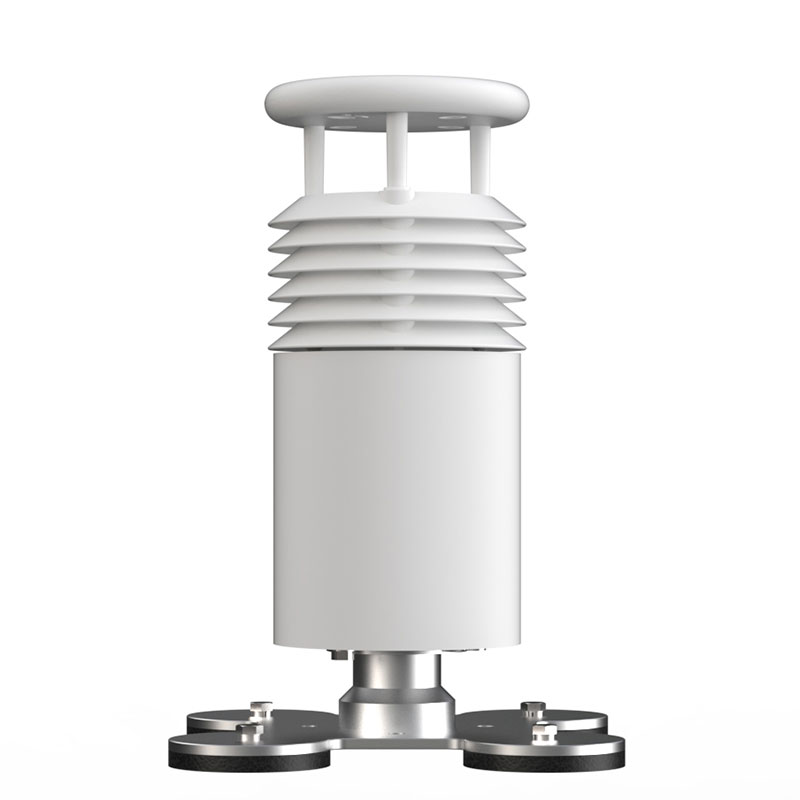
Vehicle-mounted anemometer and wind direction sensor is a meteorological monitoring device specifically designed for mobile platforms. It utilizes a two-element integrated ultrasonic sensor to provide real-time wind speed and direction measurements. Its top cover features a concealed probe design, effectively preventing the accumulation of rain and snow and shielding against natural wind interference, ensuring the accuracy and continuity of data during vehicle operation.
Vehicle-mounted anemometer and wind direction sensor is a specialized meteorological instrument installed on vehicles and other mobile platforms for real-time measurement of wind parameters. Its core task is to overcome interference caused by the vehicle's own movement and accurately obtain true environmental wind speed and direction data. The device integrates the measurement functions of wind speed and direction into a single compact sensor unit, enabling efficient monitoring in limited installation spaces.
The instrument generally employs the ultrasonic measurement principle. Multiple pairs of ultrasonic probes within the sensor transmit and receive sound wave pulses. By precisely calculating the time difference of ultrasonic propagation along the upwind and downwind paths, the airflow speed (wind speed) and direction relative to the sensor can be directly calculated. This measurement method has no mechanical rotating parts, fundamentally avoiding mechanical wear and bearing seizure problems caused by vehicle vibration and bumps. It features low starting wind speed, fast response speed, and high measurement accuracy, making it ideal for continuous operation in mobile conditions.
To address the unique challenges of the vehicle environment, the device has been specially optimized structurally. The most significant design feature is the concealed ultrasonic probe in the top cover. Traditional exposed sensors, especially in rainy and snowy weather, are prone to water, snow, or ice accumulation on the probe surface during vehicle operation. This severely interferes with the normal transmission and reception of ultrasonic waves, leading to measurement failure or data distortion. The concealed design places the sensitive ultrasonic probes under a top cover with a special aerodynamic shape and hydrophobic coating. This structure ensures smooth airflow through the measurement area while providing physical shielding for the probes, effectively preventing direct accumulation and impact of rain and snow, greatly improving operational reliability in harsh weather conditions. At the same time, the optimized top cover shape also reduces obstruction and turbulence to the natural wind field, allowing the measurement results to better reflect the true, undisturbed environmental wind.
Vehicle-mounted anemometer and wind direction sensor has a wide range of applications. In the field of special vehicle meteorological monitoring, this device is installed on environmental monitoring vehicles and meteorological emergency vehicles for tasks such as mobile meteorological observation and pollution dispersion tracking. In the transportation sector, it can be installed on highway patrol vehicles, railway inspection vehicles, or bridge inspection vehicles to assess crosswind risks on specific road sections (such as wind-prone areas and bridges), providing data for traffic safety management. Environmental protection departments use it for mobile monitoring of wind field distribution in industrial parks or urban areas, assisting in pollution source tracing. Furthermore, the device plays a crucial role in applications requiring mobile meteorological information support, such as agricultural plant protection, forest fire patrol, scientific research, and military reconnaissance.
During installation, the device is typically fixed to the vehicle roof using a dedicated bracket, ensuring the sensor height meets specifications and is away from the vehicle's own turbulent airflow. The collected wind speed and direction data are transmitted to an in-vehicle data collector via cable or wirelessly. The collector packages the vehicle's GPS location and time information with the meteorological data and transmits it in real-time to a remote monitoring and command center via a vehicle-mounted communication terminal (such as 4G/5G). The central platform can display the trajectory of each mobile monitoring vehicle and a cloud map of wind speed and direction changes along its route, enabling large-scale, detailed dynamic wind field monitoring. This mobile monitoring mode effectively compensates for the limitations of fixed weather stations in terms of spatial coverage, providing strong technical support for various fields requiring real-time, mobile meteorological support.
PCR Machine supports the simultaneous detection of two fluorescently labeled targets within a single reaction well. Its 16-well sample throughput combined with a dual-channel parallel design doubles the information obtained in a single detection. The device utilizes an imported high-quality TE...
Fluorescent Quantitative PCR Detection System is a laboratory instrument integrating fluorescence optical detection, a temperature control system, and data analysis software. It employs four-channel fluorescence detection and a 48-well reaction module, with a maximum power of 550W and a weight...
In scenarios such as ventilation and air conditioning systems and industrial pipeline exhaust, the air velocity in the air duct is an important parameter for measuring the operating status of the system. When the air velocity is too high, it may lead to increased energy consumption, greater pipeline...
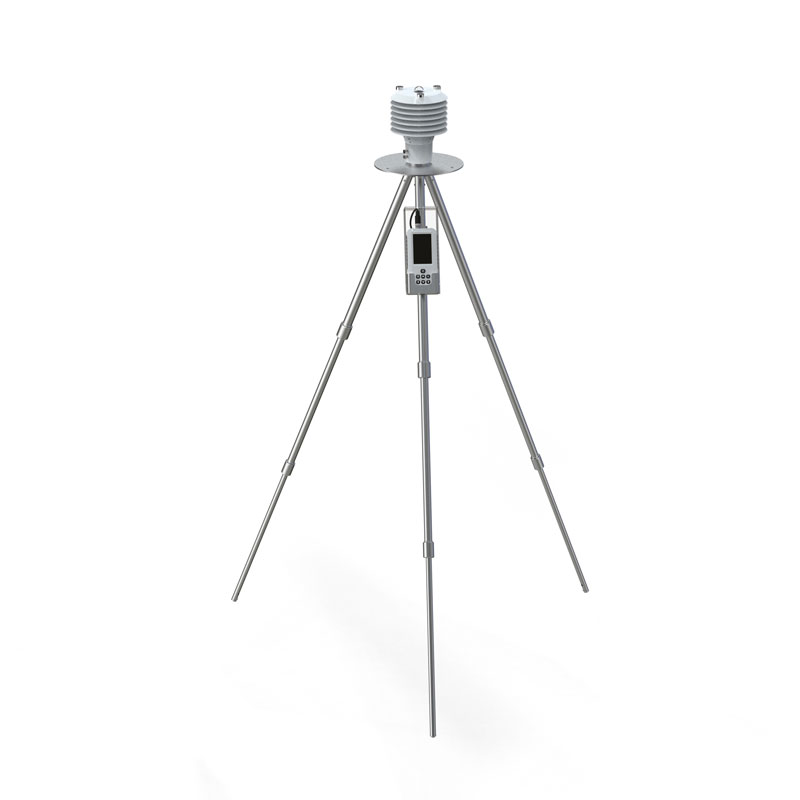
The portable anemometer is a mobile intelligent observation device integrating multiple meteorological monitoring functions. Relying on precision sensors and intelligent chips, it achieves accurate measurement of multiple elements, supports long-term data storage and convenient data transmissi...


 Skype
Skype
 whatsapp
 mail
mail