Tianqiong Sensor IOT Technology Co., Ltd
Sales Manager:Ms. Emily Wang
Cel,Whatsapp,Wechat:+86 15898932201
Email:info@fengtutec.com
Add:No. 155 Optoelectronic Industry Accelerator, Gaoxin District, Weifang, Shandong, China


Sales Manager:Ms. Emily Wang
Cel,Whatsapp,Wechat:+86 15898932201
Email:info@fengtutec.com
Add:No. 155 Optoelectronic Industry Accelerator, Gaoxin District, Weifang, Shandong, China
time:2026-01-26 10:49:11 source:Weather Station viewed:428 time
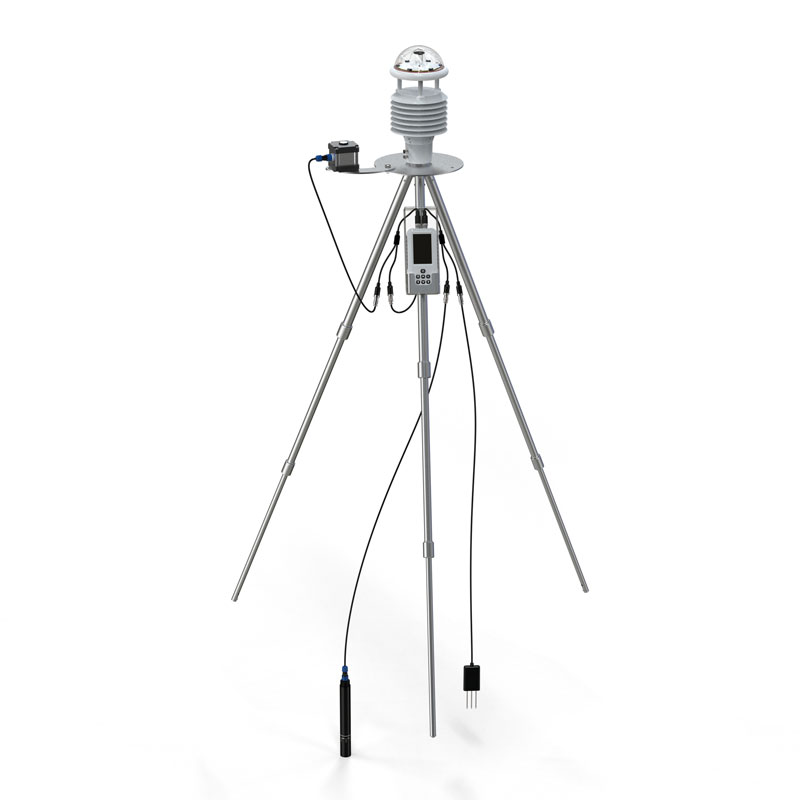
The price range for Vehicle Weather Station typically falls between 6800 and 18800 RMB. This device is a mobile weather monitoring station specifically designed for mobile platforms such as vehicles and ships, capable of monitoring core meteorological elements such as temperature, humidity, wind speed, wind direction, and atmospheric pressure. It is suitable for emergency and mobile environmental monitoring tasks.
Vehicle Weather Station is an integrated meteorological observation device designed for mobile platforms. Its core function is to provide real-time, continuous monitoring and recording of meteorological environmental elements along the route or in the target area while vehicles, ships, or other carriers are in motion or stationary. By highly integrating meteorological sensors, data collectors, and power supply and communication systems, it forms a complete mobile weather station, effectively expanding the spatial coverage and flexibility of meteorological monitoring.
In terms of monitoring capabilities, a standard Vehicle Weather Station typically includes the following basic sensor units: an air temperature sensor for measuring ambient temperature; a relative humidity sensor for monitoring the moisture content in the air; wind speed and wind direction sensors that work together to capture the airflow speed and direction around the vehicle in real time, which is crucial for assessing wind field changes; and an atmospheric pressure sensor for recording atmospheric pressure values. These elements are the core parameters that constitute basic weather conditions. Some more feature-rich models may also integrate rain gauges, solar radiation sensors, or visibility meters to meet the needs of specific monitoring tasks.
Regarding pricing, market data shows that the price range is approximately between 6800 and 18800 RMB. The price difference mainly stems from several technical configuration factors. The basic model (around 6800 RMB) usually includes sensors for the five core meteorological elements mentioned above, using medium-precision sensors and local data storage, with a relatively simple structure. As the configuration improves, the price increases accordingly. High-end models (close to 18800 RMB) may use higher-precision sensors, include more monitoring elements, be equipped with more stable and reliable wireless data transmission modules (such as 4G/5G or satellite communication), and have a higher level of equipment protection (such as shockproof, dustproof, and waterproof) to adapt to harsher mobile monitoring environments. In addition, whether it includes mounting brackets, dedicated power management modules, and customized software analysis platforms will also affect the final system cost.
From an installation and application perspective, Vehicle Weather Station needs to be specifically designed to adapt to mobile environments. The main unit of the device must be securely mounted on the vehicle roof or a dedicated mast to ensure the sensors are exposed to undisturbed airflow, which is particularly crucial for accurate wind speed and direction measurements. The power supply system typically draws power directly from the vehicle battery and is equipped with voltage regulation and protection circuits. Collected data can be transmitted wirelessly in real-time to a command center for remote monitoring. This design makes it particularly suitable for two main scenarios: firstly, emergency meteorological monitoring, where the monitoring vehicle can quickly reach the scene of natural disasters or sudden environmental events to provide first-hand meteorological data to support rescue decisions; secondly, large-scale mobile meteorological surveys or scientific observations, such as for urban heat island effect research, wind energy resource surveys, meteorological monitoring along highways, or ecological scientific research, enabling efficient acquisition of spatially continuous meteorological data.
In summary, the Vehicle Weather Station, as a mobile and flexible meteorological monitoring solution, integrates multiple core sensors to achieve environmental parameter acquisition while in motion. Its market price varies depending on configuration and performance. Users should consider specific monitoring accuracy requirements, data transmission needs, environmental adaptability, and project budget when making a selection. This device plays an indispensable role in emergency response, environmental monitoring, and scientific research, effectively improving the spatiotemporal resolution and response speed of meteorological data acquisition.

Negative oxygen ions exert a significant impact on the physiological activities of the human body, and their effects are mainly realized through the nervous system and blood circulation process. For this reason, the concentration of negative oxygen ions in the air has become one of the key indicator...
Hospital water quality monitoring can accurately monitor key parameters of water bodies online, such as residual chlorine, pH, and water temperature. It supports multi-sensor expansion configurations, retains and exports historical monitoring and alarm data, and connects to various devices usi...
The River Flow Monitoring System is mainly used for remotely grasping the real-time hydrological conditions of various water areas, including natural rivers, artificial canals, and landscape watercourses. It assists relevant authorities in promptly recording the dynamic changes of river water source...
In the field of meteorological monitoring, traditional monitoring methods have limitations in specific geographical environments. Ground-based equipment is restricted by terrain and difficult to achieve comprehensive coverage; while satellites can provide macro-level monitoring, they lack precision...


 Skype
 whatsapp
 mail