Tianqiong Sensor IOT Technology Co., Ltd
Sales Manager:Ms. Emily Wang
Cel,Whatsapp,Wechat:+86 15898932201
Email:info@fengtutec.com
Add:No. 155 Optoelectronic Industry Accelerator, Gaoxin District, Weifang, Shandong, China


Sales Manager:Ms. Emily Wang
Cel,Whatsapp,Wechat:+86 15898932201
Email:info@fengtutec.com
Add:No. 155 Optoelectronic Industry Accelerator, Gaoxin District, Weifang, Shandong, China
time:2025-11-27 10:50:35 source:Weather Station viewed:448 time
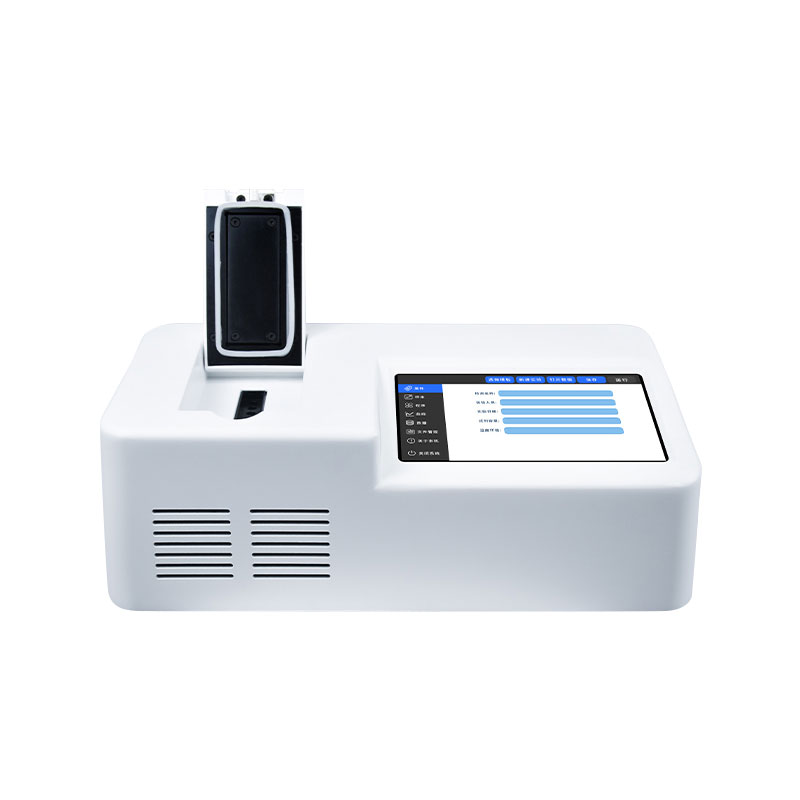
Transgene detection is a portable device specifically designed for detecting genetically modified (GM) components in soybeans. This instrument utilizes rapid PCR technology, allowing users to perform on-site sample DNA extraction and detection analysis, quickly identifying GM components in soybeans and other food crops. Its lightweight design makes it easy to carry, meeting the needs of on-site testing.
Transgene detection is a professional device in modern food quality testing systems, primarily used for rapid screening and identification of GM components in crops such as soybeans and rice. The instrument combines molecular biology detection technology with a portable design, enabling rapid on-site detection of genetically modified products.
In terms of technical principles, the detector is based on polymerase chain reaction (PCR) technology. Through specific primer design, it can amplify and detect common GM elements, such as the 35S promoter and NOS terminator, and other characteristic sequences. The instrument's built-in temperature control system precisely controls the denaturation, annealing, and extension steps of the reaction, ensuring the specificity and efficiency of the amplification reaction. The detection sensitivity meets the requirements of relevant standards, such as those of the European Union.
The device's operation process includes several standardized steps. First, sample pretreatment is required, grinding the soybean sample into a uniform powder. Then, a matching nucleic acid extraction kit is used to extract genomic DNA, a process that usually takes less than 15 minutes. The extracted DNA template is added to the rapid PCR reaction system and placed in the instrument for amplification. The new rapid PCR technology reduces the reaction time from several hours to 30-40 minutes. Finally, the amplification results are analyzed using a fluorescence detection system to determine whether the sample contains genetically modified components.
The portability of this detector is reflected in several aspects. The overall weight is typically less than 5 kilograms, and the dimensions are suitable for placement in a standard testing case. The power system supports battery operation, ensuring normal use in the field or in locations without a power supply. The operating interface uses a touchscreen design, simplifying the operation process. These design features allow the device to adapt to the testing needs of different locations, including laboratories, warehouses, and fields.
In terms of detection capabilities, the instrument can identify a variety of genetically modified components. In addition to common Roundup Ready soybean varieties, it can also detect other commercially available GM soybean varieties. By using different detection kits, qualitative screening and identification of specific transformation events can be performed. Some high-end models also feature quantitative detection capabilities, allowing them to determine the proportion of genetically modified components in a sample.
Several technical aspects require attention when using this equipment. Sample collection must follow the principle of random sampling to ensure the representativeness of the tested samples. Cross-contamination must be prevented during DNA extraction, and all operations should be performed on a dedicated workbench. Positive and negative controls should be included in each test to ensure the reliability of the results. The instrument requires regular calibration and maintenance to ensure the accuracy of the temperature control system.
This detection instrument has significant application value in food safety supervision. Import and export inspection agencies can use it for rapid screening of imported soybeans at ports, improving customs clearance efficiency. Market regulatory departments can use this equipment to conduct random inspections of soybean products in circulation, strengthening the management of genetically modified labeling. Agricultural production enterprises can also use it to monitor raw material quality and ensure that products meet relevant standards.
In practical use, interpreting the test results requires professional knowledge. The instrument usually provides clear positive/negative result indications, but operators need to understand the possibility of false positive or false negative results. For example, some wild soybean varieties may contain natural variations similar to genetically modified sequences, which requires confirmation through multiple target detections. For borderline results, repeated testing is recommended to ensure accuracy.
With the development of molecular detection technology, the functions of the Transgene detection instrument are constantly improving. New generation equipment is developing towards higher throughput and faster speed. Some new instruments have achieved chip-based detection, allowing simultaneous detection of multiple genetically modified targets. The addition of wireless data transmission capabilities allows test results to be uploaded to the regulatory platform in real time, improving the efficiency of testing.
The use of this detection instrument also requires a supporting quality control system. Laboratories need to establish standard operating procedures to standardize the testing process. Operators should receive professional training, mastering basic molecular biology knowledge and equipment operation skills. Regular participation in proficiency testing is necessary to ensure the accuracy and comparability of test results. These measures together constitute a complete quality assurance system for genetically modified organism detection.
The Portable Weather Station is a lightweight monitoring device that integrates the functions of meteorological data observation, recording, and analysis. Its core positioning is to meet the meteorological monitoring needs in various mobile scenarios and emergency situations. With practicality and c...
FT-WQX5 5-in-1 Compact Weather Sensor is an efficient tool in the field of environmental monitoring, capable of simultaneously monitoring five key meteorological parameters: ambient temperature, relative humidity, wind speed, wind direction, and atmospheric pressure.The instrument adopts an integrat...
Modular Weather Station is a high-precision, automated meteorological observation device that integrates the measurement of multiple parameters—including wind speed, wind direction, temperature, humidity, atmospheric pressure, PM2.5, PM10, and noise—into a single unit. Characterized by its c...
The GNSS displacement monitor utilizes differential RTK technology to achieve millimeter-level displacement monitoring. It is suitable for scenarios such as dams, bridges, slopes, and tailings ponds. The equipment is resistant to complex environments, has low power consumption, supports offlin...


 Skype
Skype
 whatsapp
 mail
mail