Tianqiong Sensor IOT Technology Co., Ltd
Sales Manager:Ms. Emily Wang
Cel,Whatsapp,Wechat:+86 15898932201
Email:info@fengtutec.com
Add:No. 155 Optoelectronic Industry Accelerator, Gaoxin District, Weifang, Shandong, China


Sales Manager:Ms. Emily Wang
Cel,Whatsapp,Wechat:+86 15898932201
Email:info@fengtutec.com
Add:No. 155 Optoelectronic Industry Accelerator, Gaoxin District, Weifang, Shandong, China
time:2026-07-06 10:44:00 source:Weather Station viewed:38 time
Radar level gauges utilize FMCW millimeter-wave technology for non-contact water level measurement, with a ranging range of 0.1 to 40 meters, an accuracy of ±5 millimeters, and a resolution of 1 millimeter. The equipment is compact, consumes little power, and has strong anti-interference capabilities, making it suitable for water level monitoring scenarios in rivers, reservoirs, water storage tanks, sewage pipe networks, and flash flood warning systems.
A radar level gauge is a non-contact water level measuring instrument based on the principle of microwave radar ranging. The device transmits radar pulses through a radar level sensor antenna. These pulses are reflected back after encountering the water surface. The antenna receives the reflected pulses, and the distance between the radar level gauge and the water surface is calculated based on the time interval between pulse transmission and reception. Combined with the device's installation elevation, real-time water level data can be obtained. Currently, mainstream radar level gauges use Frequency Modulated Continuous Wave (FMCW) mode, operating in multiple frequency bands including 24 GHz, 26 GHz, 77 GHz, and 80 GHz.
In terms of technical parameters, radar level gauges typically have a ranging range of 0.1 to 40 meters, with some products reaching a maximum range of 70 meters or even 120 meters. Measurement accuracy is generally ±3 mm to ±5 mm, with a resolution of 1 mm and a data refresh rate as fast as 40 milliseconds. The equipment adopts a non-contact installation design, is small in size and compact in structure, and features low power consumption and strong anti-interference capabilities.
Radar level gauges are widely used for water level monitoring in rivers, reservoirs, open channels, and canals. In the field of water conservancy management, the equipment can be used for water level monitoring in reservoirs and rivers, supporting flood warnings and water resource scheduling. In urban drainage systems, radar level gauges can be used for water level monitoring in sewers and pumping stations, ensuring the efficient operation of drainage systems. Furthermore, this equipment can also be used for water level control in sewage treatment plants and sewage outlets, as well as water level management in industrial storage tanks and cooling pools.
Compared to traditional contact level gauges, radar level gauges have significant advantages. The non-contact measurement method avoids the influence of water sediment content, water flow velocity, and water quality changes on the measurement results. The equipment features no mechanical wear, a long lifespan, and low maintenance costs. Its advantages are even more pronounced in terrain conditions with steep slopes and significant water level fluctuations. The equipment can achieve continuous online monitoring without the need for water level wells. Furthermore, radar water level gauges are simple to install and easy to use, making them widely used in hydrological emergency monitoring and automatic water level reporting.
When selecting a model, users should focus on key parameters such as measurement range, accuracy, beam angle, protection level, communication method, and power supply conditions. The measurement range should be determined comprehensively based on the installation height, highest water level, and lowest water level. An excessively wide beam angle is susceptible to interference from reflections from surrounding structures such as bridge piers and well walls, causing data fluctuations. The protection level should meet the operational requirements of long-term humid environments such as outdoors, near water, and underground. For remote river channels, reservoirs, and other scenarios where power access is difficult, it is recommended to choose a low-power model that supports solar power.
The Portable IV Curve Tester is known as the "stethoscope" of power stations, capable of accurately diagnosing the operational status of power stations.The working principle of the Portable IV Curve Tester is based on the photovoltaic effect and basic circuit principles. When light shines...
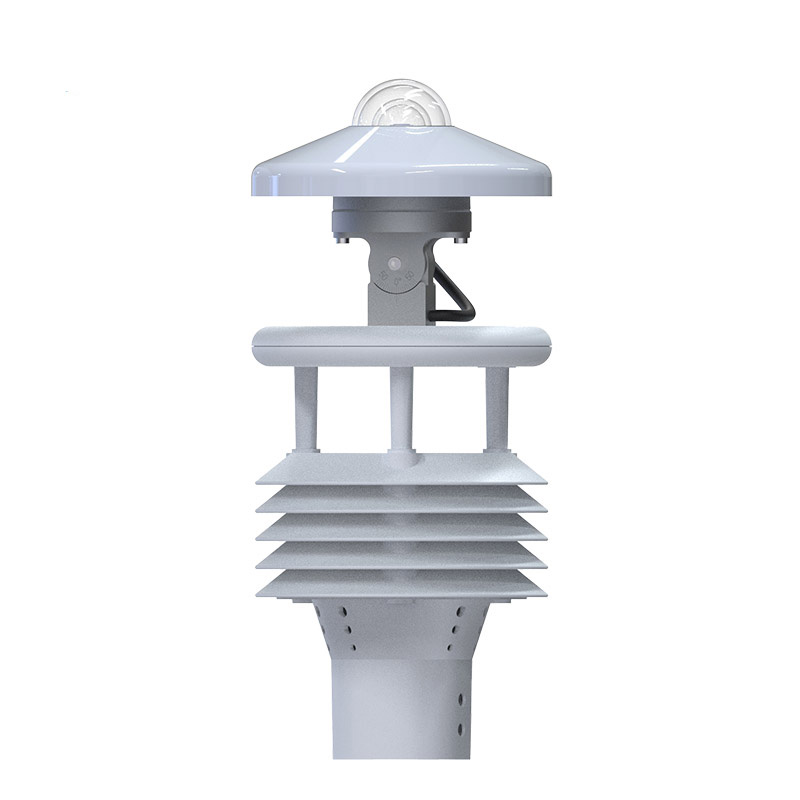
Air quality monitoring stations are compact in size and occupy a small footprint, making them easy to install and deploy. They can be flexibly set up in various locations, such as urban streets, parks, schools, communities, and industrial parks, and even installed on external walls of buildings or s...
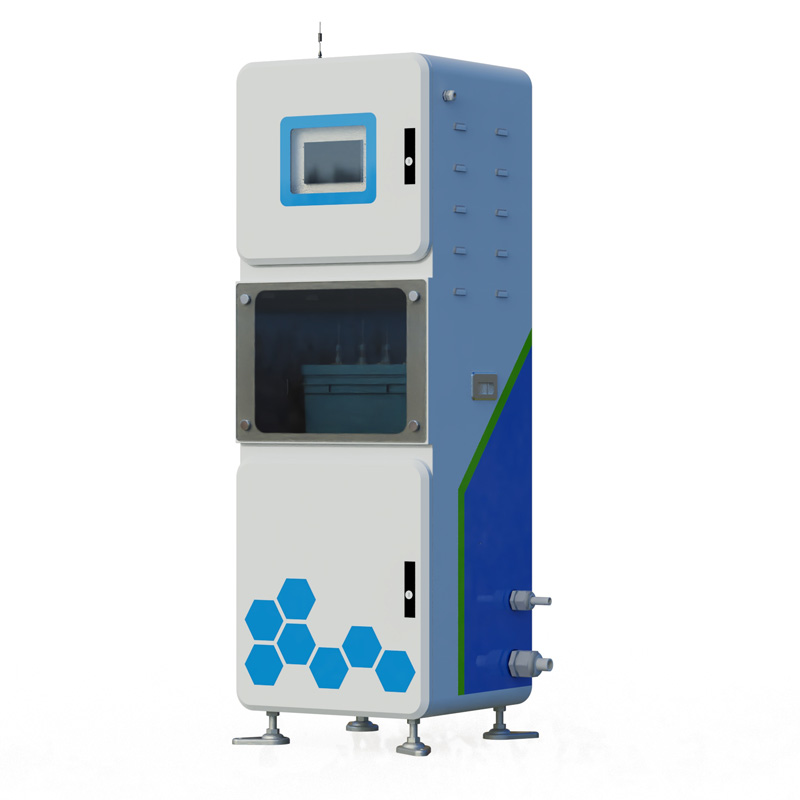
The water quality online monitoring micro-station integrates units for water sampling and distribution, analysis, and quality control. Core parameters—including total phosphorus, total nitrogen, chemical oxygen demand (COD), permanganate index, and ammonia nitrogen—are determined in strict a...
EL (Electroluminescence) detection, a non-destructive testing method, works as follows: When a forward bias is applied to a photovoltaic (PV) module, electrons and holes diffuse to the P and N regions, respectively. The radiative recombination of charge carriers generates photons, resulting in the e...


 Skype
Skype
 whatsapp
 mail
mail