Tianqiong Sensor IOT Technology Co., Ltd
Sales Manager:Ms. Emily Wang
Cel,Whatsapp,Wechat:+86 15898932201
Email:info@fengtutec.com
Add:No. 155 Optoelectronic Industry Accelerator, Gaoxin District, Weifang, Shandong, China


Sales Manager:Ms. Emily Wang
Cel,Whatsapp,Wechat:+86 15898932201
Email:info@fengtutec.com
Add:No. 155 Optoelectronic Industry Accelerator, Gaoxin District, Weifang, Shandong, China
time:2026-04-27 11:34:25 source:Weather Station viewed:539 time
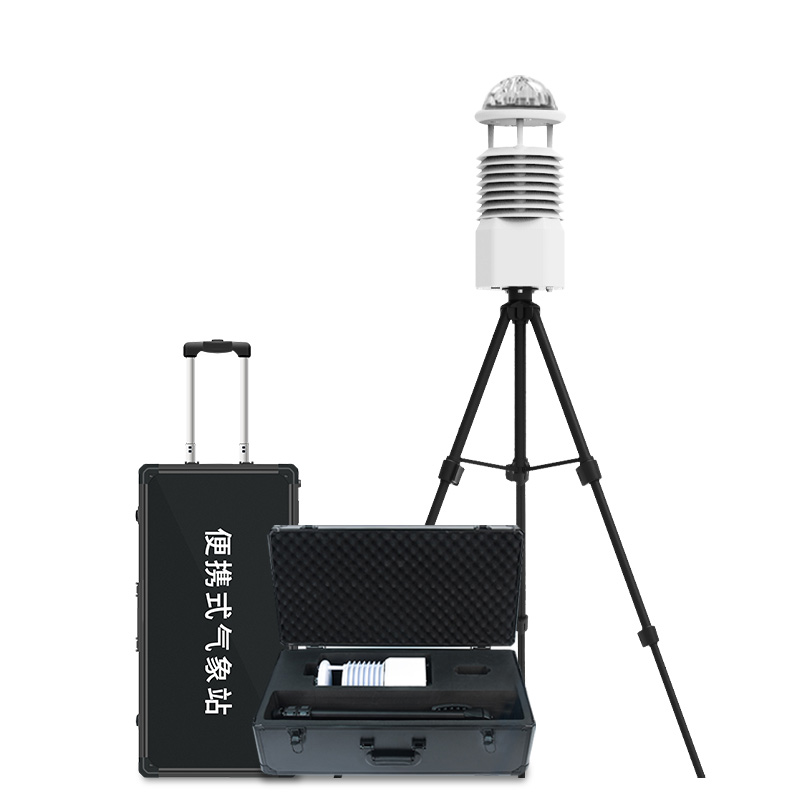
Digital Weather Station is a highly integrated, low-power, and rapidly deployable high-precision automatic meteorological observation device. It provides real-time monitoring of nine key meteorological elements—including wind speed, wind direction, temperature, humidity, atmospheric pressure, optical precipitation, total radiation, PM2.5, and PM10—and features an ingress protection rating of IP65 or higher.
Traditional outdoor meteorological monitoring has long been plagued by issues such as bulky equipment, complex installation procedures, and a heavy reliance on mains power. In areas lacking grid coverage—such as mountainous regions, forests, and arid plains—conventional weather stations are difficult to deploy; even if installation is attempted, it entails frequent manual maintenance and prohibitive transportation costs. The advent of Digital Weather Station has revolutionized this landscape. This device is a highly integrated, low-power, and rapidly deployable high-precision automatic meteorological observation system designed specifically for convenient field monitoring. It comprises five core components: meteorological sensors, a data acquisition unit, a solar power supply system, a mounting pole assembly, and a cloud-based platform.
In terms of technical architecture, Digital Weather Station seamlessly integrates the measurement capabilities for all nine meteorological elements—wind speed, wind direction, temperature, humidity, atmospheric pressure, optical precipitation, total radiation, PM2.5, and PM10—into a single unified unit. Wind speed and direction are measured using ultrasonic principles, featuring a wind speed range of 0 to 60 m/s and a wind direction range of 0 to 360°, with an accuracy of ±2°. Air temperature is measured within a range of -40°C to 80°C, with an accuracy of ±0.3°C. Humidity is measured within a range of 0% to 100% RH, with an accuracy of ±3% RH. Atmospheric pressure is measured within a range of 300 to 1100 hPa, with an accuracy of ±0.25%. Optical precipitation measurement features an upper limit of 4 mm/min and a resolution of 0.01 mm. Both PM2.5 and PM10 measurements cover a range of 0 to 1000 µg/m³. Total radiation measurement features an upper limit of 1242 W/m² and an accuracy of better than ±3%. The sensor housing is constructed from imported ABS material, effectively withstanding corrosive environments such as salt spray. With an ingress protection rating exceeding IP65, the device operates stably under harsh conditions, including heavy rain, wind-blown sand, and salt mist.
The advantages of this device in practical application are primarily manifested in three key areas. First is its rapid deployment capability. The entire unit weighs no more than 5 kg, allowing a single individual to carry and install it; deployment—from unboxing to full setup—takes less than two minutes. This eliminates the need for complex calibration procedures, making it ideal for emergency meteorological observations and temporary monitoring tasks. Second is its low power consumption and self-powered design. The complete unit consumes only 1.5 W and is equipped with a high-capacity 12,000 mAh lithium battery, providing a continuous operating life of over 50 hours on a single charge. It also supports the addition of an external solar panel, enabling long-term, unattended operation in remote field locations where access to mains electricity is unavailable. Third is its flexible data transmission capability. The device comes standard with three transmission options—GPRS, Bluetooth, and RS485-to-USB—supporting the real-time uploading of data to a cloud-based platform. Users can remotely monitor meteorological data and manage the device via a computer or mobile phone. This device meets the monitoring requirements of various sectors—including agriculture, forestry, and scientific research—and is widely utilized in fields such as meteorology, agro-forestry, environmental protection, marine science, airport and port operations, scientific expeditions, and campus education. In agricultural cultivation zones, it enables the real-time acquisition of microclimate data from farmlands, providing essential support for precision irrigation and early warning systems for pests and diseases. In forestry regions, it serves as a tool for forest fire prevention monitoring, allowing for the continuous tracking of temperature, humidity, and precipitation fluctuations within forest areas. For field-based scientific expeditions, it provides research teams with continuous and reliable meteorological data records, facilitating long-term observational tasks without the need for constant on-site supervision.
Wheat seedling conditions are usually classified into strong seedlings, robust seedlings (including first - class and second - class seedlings), and weak seedlings (third - class seedlings). For different seedling conditions, differential management measures need to be taken during key growth stages...
In the context of the increasingly accelerating urbanization process today, air quality has become one of the key elements for measuring the quality of life. However, due to the high construction and operation costs and fixed layout, traditional large-scale environmental monitoring stations find it...
In the field of meteorological monitoring, refined monitoring has become a trend. As an important part of refined monitoring, micro-meteorological monitoring is dedicated to obtaining more accurate and detailed meteorological information. It focuses on the changes of meteorological elements within a...
Negative oxygen ions exert a significant impact on the physiological activities of the human body, and their effects are mainly realized through the nervous system and blood circulation process. For this reason, the concentration of negative oxygen ions in the air has become one of the key indicator...


 Skype
Skype
 whatsapp
 mail
mail