Tianqiong Sensor IOT Technology Co., Ltd
Sales Manager:Ms. Emily Wang
Cel,Whatsapp,Wechat:+86 15898932201
Email:info@fengtutec.com
Add:No. 155 Optoelectronic Industry Accelerator, Gaoxin District, Weifang, Shandong, China


Sales Manager:Ms. Emily Wang
Cel,Whatsapp,Wechat:+86 15898932201
Email:info@fengtutec.com
Add:No. 155 Optoelectronic Industry Accelerator, Gaoxin District, Weifang, Shandong, China
time:2026-07-01 10:06:07 source:Weather Station viewed:46 time
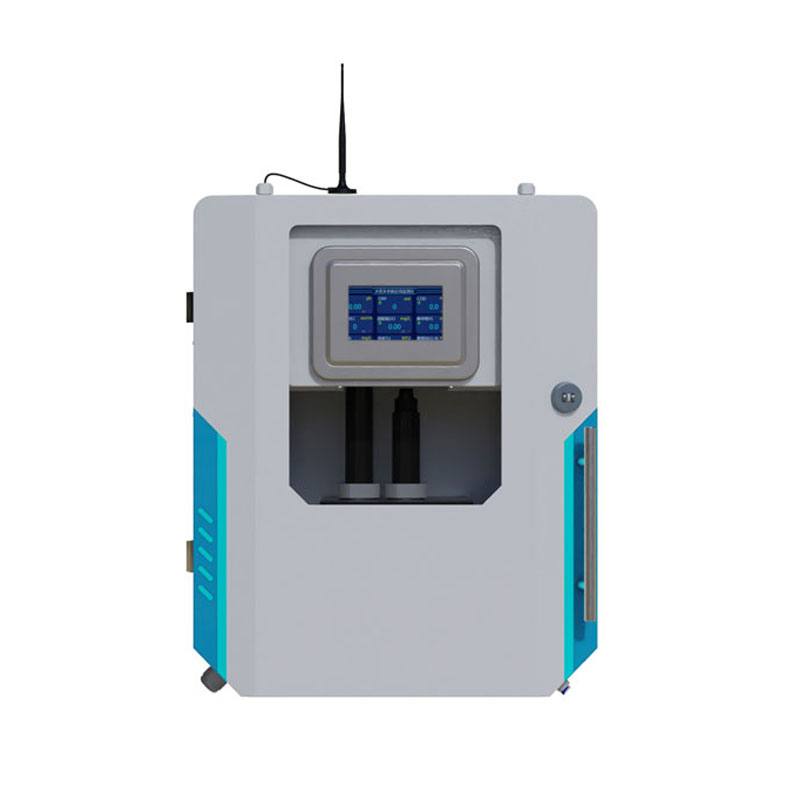
Based on IoT technology, this simplified multi-parameter water quality monitoring terminal integrates sensors for residual chlorine, pH, water temperature, turbidity, and conductivity, and is used in water supply terminals with pipe pressures below 0.3 MPa. The device features data acquisition and display, historical curves, and real-time cloud-based observation and analysis capabilities, suitable for water plants, pipe networks, secondary water supply systems, and swimming pools.
The simplified multi-parameter water quality monitoring terminal is a comprehensive sensor acquisition and display device based on IoT technology, primarily used for water supply quality monitoring. The system consists of a flow stabilization and venting unit, an analysis and monitoring sensor unit, a system control unit, and a remote communication unit. It possesses complete power supply, network communication, and real-time cloud-based data observation and analysis capabilities, enabling continuous tracking and recording of water quality changes.
The simplified multi-parameter water quality monitoring terminal is specifically designed for water supply terminals with pipe pressures below 0.3 MPa. The main monitoring parameters consist of residual chlorine sensors, pH sensors, water temperature sensors, turbidity sensors, and conductivity sensors. Residual chlorine is a key indicator for measuring the disinfection effect of tap water; pH value reflects the acid-base balance of the water body; turbidity directly relates to the clarity and suspended solids content of the water; and conductivity can be used to assess the total amount of dissolved solids in the water. Through the coordinated monitoring of these multiple parameters, the equipment can comprehensively reflect the water quality at the point of sale.
At the application level, the simplified multi-parameter water quality monitoring terminal can be widely deployed in urban or rural waterworks, tap water transmission networks, secondary water supply facilities, end-user points, indoor swimming pools, large-scale water purification equipment, and direct drinking water systems. As an important online analysis device in water plant production process control, water conservancy management, water affairs supervision, and health supervision, this terminal can provide relevant departments with continuous and reliable water quality data support, helping to promptly detect water quality anomalies and take corresponding measures.
From a technical architecture perspective, the simplified multi-parameter water quality monitoring terminal integrates data acquisition, display, and historical curve recording functions. Users can obtain real-time monitoring data through a digital communication interface. The remote communication unit supports uploading data to a cloud platform for remote viewing and trend analysis. This design transforms water quality monitoring from being limited to on-site manual sampling and laboratory testing into an automated monitoring mode that allows for remote access and continuous recording. The integrated structure of the equipment also reduces the complexity of installation and maintenance, making it suitable for water supply monitoring scenarios of different scales.
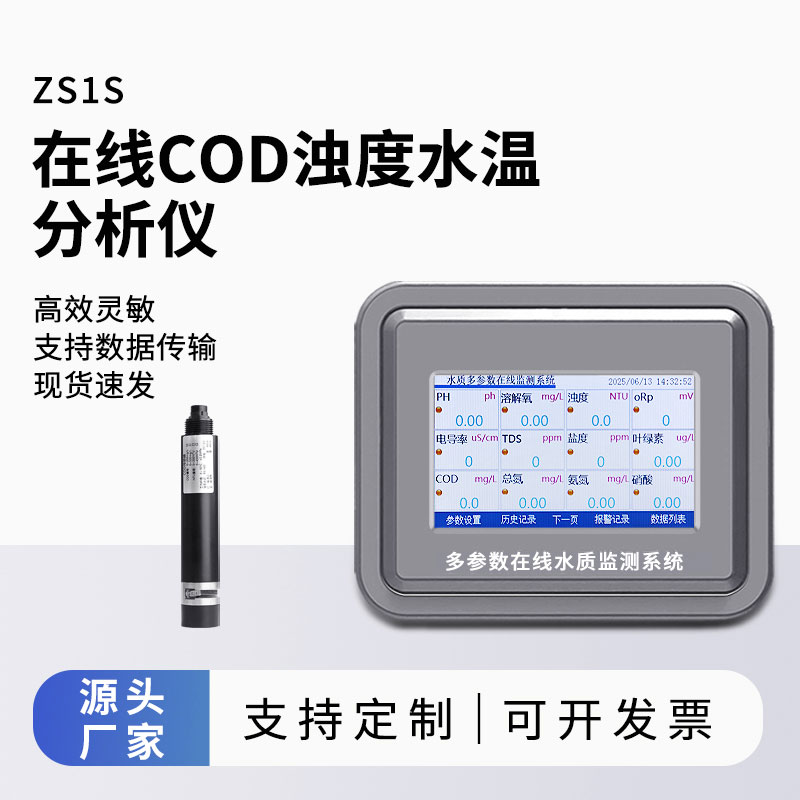
Water quality monitoring equipment is an integrated device based on Internet of Things (IoT) technology, capable of synchronously monitoring water conductivity, pH, dissolved oxygen, ammonia nitrogen, turbidity, and water temperature online. This system supports automatic data acquisition and transmission, and is suitable for long-term continuous monitoring in drinking water distribution networks and secondary water supply systems....
Microclimate refers to the small - scale climatic characteristics of the near - surface atmosphere and the upper layer of soil, which are caused by the specific structural features of the underlying surface. These characteristics are usually reflected in individual meteorological values and sometime...
IoT Water Quality Monitoring Station system consists of six parts: a water quality sensor, a data acquisition unit, a communication system, a power supply system, an overall support frame, and a water quality monitoring platform. It can simultaneously monitor multiple water quality elements, i...
In fields such as agricultural production, outdoor sports, and transportation, accurately grasping weather conditions is crucial. Although traditional large-scale weather stations can provide macro meteorological data, they have shortcomings in monitoring accuracy in local areas and are difficult to...


 Skype
Skype
 whatsapp
 mail
mail