Tianqiong Sensor IOT Technology Co., Ltd
Sales Manager:Ms. Emily Wang
Cel,Whatsapp,Wechat:+86 15898932201
Email:info@fengtutec.com
Add:No. 155 Optoelectronic Industry Accelerator, Gaoxin District, Weifang, Shandong, China


Sales Manager:Ms. Emily Wang
Cel,Whatsapp,Wechat:+86 15898932201
Email:info@fengtutec.com
Add:No. 155 Optoelectronic Industry Accelerator, Gaoxin District, Weifang, Shandong, China
time:2026-07-27 10:24:38 source:Weather Station viewed:35 time
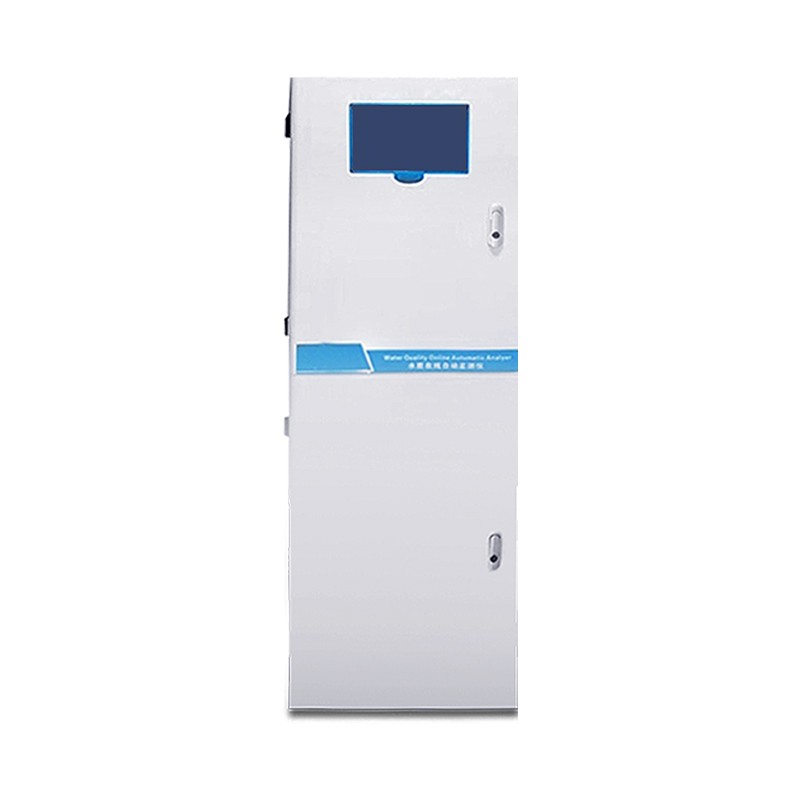
The Total Phosphorus Analyzer determines total phosphorus concentration in water using the ammonium molybdate spectrophotometric method and is suitable for both online monitoring and laboratory analysis of surface water, industrial wastewater, and domestic sewage. The instrument features automatic calibration, automatic cleaning, and data analysis capabilities; it offers high measurement accuracy and a long maintenance cycle, meeting detection requirements across various measurement ranges.
The Total Phosphorus Analyzer is a specialized analytical device designed to measure total phosphorus content in water. Total phosphorus—comprising dissolved, particulate, organic, and inorganic phosphorus—is a key indicator of the degree of water eutrophication. When phosphorus levels exceed 0.2 mg/L, excessive algae proliferation can occur, reducing water transparency and degrading water quality in lakes and rivers. Consequently, accurate monitoring of total phosphorus is crucial for water environmental protection and pollution control.
Currently, Total Phosphorus Analyzer units on the market are primarily designed and manufactured in accordance with the national standard GB11893-89, "Water Quality—Determination of Total Phosphorus—Ammonium Molybdate Spectrophotometric Method." The core measurement principle involves converting phosphorus elements within phosphorus-containing compounds in the water sample into orthophosphate; this occurs under high-temperature, high-pressure, and acidic conditions, driven by atomic oxygen released from the decomposition of persulfate. The orthophosphate then reacts with ammonium molybdate and antimony potassium tartrate to form phosphomolybdenum heteropoly acid, which is subsequently reduced by a reducing agent to form a blue complex. Absorbance is measured at a specific wavelength and converted into a concentration value. Some products also utilize the molybdenum yellow method, measuring the absorbance of the phosphorus-vanadium-molybdenum yellow complex at a wavelength of 420 nm.
Regarding technical parameters, the measurement range of the Total Phosphorus Analyzer typically covers multiple tiers—such as 0–2 mg/L, 0–10 mg/L, and 0–50 mg/L—allowing users to select or customize the range based on actual needs. The instrument's indication error is generally controlled within ±3%, the detection limit can reach 0.01 mg/L, and repeatability is better than ±2%. The minimum measurement cycle is 30 minutes, and the calibration cycle can be set as required. Regarding reagent consumption, some products require only 1.5 mL per dose, effectively reducing operating costs.
When selecting an instrument, its anti-interference capability is a key consideration. Factors such as water sample color, suspended solids, and air bubbles can affect measurement accuracy; however, advanced photoelectric quantification technology and dual-beam designs can effectively mitigate these interferences. Automation is another important factor; instruments featuring automatic calibration, automatic cleaning, fault self-diagnosis, and remote monitoring capabilities can significantly reduce the workload associated with operation and maintenance. In terms of maintenance intervals, some products offer up to 720 hours of operation, requiring less than two hours of maintenance per month. Data storage and output capabilities are also crucial; products supporting RS485, RS232, and USB interfaces, as well as 4–20 mA signal output, facilitate easier system integration and data management.
Cellular Weather Station is a high-precision automatic meteorological observation device featuring an integrated 5-element sensor. It enables real-time observation of key meteorological parameters—including wind speed, wind direction, air temperature, humidity, and atmospheric pressure—and s...
Water Quality Monitoring Data Buoys can be fixed in water bodies for a long time, collecting real-time and continuous water quality data such as water temperature, pH value, dissolved oxygen, ammonia nitrogen, and turbidity. With the help of this real-time data, dynamic changes in water quality can...
While traditional environmental air quality monitoring stations (national and provincial control points) provide accurate data with legal validity, their high construction and operational costs result in insufficient spatial distribution density. This sparse layout primarily serves regional macro ai...
Based on microwave radar technology, the system measures water level, flow velocity, flow rate, and rainfall in channels non-contactly. It is unaffected by temperature, sediment, or floating debris, making it suitable for rivers, irrigation canals, and flood control early warning systems....


 Skype
Skype
 whatsapp
 mail
mail