Tianqiong Sensor IOT Technology Co., Ltd
Sales Manager:Ms. Emily Wang
Cel,Whatsapp,Wechat:+86 15898932201
Email:info@fengtutec.com
Add:No. 155 Optoelectronic Industry Accelerator, Gaoxin District, Weifang, Shandong, China


Sales Manager:Ms. Emily Wang
Cel,Whatsapp,Wechat:+86 15898932201
Email:info@fengtutec.com
Add:No. 155 Optoelectronic Industry Accelerator, Gaoxin District, Weifang, Shandong, China
time:2025-11-12 09:14:57 source:Weather Station viewed:616 time
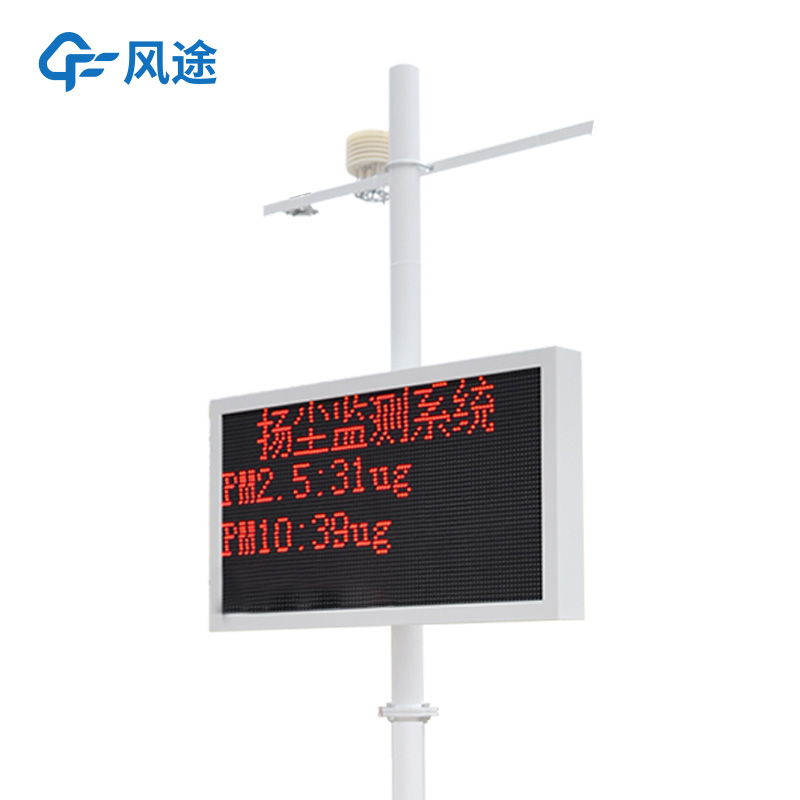
The FT-YC03 Online Dust Monitoring System is an intelligent monitoring device that integrates multiple sensing and transmission technologies, designed for monitoring dust and noise pollution. It is widely used in environmental supervision and other fields.
In the process of urbanization and industrialization, dust and noise have become prominent environmental issues. Dust accounts for 28% of air pollution sources, covering various non-point source pollution origins such as construction, roads, and storage yards. These types of pollution sources are difficult to prevent and control. Traditional manual inspections struggle to achieve comprehensive coverage, lack timeliness, and often encounter situations where regulations are circumvented to avoid inspection. On the other hand, noise pollution includes four main categories: industrial, traffic, construction, and domestic noise, which chronically disturb residents' lives and health. Previous reliance on manual on-site monitoring was not only inefficient but also faced challenges such as difficult evidence collection and data delays, failing to meet the needs of refined management. This led to the creation of the Online Dust Monitoring System.
The FT-YC03 consists of components including sensors, a data acquisition and transmission system, and a backend processing platform, with functionalities adapted to diverse monitoring needs. It uses the light scattering method to monitor concentrations of particulate matter like PM2.5 and PM10, employs professional decibel meters to monitor noise with a measurement range of 30-130 dB, and can simultaneously collect meteorological data such as temperature, humidity, wind speed, and wind direction. The equipment can operate 24/7 uninterrupted. After collection, data is uploaded in real-time to the supervision platform via methods like 4G or wired networks. The device also features local storage capability, preserving historical data and ensuring data integrity.
When monitored data exceeds standards, the equipment automatically triggers audible and visual alarms, can activate linked cameras to capture evidence, and can interface with treatment devices like fog cannons and sprayers to achieve timely pollution control. The equipped LED screen displays data on-site, serving both as a warning and facilitating public supervision.
The FT-YC03 Online Dust Monitoring System is widely deployed in areas such as construction sites, industrial parks, and material yards. This data not only provides an objective basis for environmental law enforcement, solving the traditional difficulty of evidence collection but also, through statistical analysis of multi-period and multi-area data, aids in tracing pollution sources and formulating treatment plans.
Once integrated into the urban environmental monitoring network, the FT-YC03 promotes a shift in environmental management from passive rectification to proactive early warning. It can significantly enhance the modernization and intelligence level of urban environmental supervision and provide reliable data for the formulation of relevant environmental policies.
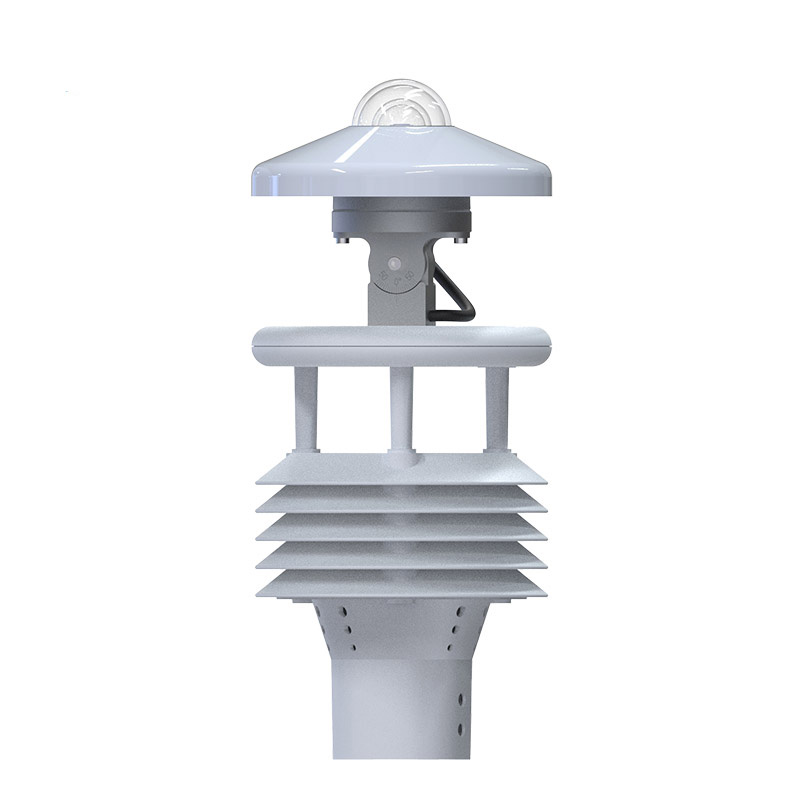
Meteorological Stations integrates twelve meteorological parameters: wind speed, wind direction, temperature, humidity, atmospheric pressure, optical rainfall, PM2.5, PM10, CO, SO2, NO2, and O3. The sensor housing is constructed from imported ABS material, offering an ingress protection rating...
These portable, mobile weather stations are equipped with high-precision sensors. They can simultaneously collect multiple data points, including wind speed, temperature, humidity, air pressure, and GNSS positioning. They also feature long-term data storage capabilities and are primarily used...
fluorescence quantitative PCR instrument is a four-channel 16-well quantitative PCR instrument running on an Android operating system. It has a temperature control range of 4℃ to 99℃ and a heated lid temperature of 30℃ to 108℃, making it suitable for molecular diagnostics, pathogen detecti...
The electronic weather meter is a portable meteorological observation instrument that integrates the measurement of multiple weather parameters into a single unit. It is capable of simultaneously and accurately measuring factors such as wind speed, wind direction, average wind speed, temperatu...


 Skype
Skype
 whatsapp
 mail
mail