Tianqiong Sensor IOT Technology Co., Ltd
Sales Manager:Ms. Emily Wang
Cel,Whatsapp,Wechat:+86 15898932201
Email:info@fengtutec.com
Add:No. 155 Optoelectronic Industry Accelerator, Gaoxin District, Weifang, Shandong, China


Sales Manager:Ms. Emily Wang
Cel,Whatsapp,Wechat:+86 15898932201
Email:info@fengtutec.com
Add:No. 155 Optoelectronic Industry Accelerator, Gaoxin District, Weifang, Shandong, China
time:2026-04-01 11:05:45 source:Weather Station viewed:259 time
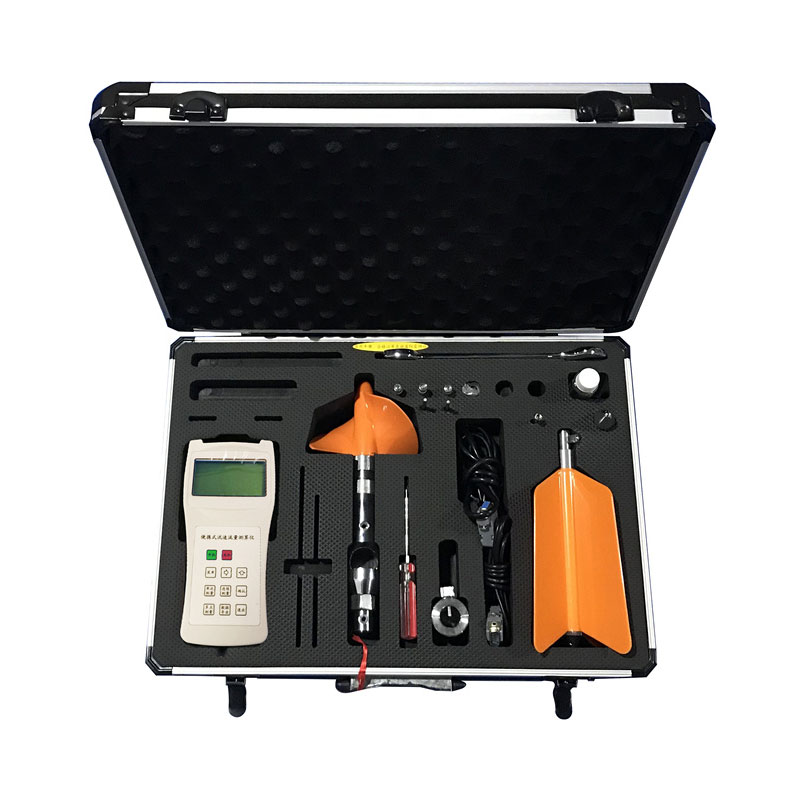
Instrument for measuring water flow velocity consists of a propeller-type flow velocity sensor, a flow velocity calculator, and a measuring rod. It features a velocity measurement range of 0.06 to 8.00 m/s and a measurement error margin of ≤1.5%. Once the signal cable is connected, the device automatically displays the flow velocity, making it suitable for measuring flow rates in open channels such as rivers, lakes, reservoirs, and irrigation canals.
Instrument for measuring water flow velocity is a versatile instrument designed for flow velocity measurement in hydrological surveys. It comprises three main components: a propeller-type flow velocity sensor, a flow velocity calculator, and a measuring rod assembly (0.4m × 4 sections, Ø16mm). The complete set is housed within a high-quality aluminum alloy carrying case with a combination lock, ensuring ease of transport and convenient field deployment. This instrument is primarily utilized to measure the time-averaged flow velocity at predetermined points within the cross-sections of rivers, lakes, reservoirs, and canals. It is applicable across various sectors, including hydrological surveying, water conservancy investigations, agricultural irrigation, runoff experiments, municipal drainage, industrial wastewater management, water resource administration, open channel flow monitoring, hydraulic engineering projects, and construction site drainage/sewage flow measurement.
The operating principle of Instrument for measuring water flow velocity is based on the characteristic that the rotational speed of the propeller-type sensor—when immersed in flowing water—is directly proportional to the flow velocity. The sensor is secured to the measuring rod and positioned at a designated measurement point; as the water flow drives the propeller to rotate, the sensor converts this rotational motion into electrical pulse signals, which are then transmitted to the flow velocity calculator. The calculator acquires, processes, and computes these signals to directly display the measured flow velocity value. Once the operator connects the signal cable, measurement results can be obtained immediately without the need for manual conversion calculations. With a velocity measurement range of 0.06 to 8.00 m/s and a maximum error of 1.5%, the device fully complies with the accuracy requirements for flow velocity measurement stipulated in hydrological surveying standards.
In practical applications, Instrument for measuring water flow velocity is characterized by its ease of operation and portability. The measuring rod assembly consists of four 0.4-meter sections (Ø16mm); these sections can be combined to form rods of varying lengths according to the specific water depth, thereby accommodating measurement requirements for water depths ranging from 0.4 meters to 1.6 meters. The sensor features a propeller-type design that minimizes interference with water flow, making it suitable for a wide variety of aquatic environments, including open channels, rivers, and pipelines. The accompanying measurement unit is equipped with a built-in microprocessor that performs signal filtering and data processing; this enables the device to automatically eliminate measurement interference caused by water flow fluctuations, thereby ensuring data stability. The complete instrument kit is housed within a durable aluminum alloy carrying case, providing effective protection for both the sensor and the measurement unit while facilitating easy transport and long-term storage.
In fields such as hydrological forecasting, hydraulic engineering design, and water resource management, the Instrument for measuring water flow velocity provides reliable data support regarding flow velocity. By measuring the time-averaged flow velocities at various points across a specific cross-section of the water body—and combining these readings with the cross-sectional area—the total discharge volume can be calculated, thereby providing foundational data for hydrological forecasting, water resource allocation, and hydraulic engineering planning. This instrument serves diverse applications: it can be used to monitor water conveyance efficiency in agricultural irrigation channels, to detect flow velocities within sewage networks in municipal drainage systems, and to conduct long-term flow velocity observations at hydrological stations situated along rivers and lakes. Renowned for its stable performance and user-friendly operation, the Instrument for measuring water flow velocity has become a widely adopted tool for flow velocity measurement within the hydrological and hydraulic engineering sectors.
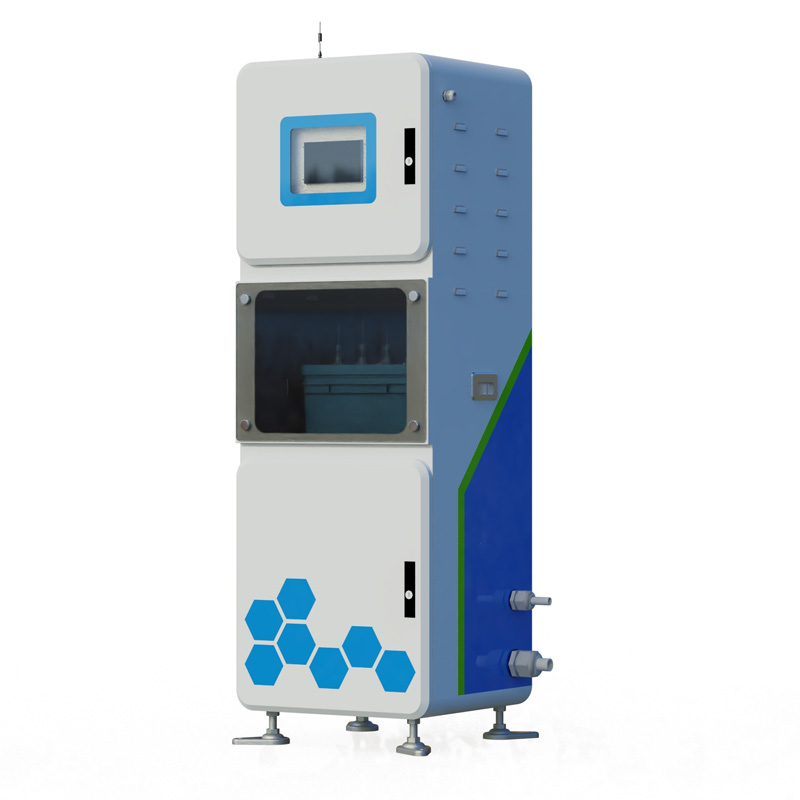
Aquaculture Water Quality Monitoring can monitor multiple core water parameters, including water temperature, pH, ammonia nitrogen, residual chlorine, and dissolved oxygen, 24/7 online. It is adaptable to various water environment monitoring scenarios, supports sensor expansion, data storage a...
PCR Machine employs Peltier heating and temperature control with a PT1000 temperature sensor to achieve a temperature control accuracy of 0.01℃. Equipped with a blue LED solid-state light source and an imported photomultiplier tube detector, it supports 0.2ml single tubes and eight-tube sets,...
Negative ions, known as the "vitamins in the air", are beneficial to human health. Medical research shows that a high-concentration negative ion environment can effectively improve human immunity, promote metabolism, soothe nerves, relieve fatigue, and even have auxiliary therapeutic effec...
Traditional visibility monitoring mainly relies on ground-based fixed stations. While these stations can provide continuous data, they have limitations such as limited spatial coverage, high construction costs, and difficulty in mobility. Especially in complex terrain areas (such as mountainous regi...


 Skype
Skype
 whatsapp
 mail
mail