Tianqiong Sensor IOT Technology Co., Ltd
Sales Manager:Ms. Emily Wang
Cel,Whatsapp,Wechat:+86 15898932201
Email:info@fengtutec.com
Add:No. 155 Optoelectronic Industry Accelerator, Gaoxin District, Weifang, Shandong, China


Sales Manager:Ms. Emily Wang
Cel,Whatsapp,Wechat:+86 15898932201
Email:info@fengtutec.com
Add:No. 155 Optoelectronic Industry Accelerator, Gaoxin District, Weifang, Shandong, China
time:2025-07-01 08:58:08 source:Weather Station viewed:583 time
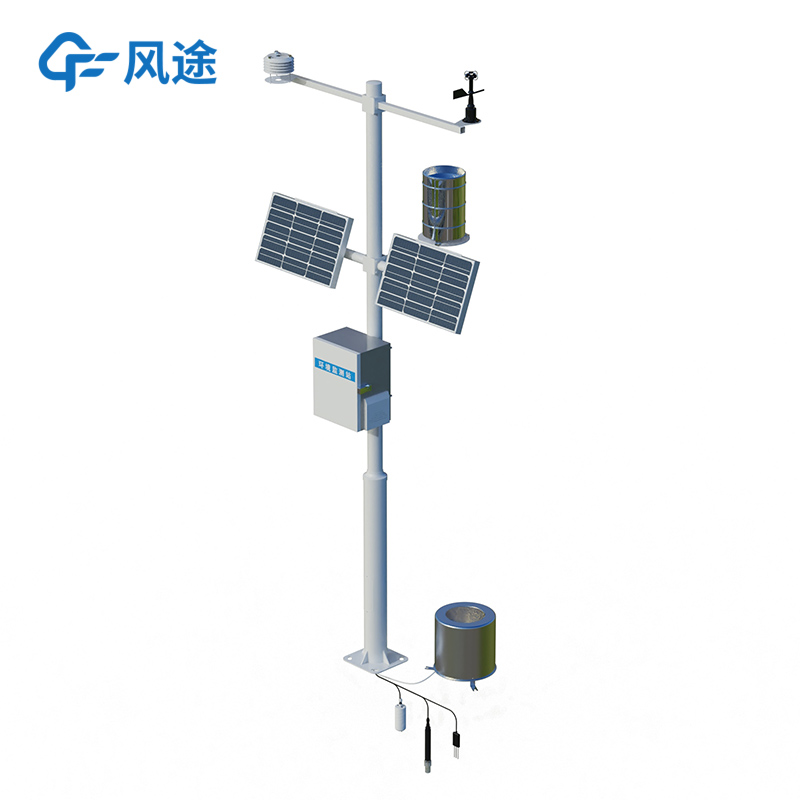
Agricultural Weather Stations,Customizable Parameters and Intelligent Monitoring as Key Tools for Scientific Decision-making in Agriculture
Agricultural Weather Stations enable free customization of parameters and intelligent monitoring, serving as vital tools for scientific decision-making in agricultural production.
Different crops have distinct requirements for meteorological elements in their growth environments, and the equipment allows flexible selection of monitoring parameters based on actual planting needs. Users can independently determine monitoring indicators such as temperature, humidity, light intensity, wind speed, wind direction, rainfall, soil temperature and humidity, and soil pH according to crop varieties and the characteristics of the planting area. For example, in mushroom cultivation, which is sensitive to humidity, the monitoring of air humidity and soil moisture can be prioritized; for fruit and vegetable planting with high light requirements, the accuracy and frequency of light intensity monitoring can be enhanced. The equipment also supports personalized settings for the monitoring frequency and data collection interval of each parameter to meet the diversified needs of different agricultural scenarios.
The intelligent monitoring function makes meteorological data collection and analysis more efficient and precise. Equipped with high-precision sensors, Agricultural Weather Stations achieve real-time and continuous monitoring of meteorological elements, automatically collecting and storing data. Once the monitored data exceeds the preset threshold, the equipment immediately triggers an alarm mechanism, sending abnormal information to relevant personnel in real time via SMS, APP push, etc. Thanks to Internet of Things (IoT) and big data technologies, the equipment conducts in-depth analysis of the collected data, generating visual meteorological data charts and trend reports that intuitively present the variation patterns and development trends of meteorological elements. These analysis results not only provide real-time environmental status information for agricultural production but also predict future weather changes, helping farmers take pre-emptive measures—such as reinforcing greenhouses before heavy rains or irrigating in a timely manner during droughts—to effectively reduce the impact of meteorological disasters on agricultural production and enhance the safety and efficiency of agricultural operations.
The above functions bring great convenience to agricultural production, promoting the development of agriculture towards intelligence and precision, and facilitating the modernization of agriculture.
The core component of an ultrasonic anemometer is the ultrasonic transducer—a device specifically designed to transmit and receive ultrasonic waves. The entire equipment contains four such transducers. It adopts the ultrasonic time-difference method to measure wind speed and wind direction. The pri...
Hospital water quality monitoring can accurately monitor key parameters of water bodies online, such as residual chlorine, pH, and water temperature. It supports multi-sensor expansion configurations, retains and exports historical monitoring and alarm data, and connects to various devices usi...
In traditional agricultural production, there has always been a problem of lag in crop disease prevention and control. Farmers mainly rely on experience to judge diseases, and by the time obvious symptoms appear in the field, certain losses have often been caused. Blind use of pesticides is also com...
Drinking water monitoring system enables real-time, precise detection of key water quality parameters such as residual chlorine, pH, and turbidity. It supports sensor expansion and data export, utilizes standardized industrial communication to interface with various devices, and is suitable for rout...


 Skype
Skype
 whatsapp
 mail
mail