Tianqiong Sensor IOT Technology Co., Ltd
Sales Manager:Ms. Emily Wang
Cel,Whatsapp,Wechat:+86 15898932201
Email:info@fengtutec.com
Add:No. 155 Optoelectronic Industry Accelerator, Gaoxin District, Weifang, Shandong, China


Sales Manager:Ms. Emily Wang
Cel,Whatsapp,Wechat:+86 15898932201
Email:info@fengtutec.com
Add:No. 155 Optoelectronic Industry Accelerator, Gaoxin District, Weifang, Shandong, China
time:2025-09-17 09:14:22 source:Weather Station viewed:460 time
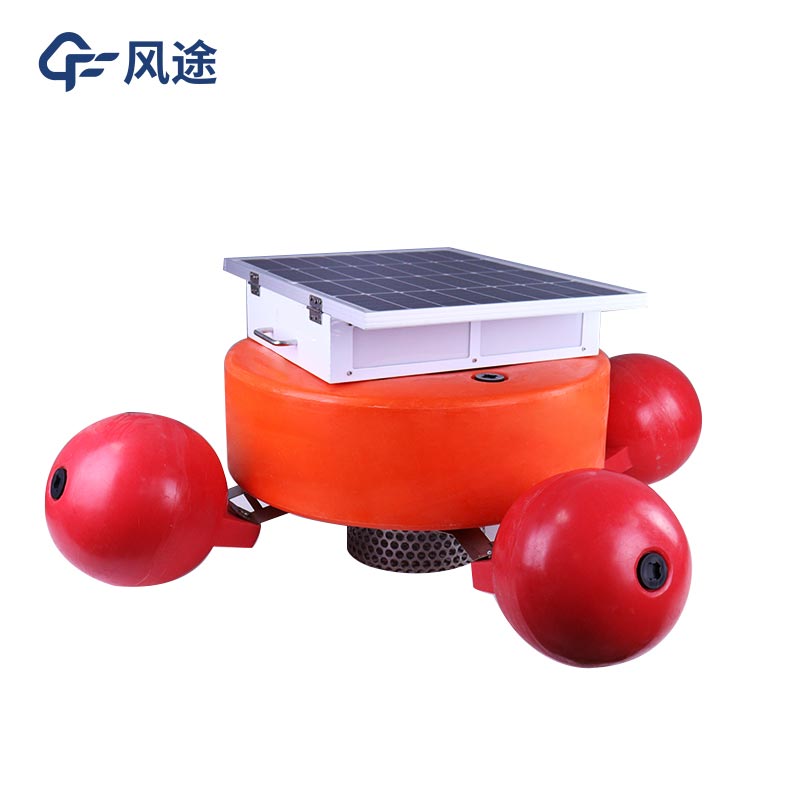
The Water Quality Monitoring Buoy is an unattended field device that integrates multiple water quality monitoring sensors onto a buoy, which is deployed in water bodies requiring monitoring. It enables real-time online water quality monitoring. By leveraging technologies such as on-site sensor monitoring, solar-powered autonomous energy supply, modern wireless communication, data acquisition, and cloud platform monitoring, combined with mature field operation and maintenance experience, it stands as an advanced and modern water body monitoring tool.
Such monitoring stations are fixed in water via anchor chains, allowing for direct in-situ water quality measurement. They conduct 24/7 continuous, fixed-point tracking of water quality changes and can transmit monitoring data to the central station in real time. With these capabilities, staff can quickly grasp the current water quality status and variation patterns at the monitoring section, detect environmental pollution issues promptly, and provide robust data support for river basin water quality assessment, pollution prevention and control decision-making, and comprehensive remediation efforts.
Key components include the buoyant body, power supply unit, data acquisition and transmission unit, mooring unit, analysis unit, and auxiliary unit. The analysis unit adopts physical monitoring methods and can be equipped with various electrochemical or optical detection instruments for parameters such as water temperature, pH value, dissolved oxygen, turbidity, conductivity, chlorophyll-a, cyanobacteria, ammonia, and COD. The data acquisition and transmission unit features multiple digital and analog interfaces, enabling simultaneous connection to multiple digital water quality devices. It also has a large memory capacity, ensuring that stored data is not lost even in the event of a power outage. The auxiliary unit is an optional configuration, including equipment such as alarm lights and GPS positioning.
It enables in-situ monitoring, eliminating the need for pipeline transportation of the water sample to be tested, so measurements are not interfered with by intermediate links. The buoyant body is lightweight yet highly buoyant, with excellent wave-following performance. It also boasts a simple structure, high stability, and strong load-bearing capacity, facilitating deployment, retrieval, position adjustment, and movement. Additionally, the buoyant body is equipped with anti-collision self-protection functionality: it will not damage contacting objects such as ships upon collision, and even if it itself is damaged, it will not take on water and sink, thus effectively protecting the internal measurement instruments. Constructed from high-molecular polyethylene material and filled with foam inside, the buoyant body exhibits strong corrosion resistance, prevents the attachment and growth of aquatic organisms, and has excellent impact resistance. Furthermore, it has a low center of gravity, offering superior wind and wave resistance. No additional paint application is required, ensuring no pollution to the surrounding environment.
A Handheld Weather Meter is an outdoor meteorological monitoring device that combines high precision with portability. It mainly uses the ultrasonic time-difference method to measure wind speed and direction. Since there are no mechanical rotating parts inside, it avoids the precision degradation pr...
Crop growth monitoring refers to the dynamic observation of crop seedling status, growth conditions and their changes, which is related to the adjustment of cultivation measures. The adoption of rapid and non-destructive monitoring methods can not only reflect the changes in crop yield (whether abun...
The high-precision handheld 6-element weather station is a mobile weather observation instrument that integrates precision sensors and smart chips to simultaneously measure wind speed, wind direction, average wind speed, temperature, humidity, and atmospheric pressure. It has built-in large-ca...
Soil moisture automatic measurement relies on multiple sensor technologies. For soil water content measurement, Frequency Domain Reflectometry (FDR) and Time Domain Reflectometry (TDR) are commonly used. FDR sensors calculate water content by measuring the soil's dielectric constant, as there is...


 Skype
Skype
 whatsapp
 mail
mail